If you sell a beauty brand running 50 or more SKUs across skincare, makeup and body care on TikTok Shop in Indonesia, the category decides almost everything about how your creator programme should be built. Beauty is one of the deepest categories on TikTok Shop in Indonesia, which is exactly why so much of the content looks the same: a creator holds a bottle, says the texture is light, and the video dies at 800 views. The problem is rarely the creator. It is that one format is being asked to do four different jobs at once. This guide covers the four decisions that separate a campaign that moves inventory from one that produces nice footage: which creator types match which job, how to pick a format per SKU, how to turn a launch calendar into an upload schedule, and how to check claims before anything goes live.
Each section below is written to be handed to a creator or used in your next brief.
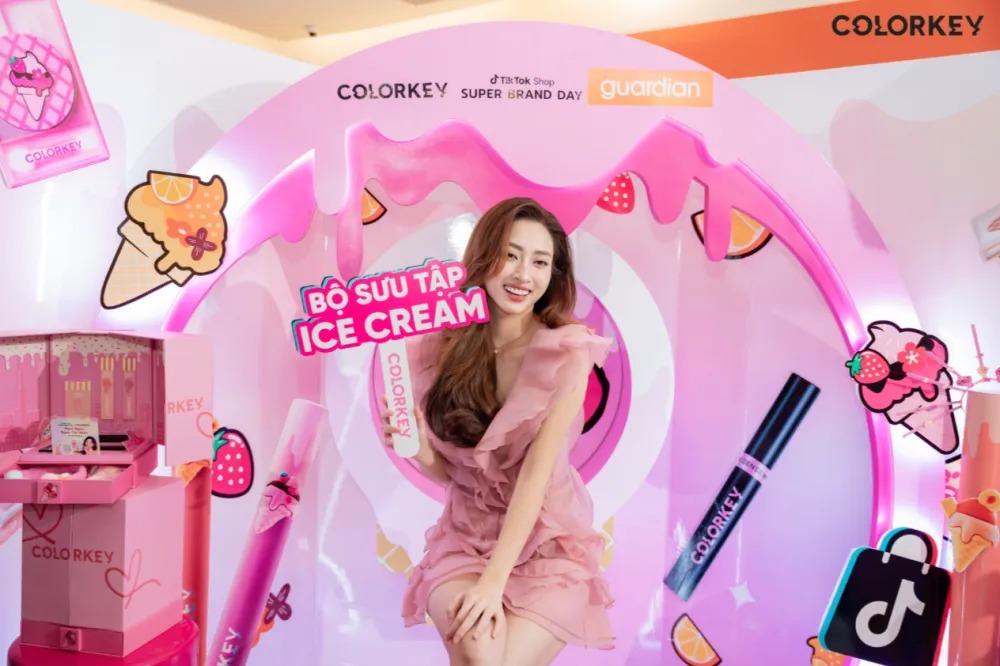
Why beauty content in Indonesia goes flat
A beauty catalogue above fifty SKUs has at least five different buying questions inside it: does this shade work on my skin tone, will this serum break me out, is the texture sticky under makeup, does it survive a Jakarta commute, and is it halal and BPOM-registered. A single review format cannot answer all five, so creators default to the safest sentence — 'the texture is light' — and viewers scroll. The fix is not more creators. It is assigning each SKU the one format that answers its specific question, then making sure the roster has enough of each type.
One last budget note: sample cost, not creator fee, is what usually caps a beauty programme. At three samples per SKU and fifty SKUs, the sample line quietly becomes larger than the media line. Cap it by sending full-size product only for hero SKUs and sealed minis for the rest, and say so in the brief so no creator feels short-changed.
Step 1 — Match the creator type to the job
Split the roster into three jobs. Review creators — roughly 10k to 100k followers, filming at a desk or in daylight — answer 'is this worth it' and carry the highest trust per view. Tutorial creators answer 'how do I use it' and sell routines rather than products, which is how a serum pulls a moisturiser and a sunscreen along with it. Story creators — the drama and POV format — answer 'who is this for' and produce the reach that makes the other two credible. A workable ratio for a 50-SKU brand is 5 review, 3 tutorial, 2 story in every ten creators. When a launch underperforms, the first question is which of the three is missing, not how to get more of the one that already worked.
Report by creator type, not by campaign total. Build a monthly table with four columns per creator: cost per video, attributed GMV within seven days, repeat purchase within sixty days, and content assets produced. The pattern that usually appears after two months is that tutorial creators cost more per video and convert better on routine products, while review creators convert better on single hero SKUs. Move budget toward the column that is actually paying, and stop judging the programme on one blended number that hides both.
Step 2 — Pick one format per SKU
One SKU, one format, decided before the brief is sent. Swatch and shade content for lip and cheek colours, filmed in daylight on at least two skin tones — this is the only format that answers the shade question honestly. Before-and-after for texture and absorption claims, with the same lighting and the same distance in both frames. Get-ready-with-me for routine products, because it shows order of application, which is where most skincare complaints actually come from. Single-claim demos for anything with a functional story — one video, one claim, tested on camera. And a 15-second cutdown of the best-performing format for every SKU, because the same footage that works at 40 seconds rarely works at 15 without being re-edited for the shorter hook.
The practical rule that saves the most money: never brief a creator on more than four SKUs in one video. Above four, the video becomes a catalogue, viewers cannot remember what was shown, and the comment section fills with 'link?' instead of shade names. If a launch has eight SKUs, split it — four hero products get individual videos, the remaining four appear as a set inside a routine format that already has a reason to show them together.
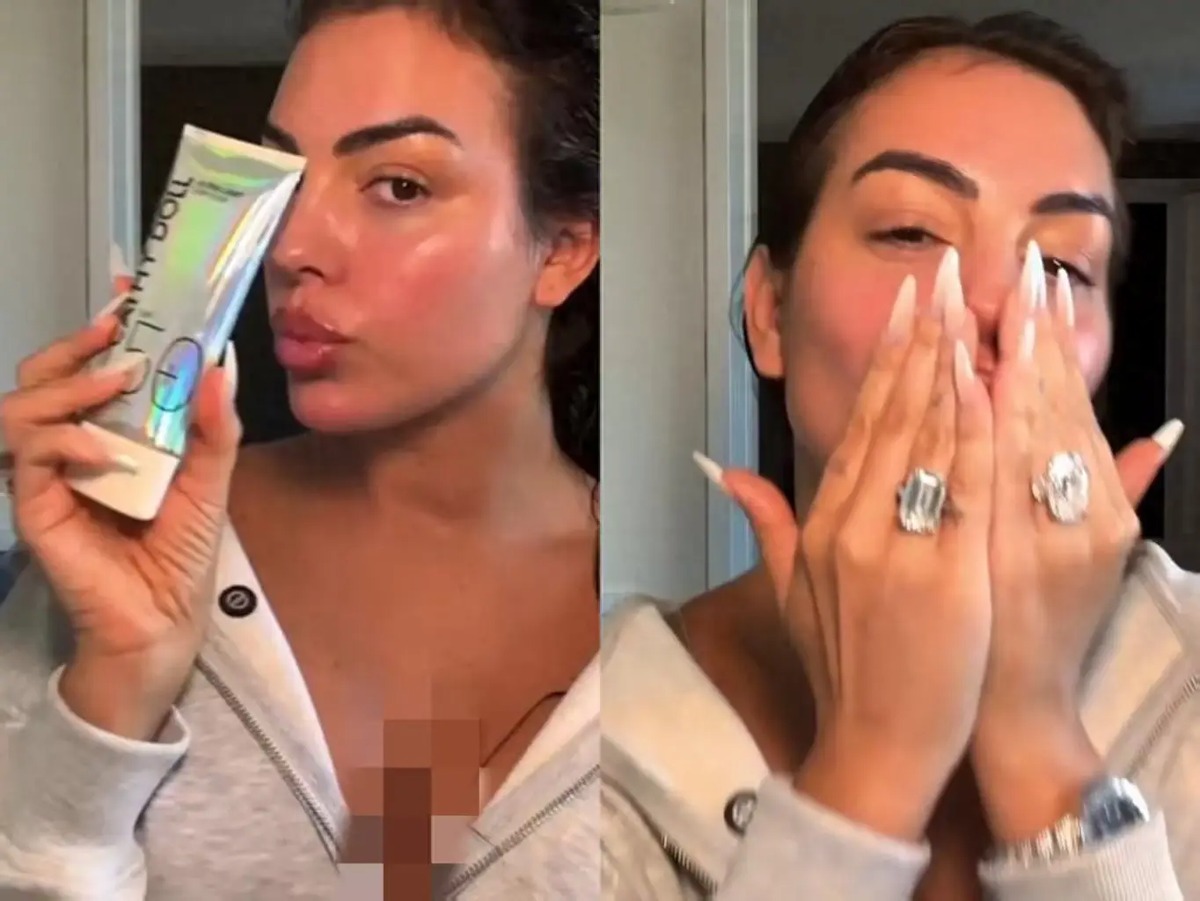
Step 3 — Turn the launch calendar into an upload schedule
Work backwards from the launch date, not forwards from the sample shipment. Ten days before launch, samples leave and the brief is locked. Five days before, first cuts arrive and only factual fixes are allowed. Two days before, everything is approved and the CTA link is tested on a real phone. On launch day, review and tutorial creators publish within the same six-hour window so the algorithm sees a cluster rather than a trickle, and story creators publish the day after to catch the people who saw the first wave and did not act. Then a second wave at day seven with the best-performing cut, which in practice is almost never the one the brand expected.
The roster should not grow every month; it should get more specific. Keep eight to ten core creators on a standing arrangement — a fixed monthly deliverable, first access to new launches, and a personal discount code so you can see which creator drives repeat purchase rather than a one-off spike. Rotate about a third of the roster each quarter to test new faces, and use competitor creator search to find people who already film your category for another brand: they arrive with a working format and an audience that has bought before, which shortens the learning curve by weeks.
Step 4 — Check claims and reuse the footage
Indonesian beauty content carries claim risk that has nothing to do with creativity. Anything that sounds like treating acne, fading dark spots permanently, or whitening skin should not appear in a brief at all; write the permitted wording into the brief and mark the forbidden phrases explicitly, because a creator improvising a benefit is how a takedown happens. For halal and BPOM registration, the number or logo must be visible for at least two seconds, which means the pack shot has to be planned, not incidental. On reuse: one approved master video should yield three vertical cuts, two still frames for the product page, and one 6-second bumper — and the usage window, usually 90 days for paid amplification, is agreed before filming rather than after the video performs well.
Beauty is the category where a single bad batch becomes a content crisis. Decide in advance what happens if a creator posts a negative experience: the response should be a second video from the same creator after the issue is resolved, not a brand statement, because audiences read a follow-up as accountability and a statement as PR. Then take the three most common complaints from the comment section and write them into the next brief as questions the creator should answer on camera — most beauty objections are answerable in fifteen seconds if someone actually answers them.
How DAMI keeps a 50-SKU creator roster manageable
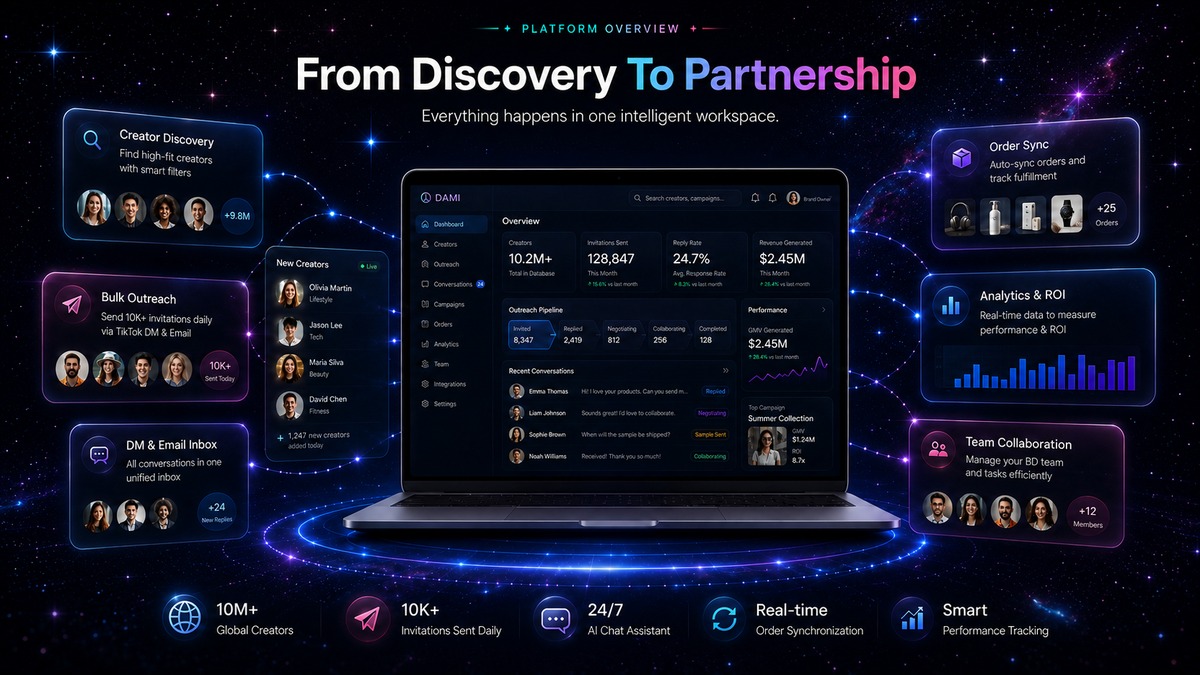
DAMI brings an 8-million-plus creator database, competitor and competitor-store creator search, automated outreach tasks, AI-assisted outreach, sample management, campaign management, store analytics, and multi-store team dashboards into one place. For a category programme that means an 8-million-plus creator database to source by niche, competitor and competitor-store creator search to see which creators already work with brands like yours, automated outreach tasks so follow-ups do not depend on memory, AI-assisted outreach to keep conversations moving, sample management to track what was sent and what came back, campaign management to hold every SKU and deadline together, plus store analytics and a multi-store team dashboard so everyone reads the same numbers.
A category roster, a launch calendar and a content library belong in one system, not five spreadsheets. Start with DAMI and run creator marketing as a process.
Frequently asked questions
Should a beauty brand start with big creators or many small ones?
Many small ones, at least for the first two months. Ten creators in the 10k to 50k range give you ten different hooks and ten sets of comments to read, which is how you find out which claim actually lands. Big creators are worth paying for once you already know which sentence works.
How many SKUs should one creator video cover?
Four at most, and only when the format has a natural reason to show them together, such as a full routine. Above four the video stops being content and becomes a shelf, and viewers leave without remembering a single product name.
How do we know a creator will actually use the product before filming?
Ask for one still frame at least 48 hours before the shoot: product in hand, label legible, correct shade. A creator who has not opened the box cannot send that frame, and you find out two days early instead of on the delivery date.
How long should content usage rights run?
Ninety days for paid amplification is the common baseline in Indonesia; ask for it in writing before filming and price an extension separately. Negotiating usage after a video performs well is the most expensive conversation in creator marketing.
Conclusion
Category marketing in Indonesia is not won by finding better creators. It is won by matching the creator, the format and the moment to the specific question a buyer already has. Do that and an ordinary roster starts producing content that sells.
Pick the format first, write it into the brief, put a date on every stage, then reuse what worked instead of commissioning more of what did not. DAMI brings an 8-million-plus creator database, competitor and competitor-store creator search, automated outreach tasks, AI-assisted outreach, sample management, campaign management, store analytics, and multi-store team dashboards into one place. Get started with DAMI and build the next campaign from records, not from instinct.