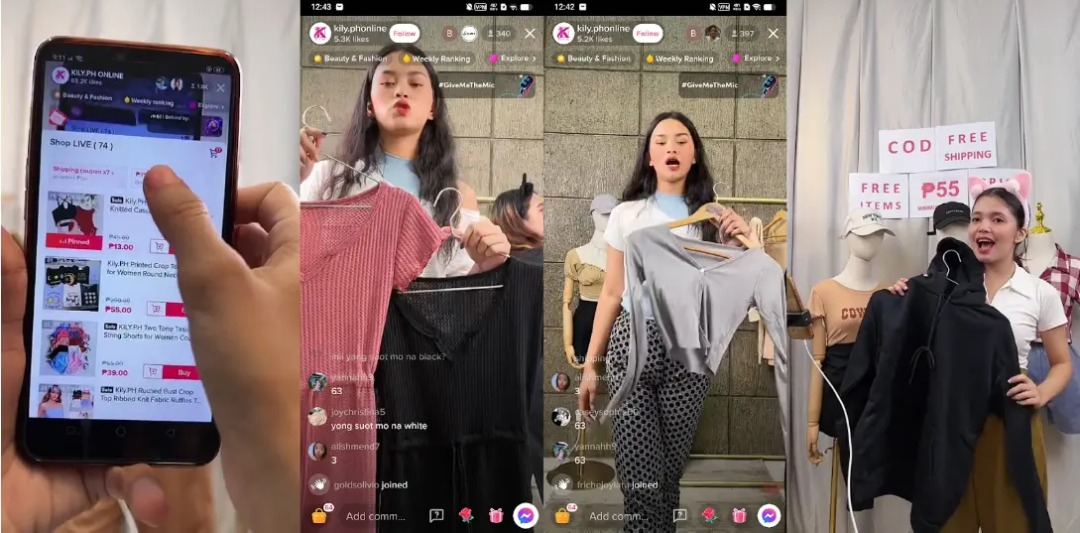
If you sell a US DTC brand planning Black Friday, Cyber Monday and the December run as one campaign in the United States, the peak season is not one campaign but a short sequence of them, and each one asks the creator roster for something different. American Q4 is not one event. It is three: Black Friday, when buyers are hunting for the deepest discount; Cyber Monday, when they are at a desk with a card already saved; and December, when they are buying for other people and price sensitivity drops. Brands that run one campaign across all three spend December money on Black Friday logic, and they usually discover it in January when the same discount that worked in November stops converting in a gifting context. This guide works through the four decisions that keep a peak campaign from turning into a discount with content attached: why the three dates need three different creator jobs, how early a US Q4 roster actually has to be locked, how to move commission and budget forward without losing the margin, and what disclosure rules change about the content itself.
Everything below is written to be used directly — in the brief you send a creator, or in the calendar you hand your team.

Why one campaign cannot cover Black Friday, Cyber Monday and December
Each of the three dates has a different question behind it. On Black Friday the buyer asks whether this is the lowest price they will see, so the content has to answer with certainty and urgency. On Cyber Monday they have already decided what they want and are comparing checkout friction, so the content has to reduce risk — shipping, returns, warranty. In December they are buying for someone else, which makes the gift framing, the unboxing and the delivery deadline the deciding factors rather than the percentage off. A single discount-led video answers one of those three questions and misses the other two, which is why Q4 budgets produce a strong November and a soft December.
Write the Q4 plan as three campaigns with three budgets, then merge them into one calendar. The merge is where the saving is: one shoot covering all three dates, one creator list with per-date roles, one price-consistency owner, one delivery cut-off. Three separate teams running three separate holiday campaigns is how a brand spends Q4 money three times and remembers the quarter as expensive.
Step 1 — Give each date a different creator job
Black Friday: creators whose job is proof and urgency. The format is a straight comparison — this price against what the buyer would normally pay — delivered without hedging, plus a clear statement of when the price ends and what happens to stock. Cyber Monday: creators whose job is risk removal. The format is a walkthrough of the purchase itself — delivery window to a US address, return policy, what is in the box, what the warranty covers. December: creators whose job is gifting. The format is a recommendation for a specific person, with the delivery cut-off stated plainly, because a gift that arrives on the 27th is a refund.
Do not let a creator carry the discount messaging alone. US buyers cross-check a claimed discount against the brand's own store page within seconds, and a video that promises a price the listing does not show produces distrust that outlasts the campaign. Make one person responsible for the price match across video, listing and checkout before anything publishes, and give creators a single line they can quote. Consistency is the cheapest credibility available in Q4.
Step 2 — Lock the Q4 roster earlier than feels reasonable
US Q4 creator inventory is booked well before the campaign, so a roster locked in November is a roster of whoever is left. Work to a six-to-eight week lead: approach in early October for Black Friday, and sign the December gifting creators in the same conversation, because the same creator is being asked by twenty brands in that window. Two practical consequences. First, decide the SKUs before you talk to anyone, since a creator asked to choose from your catalogue will pick the obvious bestseller. Second, accept that the strongest creators will want a fixed fee plus commission, and budget for it in October rather than discovering it as a surprise in the final week.
Plan the December delivery cut-off before you plan the December creative. In the US, a large share of Q4 gifting orders arrive in the final ten days, and the deadline that actually matters is not the order date but the date the parcel has to leave the warehouse to arrive before the holiday. Tell creators the cut-off, put it on screen in the December videos, and stop the campaign on that date rather than letting it run into orders you cannot fulfil. A brand that keeps selling past its own cut-off buys a refund and a chargeback for every order it takes.
Step 3 — Front-load commission and budget without losing margin
Commission is the cheapest form of Q4 budget because it only pays on orders you actually get, so front-loading it protects cash rather than spending it. Two moves work. Raise the commission rate for the specific window — Black Friday through Cyber Monday — rather than raising it for the quarter, so creators have a reason to publish inside the two days that matter. And pay a smaller fixed fee than usual in exchange for the higher rate, which keeps your break-even volume low. What breaks margin is the combination of a high fixed fee, a deep discount and a raised commission, because all three come out of the same unit. Pick two.
Build a post-holiday sequence while the roster is still warm. The first ten days of January carry the cheapest attention of the quarter and the highest intent of the year from people spending gift cards and exchanging sizes. The same creators who sold in December can publish a short follow-up — how to use it, what to pair it with, what to do if the size is wrong — and that content costs almost nothing because the relationship and the footage already exist.
Step 4 — Build disclosure into the brief, not into the review
US disclosure is not a formality you fix in editing. The FTC expects a clear and conspicuous disclosure that a reasonable viewer will notice without clicking anything, placed in the video itself and not only in a hashtag buried under thirty others. Practically that means: state the paid relationship in the first few seconds or on screen for long enough to read, keep it in the same language as the rest of the video, and do not rely on a platform's built-in paid partnership label as the only signal. Put those three requirements in the brief with an example, and reject a first cut that misses them — retrofitting disclosure into a finished video costs a re-shoot, and a missing disclosure costs more than that.
Keep a per-creator record across the three dates rather than one campaign number. The same creator can be strong on Black Friday and weak in December, because the job changed from proof to gifting and the format did not. Recording delivery, on-time rate and full-price sell-through per creator per date is what lets you rebuild the roster in July instead of guessing at it in September.
How DAMI holds a three-date roster and its spend together
DAMI brings an 8-million-plus creator database, competitor and competitor-store creator search, automated outreach tasks, AI-assisted outreach, sample management, campaign management, store analytics, and multi-store team dashboards into one place. For a three-date Q4, the useful layer is campaign management per date, the team dashboard so finance and content read the same spend, and competitor creator search to see which creators are already carrying a rival's Black Friday message before you book them.
A peak campaign is decided by records, not by improvisation: who was contacted, which SKU they received, what published and when, and what it produced against plan. Start with DAMI and run the whole season from one place.

Frequently asked questions
When should a US brand start booking Black Friday creators?
Early October, which is six to eight weeks out. The strongest Q4 creators are committed by late October, and later approaches mean paying more for a weaker roster.
Should the same creators run all three dates?
The same roster, different roles. Reusing the relationship saves negotiation time, but a creator strong at proof is not automatically strong at gifting — check the December format before committing them to it.
Fixed fee or commission for Q4?
A smaller fixed fee plus a higher commission concentrated on the Black Friday to Cyber Monday window. That keeps break-even volume low and gives creators a reason to publish on the two days that matter.
How deep should the Black Friday discount be?
Deep enough to be defensible against the price the buyer would otherwise pay, and no deeper. A discount that requires cutting the commission or the fixed fee is a discount you cannot afford to advertise.
What does FTC disclosure require in practice?
A clear, conspicuous statement in the video itself, in the same language, visible long enough to read, without requiring a click. A hashtag buried under thirty others does not meet that bar.
How do I handle returns season?
State the return window in the December videos rather than leaving it to the listing, and staff returns for the first two weeks of January. A clear return policy in the video reduces both hesitation and disputes.
Is Cyber Monday still worth creators?
Yes, but with a different job. Black Friday buys the discount hunter; Cyber Monday buys the buyer who already decided and needs the friction removed — shipping, warranty, returns.
What should I measure after Q4 ends?
Per creator per date: on-time delivery, full-price sell-through, and whether the video kept getting views after the discount ended. That record is what you rebuild the roster from next July.
Conclusion
Peak season rewards sequencing over effort. The seller who decides which twenty SKUs matter, who sits with which creator and on which date, and what the stop-loss is before the first video goes live, will beat the seller who simply spends more. DAMI brings an 8-million-plus creator database, competitor and competitor-store creator search, automated outreach tasks, AI-assisted outreach, sample management, campaign management, store analytics, and multi-store team dashboards into one place.
Put the dates on the calendar, write the assignment down, and reuse what worked instead of commissioning more of what did not. Get started with DAMI and build the next campaign from records.