If you sell on TikTok Shop in the Philippines — whether you run a fashion or beauty seller paying creators a mix of flat fee and commission — you already know that getting a creator to say yes is the easy half. In the Philippines, the same campaign can be quoted three ways: a flat fee, a flat fee plus commission, or commission only. Everyone agrees in the chat, nobody writes down whether commission is calculated on gross sales or on the amount after cancellations and returns, and the argument arrives two weeks later when the numbers differ by a few thousand pesos. This guide covers the four parts that decide whether that yes turns into usable content: how to write commission rules that cannot be argued with, how to set the settlement cycle, how to align on which dashboard counts, and how to handle a disagreement without losing the creator.
Everything below is written to be used in your next campaign, not filed away.
Why settlement disputes start long before payout day
Commission disputes are rarely about bad faith. They happen because four variables are left undefined: the base (gross or net), the attribution window, who absorbs the cost of vouchers and platform fees, and when the payout is due. Leave any one of them open and both sides will reasonably believe they are right. The cheapest fix is a single paragraph agreed in writing before the first video goes live.
Step 1 — Write the commission rule until it cannot be misread
Write six lines and have the creator confirm them in writing: (1) commission is X percent of net sales, where net means order value minus cancellations, returns, and refunds; (2) the platform fee and shipping subsidy are not deducted from the creator's commission base; (3) voucher cost is borne by the seller; (4) attribution uses the creator's own affiliate link or code, with a 7-day click window; (5) orders that are cancelled after payout are deducted from the next settlement, not clawed back in cash; (6) the flat fee, if any, is paid 50 percent on signing and 50 percent after the first video goes live. Six lines end most arguments before they start.
Step 2 — Set the settlement cycle and the minimum threshold
Settlement timing matters more than the rate. A workable Philippine cycle: campaign ends on the 25th, the seller pulls the final report on the 27th after cancellations settle, the creator receives a settlement statement on the 28th, and payment lands within five working days. Add a minimum threshold — for example 2,000 pesos — below which the amount rolls into the next cycle rather than triggering a separate transfer with its own fee. Put the cycle dates in the brief. Creators chase less when they know the date.
Step 3 — Agree on one data source before launch
Agree in advance that the TikTok Shop affiliate dashboard is the single source of truth, and that both sides export the same report. Screenshots without a date and time are not evidence. If the creator's own analytics differ, it is almost always a window mismatch: the seller counted 7-day attribution, the creator counted 30 days. Decide one window and write it down. Keep one PDF of the final settlement per campaign — when the same creator asks about the same campaign three months later, you answer in one minute instead of rebuilding the numbers.
Step 4 — Handle a difference without losing the creator
Use a three-step routine. First, ask for their report and compare line by line without arguing about the total. Second, reply within 48 hours with either the payment confirmation or the specific difference and its cause. Third, if the gap is under a set amount — 500 pesos is a common line — pay it and note the reason, because the cost of the discussion is higher than the difference. What loses creators is not a smaller payout; it is silence after they ask a question.
How DAMI gives both sides the same numbers
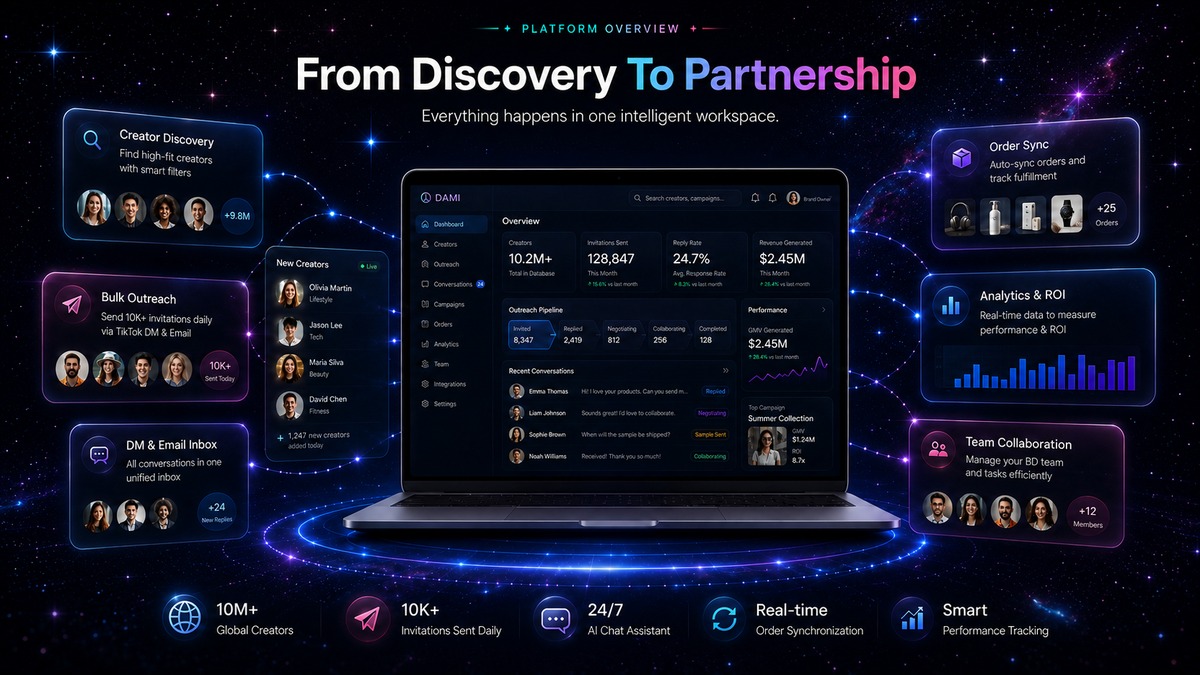
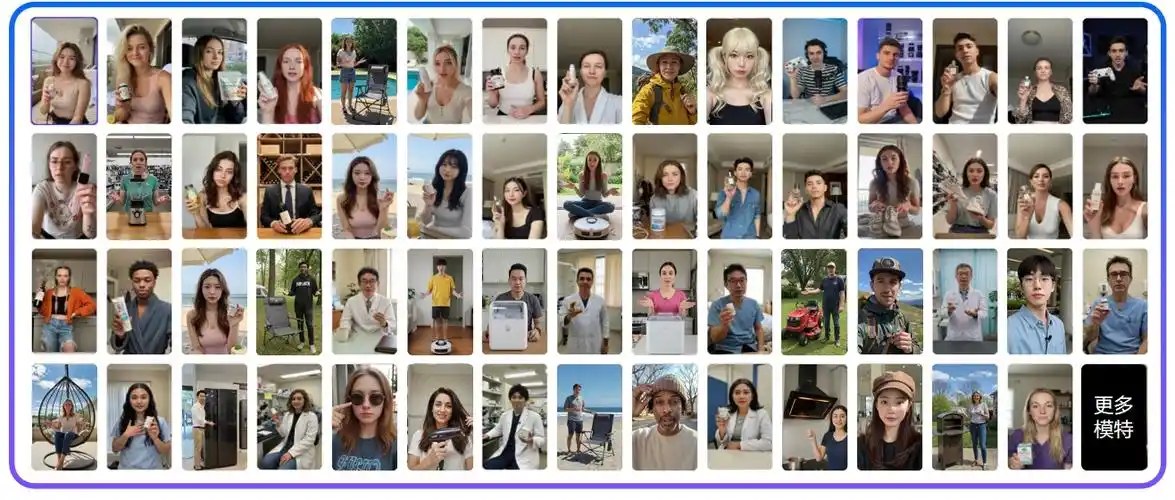
DAMI brings an 8-million-plus creator database, competitor and competitor-store creator search, automated outreach tasks, AI-assisted outreach, sample management, campaign management, store analytics, and multi-store team dashboards into one place. For collaboration execution that means an 8-million-plus creator database to source from, competitor and competitor-store search to see who already works with brands like yours, automated outreach tasks so routine follow-ups do not depend on memory, AI-assisted outreach to keep conversations moving, sample management to track what was sent and what came back, and campaign management with a multi-store team dashboard so everyone sees the same deadlines and the same numbers.
Briefs, samples, delivery dates and settlement all live in one record instead of five chat threads. Start with DAMI and run collaboration as a process.
Frequently asked questions
How much creative freedom should a creator get on the first collaboration?
Give freedom on execution and none on facts. Let them choose the hook, the pacing, and how they speak; hold the product points, the price, and the forbidden claims exactly as written. In the Philippines, the creators who deliver best are usually the ones who were told what must be true, not what to say.
What commission base prevents most arguments?
Net sales after cancellations, returns, and refunds — written into the brief with the exact definition. Gross sales looks generous and causes the argument, because the platform's gross number includes orders that never complete.
How many revision rounds is reasonable?
One structural round and one factual round. Beyond that, the cost is calendar time, not quality: each extra round adds about two days and the launch date does not move with it.
What should happen when a creator delays delivery?
Apply the delay plan you wrote before the campaign: 48 hours' notice moves the slot without penalty, later notice allows the brand to use the delivered draft and adjust the remaining fee. Decide it in advance so nobody has to negotiate under pressure.
Conclusion
Collaboration execution in the Philippines does not fail because creators are unreliable. It fails when the requirements, the dates and the money were never written down. Fix those three and the same creators suddenly look far more professional.
Write the brief, cap the revisions, put a date on every stage, and settle on the agreed cycle. DAMI brings an 8-million-plus creator database, competitor and competitor-store creator search, automated outreach tasks, AI-assisted outreach, sample management, campaign management, store analytics, and multi-store team dashboards into one place. Get started with DAMI and make the next collaboration start from records, not from memory.