If you sell on TikTok Shop in Indonesia — whether you run a seller running several beauty or home-goods stores, or an agency producing content for multiple brands — you already know that getting a creator to say yes is the easy half. In Indonesia the brief is usually a voice note: forty seconds of explanation, a product photo, and 'something like the last one'. The creator says yes, films what they understood, and the content comes back unusable — not because they were careless, but because two people were working from two different briefs. This guide covers the four parts that decide whether that yes turns into usable content: how to write a brief the creator can actually follow, how to define delivery standards, how many revision rounds to allow, and what to check before you accept the content.
Everything below is written to be used in your next campaign, not filed away.
Why briefs fail before the creator ever films
A brief that lives in a chat thread cannot be checked, versioned, or handed over. When a creator asks 'what exactly do you want', the honest answer is usually a re-explanation — which means the requirement changed. The cost is not one bad video; it is the three weeks you spend discovering that the creator's audience, format, and product angle never matched the campaign.
Step 1 — Six sections every brief needs
Write six sections in order: (1) the one goal of this video, in one sentence — not 'increase sales'; (2) who is watching, including age band and the problem they already have; (3) three product points that must be said and two claims that must not be made; (4) format — vertical 9:16, 21 to 34 seconds, hook in the first 3 seconds, burned-in subtitles in Bahasa Indonesia; (5) what to show on camera and what must stay out of frame; (6) the delivery date and time, with the timezone. A brief that answers all six can be sent to ten creators and produce comparable content. A brief missing any of them produces ten different videos.
Step 2 — Define delivery standards, not just topics
Topic is not a standard. A deliverable standard specifies resolution 1080 by 1920, audio without clipping, subtitle placement above the safe area, product label legible for at least two seconds, the price spoken correctly if mentioned, and the call to action said in the brand's own words. Add two rules that save the most rework in Indonesia: the creator sends one still frame for approval before full production, and all raw footage is handed over. That single frame catches wrong product, wrong shade, and wrong outfit before anyone films thirty seconds.
Step 3 — Cap revision rounds in the brief itself
Unlimited revisions do not improve quality; they delay the launch and burn the relationship. Put the limit in the brief: one round of structural changes — hook, order of points, length — and one round of factual fixes, such as a wrong price or a missing subtitle. Anything beyond that is a new deliverable and priced separately. Just as important is what revisions may not be used for: a creator should never be asked to re-film because someone internally changed their mind about the creative direction after seeing a version they had already approved.
Step 4 — Accept with a nine-point checklist
Accept with a checklist, not a feeling. Nine items: hook present in the first three seconds; all three product points said; no forbidden claims; subtitles correct and in the right language; price accurate; CTA link and wording correct; duration within range; product label visible; files delivered in the agreed format plus raw footage. If four or more items fail, do not fix it by message — send the brief back with the failed items marked. Creators fix checklists faster than they interpret feedback.
How DAMI keeps briefs, samples and deliveries in one place
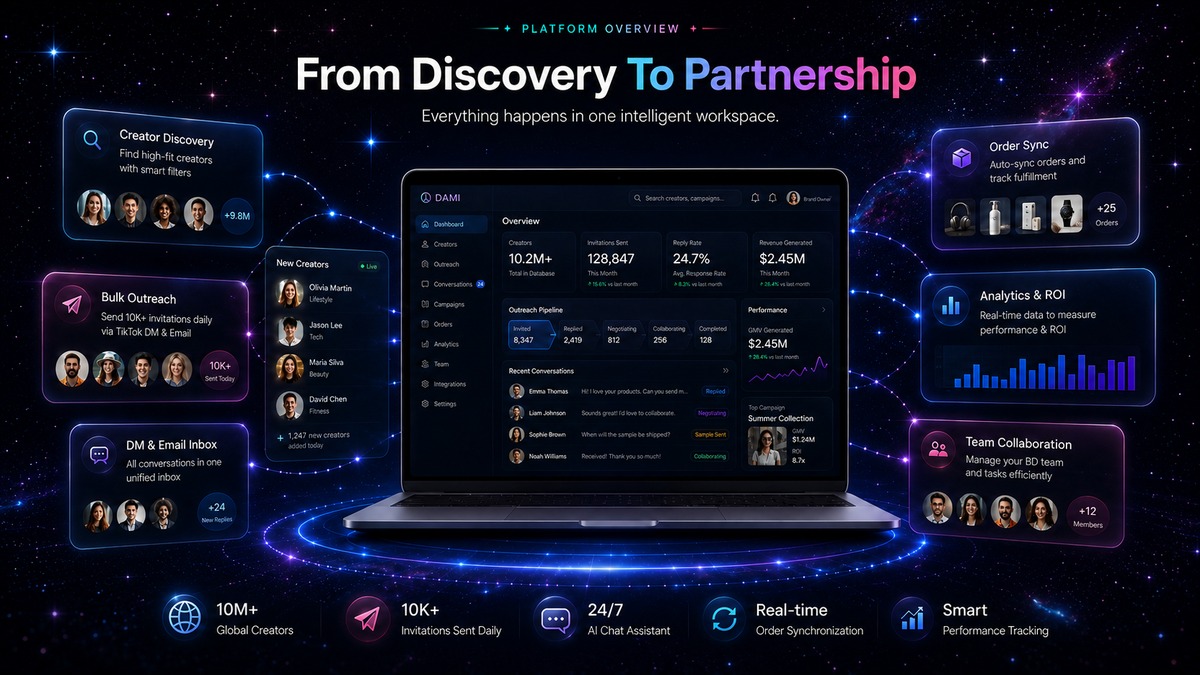
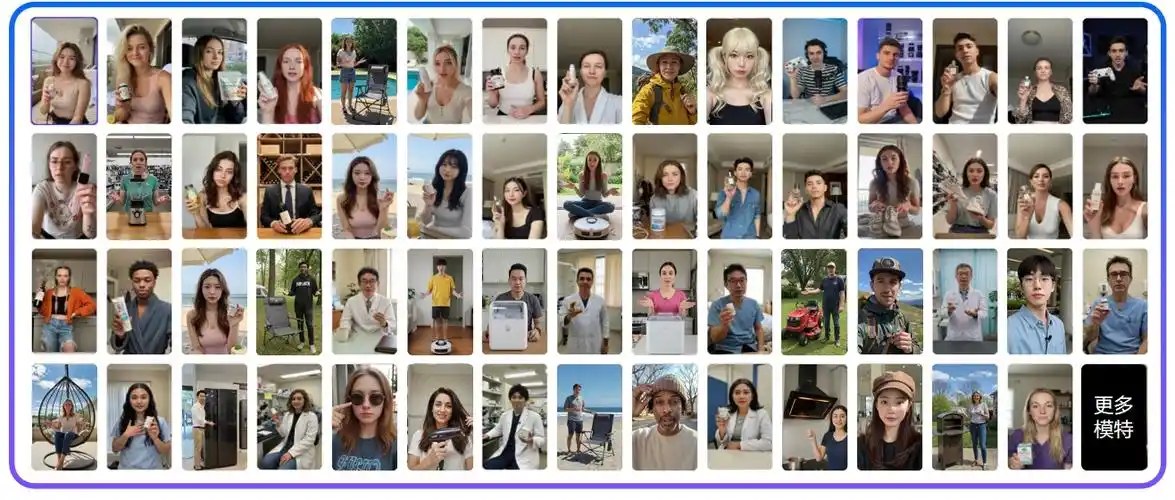
DAMI brings an 8-million-plus creator database, competitor and competitor-store creator search, automated outreach tasks, AI-assisted outreach, sample management, campaign management, store analytics, and multi-store team dashboards into one place. For collaboration execution that means an 8-million-plus creator database to source from, competitor and competitor-store search to see who already works with brands like yours, automated outreach tasks so routine follow-ups do not depend on memory, AI-assisted outreach to keep conversations moving, sample management to track what was sent and what came back, and campaign management with a multi-store team dashboard so everyone sees the same deadlines and the same numbers.
Briefs, samples, delivery dates and settlement all live in one record instead of five chat threads. Start with DAMI and run collaboration as a process.
Frequently asked questions
How much creative freedom should a creator get on the first collaboration?
Give freedom on execution and none on facts. Let them choose the hook, the pacing, and how they speak; hold the product points, the price, and the forbidden claims exactly as written. In Indonesia, the creators who deliver best are usually the ones who were told what must be true, not what to say.
What commission base prevents most arguments?
Net sales after cancellations, returns, and refunds — written into the brief with the exact definition. Gross sales looks generous and causes the argument, because the platform's gross number includes orders that never complete.
How many revision rounds is reasonable?
One structural round and one factual round. Beyond that, the cost is calendar time, not quality: each extra round adds about two days and the launch date does not move with it.
What should happen when a creator delays delivery?
Apply the delay plan you wrote before the campaign: 48 hours' notice moves the slot without penalty, later notice allows the brand to use the delivered draft and adjust the remaining fee. Decide it in advance so nobody has to negotiate under pressure.
Conclusion
Collaboration execution in Indonesia does not fail because creators are unreliable. It fails when the requirements, the dates and the money were never written down. Fix those three and the same creators suddenly look far more professional.
Write the brief, cap the revisions, put a date on every stage, and settle on the agreed cycle. DAMI brings an 8-million-plus creator database, competitor and competitor-store creator search, automated outreach tasks, AI-assisted outreach, sample management, campaign management, store analytics, and multi-store team dashboards into one place. Get started with DAMI and make the next collaboration start from records, not from memory.