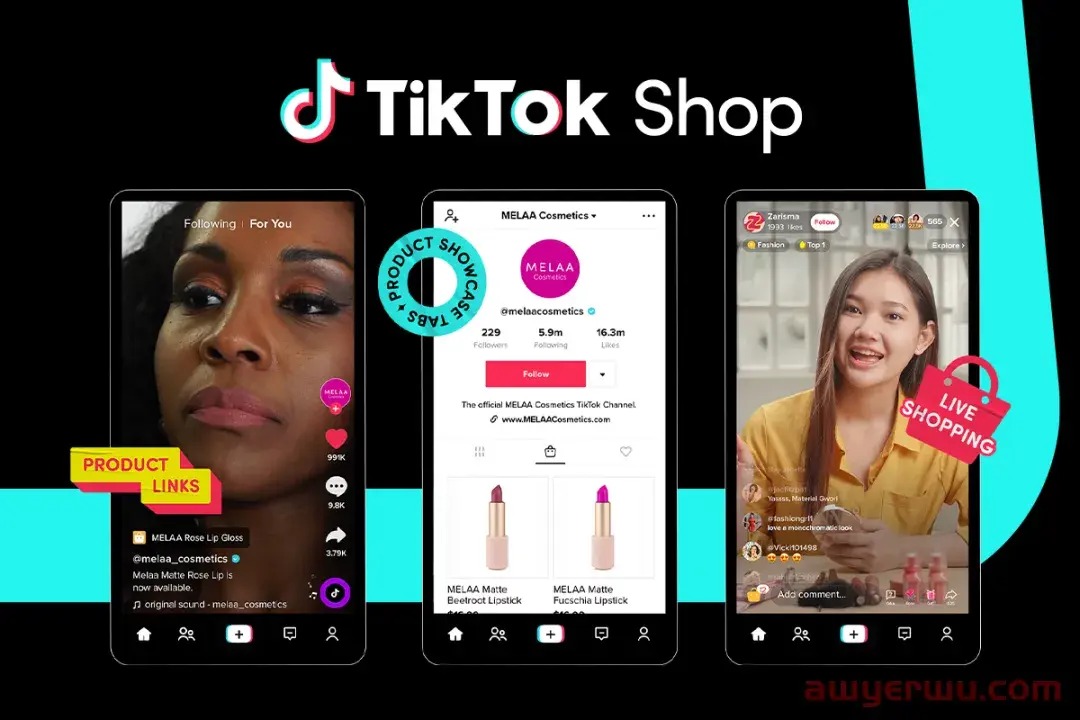
If you sell on TikTok Shop Vietnam without a local content team, currently running footage adapted from your home-market material, the change that hurt this year was not in your product or in your pricing. It was in where your traffic comes from. Sellers moving into Vietnam usually arrive with a library. It was shot for another market, it performed there, and the plan is to recut it, add Vietnamese captions, and run it. A meaningful share of that library will not distribute, and the reason is not that Vietnamese shoppers dislike foreign footage. It is that unoriginal content is a defined policy category with a list: spliced review clips with no new commentary, screen recordings of film or television with the marks removed, duets or overlays used without spoken or written promotional commentary, pre-recorded segments played inside a live, closely imitating another creator's concept, and other people's material folded into your own without permission. Edit tricks used to hide reuse — overlay frames that sandwich the borrowed footage, hidden frames flashed to change the digital fingerprint — are treated as an aggravating factor, not a workaround. Penalties land on the content or the account, and repeated violations draw heavier ones.
Adapted content looks free, which is exactly why it is expensive. Cost one unit properly. A locally shot forty-five-second video in Vietnam — a local face, a real location, Vietnamese voiceover, one round of edits — runs somewhere around 1.2 to 2.5 million VND depending on whether you hire a creator or shoot with your own staff. An adapted video costs the editing time to recut footage you already own: call it no cash at all. At thirty videos a month the apparent saving is 36 to 75 million VND. Then the distribution side enters. A video classified as unoriginal is not promoted into a wider pool, and the account carries the consequence into subsequent posts. A suppressed video does not cost you its production budget, because there was none. It costs you the slot in the feed that a video which would have been promoted was going to occupy, and it costs you that slot on everything you publish afterwards while the standing of the account recovers. Thirty adapted videos that do not distribute are not a saving of 75 million VND. They are thirty slots you did not get, bought at the price of the one thing a new market cannot buy back, which is early momentum.

What the platform actually classifies as unoriginal
The reason this bites harder in Vietnam than sellers expect is that the preference is not only a policy matter. Vietnamese audiences reward footage that looks like it was made where they live, and the distribution system follows them: material shot on a real production line or in a real home, explained in ordinary spoken Vietnamese, holds viewers substantially longer than polished green-screen or AI-generated video, with documentary-style clips reported to complete at more than three times the rate of finely edited ones. The content structure that works is also not the one most sellers bring. Rather than opening on the pain point and then introducing the product, the local pattern runs roughly eighty per cent everyday-scene storytelling and twenty per cent product, with the product placed inside a life the viewer recognises. Recutting home-market footage reverses both of those — foreign faces, foreign rooms, and a structure that leads with the pitch.
There is also a service layer underneath all of this that sellers routinely skip, and in Vietnam it is a precondition rather than a bonus. Stable dispatch, fast Vietnamese-language customer response and a high shop rating are the basic threshold for earning free distribution at all. A shop that ships late from a single warehouse and answers questions in another language can shoot perfectly local content and still not be given traffic, because the distribution decision sits on top of the service record. Fixing logistics and a Vietnamese-speaking support rota is not content work, but it is the thing that decides whether content work pays.
Step 1 — Audit the library you already have before shooting anything new
Go through the library you already own and tag each piece against the six categories before you spend anything on new production. Anything built by splicing review clips without new commentary goes. Anything that is a screen recording with marks removed goes. Any duet or overlay used without spoken or written promotional commentary goes. Any pre-recorded segment inserted into a live goes. Anything that closely imitates another creator's concept goes, and anything containing other people's material without permission goes. Then check for the two edit patterns as well: overlay frames sandwiching borrowed footage, and hidden frames inserted to change the fingerprint. Both are treated as attempts to conceal rather than as originality.
Expect to lose more than you want to. Sellers who run this audit honestly usually find that somewhere between half and four fifths of an imported library fails one of the tests, and the instinct is to argue with individual cases. Do not. The tests are not aesthetic judgements about whether the footage looks good; they are whether new commentary was added, whether permission exists, and whether the edit was used to conceal. Those three questions have objective answers, and a file that fails one of them will fail it again on review.
Building a local scene library is much easier with a structure to fill in. register with DAMI and ask the team for the Vietnam local content planner and get the local content production planner we use for Vietnam — the scene and face banks, the eighty-twenty shot list, and a two-week shooting schedule you can hand to whoever films for you.
Step 2 — Break local production into repeatable units: scenes, faces, rhythm
Stop treating each video as a creative project and start treating it as an assembly job with three inputs. Input one is a scene bank: eight to twelve real Vietnamese locations or room types where your product credibly gets used, photographed once and reused. Input two is a face bank: three to six local people — your own Vietnamese staff, hired presenters, or creators on retainer — who can each carry a month of output, so no single person becomes a bottleneck. Input three is a rhythm template: the eighty-twenty structure, a fixed opening three seconds that shows the scene rather than the product, and a fixed closing that states the one thing the product does. With those three inputs, a week of output is a scheduling problem rather than a writing problem.
Build the rhythm first and the volume second. Shoot six pieces in week one, all from the same scene bank and the same template, then look at completion rates before shooting twelve. The temptation is to prove the system by producing a lot immediately, but a large batch built on an untested template wastes the same calendar time as a small one and burns through your face bank before you know which faces hold viewers. Small, measured, then scaled — that order also means you learn which of the eight scenes actually works before you have photographed all twelve.

Step 3 — Run two tracks: a local-employee account and a local creator account
Run two tracks because they do different jobs. Track one is a local-employee account: hire or assign Vietnamese staff to present, shoot against the real production line or the real warehouse, and speak in ordinary local Vietnamese. This track does not scale, and it is not meant to. Its job is to build base trust — viewers can see a real workplace and a real person who works there. Track two is a local creator account: Vietnamese creators in roughly the 10,000 to 100,000 follower range, with a neighbour-next-door persona, filming everyday use. This track scales, and its job is reach. Sellers who run only one of these usually end up with either trust and no reach, or reach that nobody believes.
The follower range matters and it is lower than most cross-border sellers assume. Vietnamese affiliate volume is carried mainly by small and mid-tier creators in the 10,000 to 100,000 band, because their engagement rates and category focus convert better than large general-audience accounts. Buying one large creator in Vietnam typically costs more than eight mid-tier ones and produces one video instead of eight, which matters here because the whole point of the rhythm template is that output, not a single hit, is what moves a new account.
Step 4 — Reuse what already worked, legally, and only after it is validated
Once a piece of creator content has actually performed, you have an asset worth reusing, and in 2026 there is a compliant way to do it. TikTok Shop's Southeast Asia content authorisation tool lets a seller license a creator's published video for secondary use, with the scope of the authorisation and the ownership of the material defined up front. That is the right answer to the shortage that drove the adaptation habit in the first place: you wanted footage and you did not have any, so you took it. Now you can license it, use it for paid placement, and still credit the creator. Sequence it correctly, though — authorise only what has already been validated by performance, not what you hope will work.
Keep the authorisation record next to the performance record. Six months later the question will not be whether the video worked, it will be whether you were allowed to keep running it, and a licence whose scope nobody wrote down is not much better than no licence. Store the scope, the term and the creator alongside the completion rate that made you authorise it in the first place, and the renewal decision becomes a lookup rather than an argument.
How DAMI supplies the faces, the footage and the record in one place
DAMI brings an 8-million-plus creator database, competitor and competitor-store creator search, automated outreach tasks, AI-assisted outreach, AI video creation, sample management, campaign management, social media management, store analytics, and multi-store team dashboards into one place. Two DAMI functions carry the production side, and one keeps the rights straight:
Fill the face bank from the creator database
Search DAMI's 8-million-plus creator database for Vietnamese creators in the 10,000 to 100,000 band with recent posting activity in your category, and shortlist three to six as retainers. That is track two from step three, and it removes the usual two-week scramble to find someone who will shoot next month.
Produce the local footage without a local studio
Use AI video creation to turn your scene bank and shot list into finished local-language clips, so track one from step three has something to publish while the employee account is still being set up. Sample management keeps track of what was sent to which creator and what came back.
Keep authorisation next to performance
Store the licensed scope, the term and the creator against the completion rate that earned the licence, so the step-four renewal decision is a lookup rather than a reconstruction.
Frequently asked questions
Is translated footage from my own brand account unoriginal?
Not automatically. The test is whether new commentary was added, whether permission exists for anything that is not yours, and whether editing was used to conceal reuse. Your own product footage with genuine new Vietnamese voiceover is a different case from a spliced review clip with captions swapped.
Do the penalties hit the account or just the video?
Both are possible, and repeat violations draw heavier penalties on the content or the account according to the published policy. That is why the audit in step one is worth doing before production rather than after a first strike.
How much local content does a new Vietnam shop actually need?
Enough to establish a rhythm rather than a fixed number: four to six pieces a week, held flat for four weeks, is a workable floor. Below roughly three a week the account does not generate enough signal for the distribution system to place it.
Can I use AI to generate the local footage?
You can use it, but do not expect it to be the thing that works. Heavily polished green-screen and AI-generated video has been reported to struggle for distribution in Vietnam relative to footage shot in real places with real people. Use it to fill gaps, not to replace the scene bank.
Should I validate all of this in a spreadsheet first?
Yes for the audit and the first shooting cycle — six categories, twelve scenes and four weeks of completion rates fit in a sheet. It stops being adequate when you are tracking samples and licensed scope across dozens of creators, or when production, outreach and rights records are being kept by different people in different files. That is when it is worth consolidating, and not before.
Conclusion
Distribution is the one input you cannot buy back at last year's price, and everything above is about getting it from somewhere the price did not move. DAMI brings an 8-million-plus creator database, competitor and competitor-store creator search, automated outreach tasks, AI-assisted outreach, AI video creation, sample management, campaign management, social media management, store analytics, and multi-store team dashboards into one place.
Take ten pieces from the library you already have and run each one past three questions: was new commentary added, do you hold permission for everything in it, and was the edit used to conceal reuse? Anything that fails is not a video you own, it is a penalty you have not received yet. That is twenty minutes.
Start with DAMI and start the next cycle from traffic you did not have to bid for.