If you sell apparel, footwear or home goods on TikTok Shop Indonesia at an average order value under Rp150,000, where creator content drives most of the volume, creator content is probably your largest source of orders and, quite possibly, your largest source of refunds at the same time. Creator orders and shelf orders do not return at the same rate, and the gap is not small. A shopper who searched, compared three listings and then bought already wanted the product. A shopper who bought because a creator held it up for eleven seconds decided while the video was still playing. Indonesian sellers who split their refund data by traffic source usually find the affiliate line running well above the shop average, and the reasons cluster tightly: size, material feel, colour under indoor light, and whether the product does what the clip implied it does. None of those four is a fulfilment problem. All four are produced on the creator's side of the pipeline, which is exactly the side nobody is checking.
Put a number on one return before changing anything. Take a Rp129,000 apparel order. Four things survive the refund: the creator commission already paid out, which the platform reverses only when the refund clears and the commission has not yet been withdrawn, so once it has, getting it back is a conversation you hold with the creator yourself and it usually costs more in relationship than it returns in cash; the platform commission booked on the transaction, which does not come back with the refund; outbound and return shipping, billed on chargeable weight, so a light bulky item costs more than its price suggests; and the re-inspection, repacking and second-sale markdown on the unit that comes back. Fill those four lines from your own statement and most apparel sellers land somewhere between 15% and 30% of order value. A SKU sitting at 30% contribution margin therefore stops paying for its creator the moment its return rate crosses roughly one in ten.

What one returned creator order actually costs you
The line most sellers leave off the sheet is the one that decides it: what the returned unit is worth when it comes back. A returned apparel item is not the same unit you shipped. It has been worn, tried on with make-up on, folded by a courier and refolded by a warehouse, and a share of it will never sell at full price again. Sellers who treat that share as zero produce a return cost that looks survivable and a creator programme that quietly is not. The second omission is the denominator. A 9% refund rate sounds tolerable until you notice it was computed against all orders while the returns all came from the affiliate slice; measured against creator orders alone the same number is often two or three times higher. And the cost does not stop at the unit. Rising refunds pull dispute and negative-review rates up with them, which is the part that keeps costing you after the return is closed, because it taxes the distribution your next video gets rather than the order you already lost.
There is a reason this is worth doing before the next campaign rather than after it. Return cost is the one number that decides whether a creator plan is a marketing line or a margin problem, and it is also the number that almost nobody can quote from memory. Sellers who can quote it renegotiate from a position: they know which three SKUs cannot carry a creator at any commission, which creators produce returns far above the shop's baseline, and which brief wording moved the number last time. Sellers who cannot quote it argue about commission percentages, which is the argument that changes the least.
Step 1 — Put the four loss lines on one sheet before briefing anyone
Build the sheet at SKU by creator, not at shop level, and keep it to fields you can actually fill: creator orders in the period, refunded units, refund rate, commission paid, commission recovered, platform commission lost, shipping lost, and the estimated second-sale markdown. Multiply real cost per return by the number of returns and sort descending. The top three rows are the entire work list for this month — they are the SKUs whose brief is wrong, the creators whose content is overselling, or both. Everything below the top three is noise you can afford to ignore until the next cycle. The discipline that makes this work is refusing to add a fourth item to the list. A work list of three gets done. A work list of twelve becomes a spreadsheet nobody opens in week two.
Two measurement details decide whether the number is usable. Use a rolling thirty days, not seven: a live session can push two hundred orders into one evening and make a weekly figure meaningless in both directions. And read creators across SKUs rather than one SKU at a time, because the pattern that matters is a person whose return rate is high on everything they touch — that is a content problem, and no amount of brief rewriting on a single SKU will fix it.
This is the step where most sellers stall, because the sheet is tedious and nobody enjoys building it. If you would rather not start from a blank tab, register with DAMI and ask the team for the free creator-order return cost sheet: the four loss lines are already separated, four inputs give you the real cost of one return, and the sort column is already built.
Step 2 — Write size, material and use case into the brief as fixed fields
A brief that says 'show the product nicely' produces returns, because every creator fills the gap with their own habits. Replace it with fixed fields that have to be answered before the brief is valid: size in centimetres rather than a label, with the measurement points named; material composition and weight, because 'cotton' covers fabrics that behave completely differently; stretch and shrinkage after washing; how the colour reads under warm indoor light versus daylight; the two or three situations the product is actually for; and, the field that does the most work, who it is not for. Naming the people who should not buy is the single cheapest filter available to you. It removes orders, and the orders it removes are disproportionately the ones that come back.
Write it as one block you paste into every brief rather than as prose you retype, because a brief that changes shape each time is a brief you cannot audit later. Keep it to roughly 150 words. Longer briefs get skimmed, and the fields that get skipped are always the ones at the bottom — which is where 'who it is not for' tends to sit. If a creator pushes back on length, the answer is not to cut the block but to send it as a separate attachment with the sample, so it travels with the product rather than competing with the message thread.
Step 3 — Require unboxing and real-use footage, not a talking-head pitch
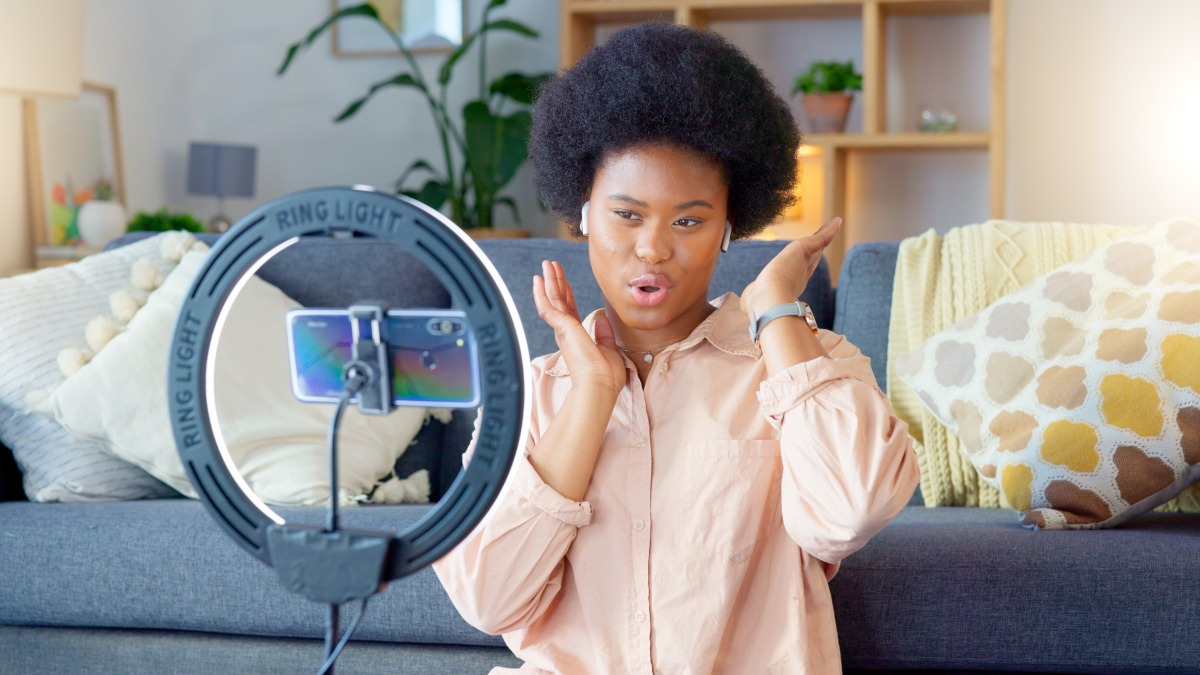
Turn the fields into shots that can be checked. Three are enough: a continuous unboxing take, so the shopper sees what actually arrives; a measurement on camera with a tape measure against the named measurement points, so 'size L fits up to 100 cm' becomes something the viewer can verify rather than something they have to trust; and one real-use action that proves the claim — the wash, the weight bearing, the fold, the ten-second assembly. Set the acceptance bar explicitly: at least three verifiable visuals per video, and no spoken claim that is not accompanied by footage. The rule that changes return rate is not 'be honest', it is 'every claim has a picture', because the first one is unenforceable and the second one can be checked in fifteen seconds before you approve the draft.
Deliver this as a material pack, not a restrictions list. Lead with what you are giving — the sample, the measurement sheet, a shot list, the claims you want repeated — and put the three required visuals inside that list rather than after it. Creators accept 'here is what makes this video work' far more readily than 'here is what you may not do', and the same three requirements survive the translation. Where a requirement genuinely costs the creator extra work, pay for it: a slightly higher commission on the SKU, or a second sample they can keep. The cost of buying compliance is a fraction of the cost of the returns it prevents.
Step 4 — Confirm the creator will shoot to the brief before the sample ships
Make confirmation a gate, not a request. Send the brief first and wait for a reply that says the creator will shoot to it; if the reply never comes, the sample does not ship. That single rule does more for return rate than any wording change, because the creators who will not commit to a brief are exactly the ones who will shoot whatever is easiest on the day. Put a printed copy of the brief in the sample parcel so the fields are in front of the camera, and build one revision round into the deal — approval before posting, not feedback after. For the creators already holding samples without having confirmed anything, do not fight about it: make the next sample conditional on the next brief, and move the ones whose return rate stays above your line for two consecutive cycles down a commission tier or out of the campaign, rather than cutting them off in one step.
Set the line before you need it. Pick a return rate threshold per category — apparel sellers often start around 12% to 15% on creator orders — and write down what happens at the threshold, what happens at one and a half times it, and who decides. A rule written in advance is a policy; the same rule written after a bad month is a fight. Review it once a month against the sheet from step one, and change one thing per cycle, not five, so you can still tell which change moved the number.
How DAMI keeps the brief, the sample and the return line in one record
DAMI brings an 8-million-plus creator database, competitor and competitor-store creator search, automated outreach tasks, AI-assisted outreach, sample management, campaign management, store analytics, and multi-store team dashboards into one place. Returns are decided in the brief and discovered in the statement, which means the fix has to be a record that connects the two. Three steps do it.
Step 1 — Attach the brief version to the creator record
Send the brief through the creator's record rather than through a chat thread, and keep the version number and the date the creator confirmed. Output: for every creator you work with, one record that shows which brief they agreed to and when, without searching messages.
Step 2 — Log the sample against the same record
Record which SKU shipped, on what date, and when the parcel was confirmed received, so the sample and the brief it belongs to sit together. Output: no sample leaves without a brief attached to it, and nothing has to be reconstructed from memory three weeks later.
Step 3 — Read returns back against the same record
Pull refund counts by creator and by SKU into the same view, beside the brief that produced them. Output: the three worst rows from step one appear next to the wording that caused them, so the next brief is edited against evidence rather than against opinion.

Frequently asked questions
Is a high return rate a reason to stop working with creators altogether?
Almost never. It is a reason to stop letting every SKU into the programme and to stop briefing with open-ended instructions. Sellers who cut the plan usually find that volume fell faster than the return cost did, because the orders that remained were the shelf ones they were already losing. Fix the three worst rows first and measure again before touching the roster.
The commission was already withdrawn before the refund cleared. Can I still recover it?
Practically, treat it as lost and price for it. You can ask the creator to return it or to offset it against the next settlement, and reasonable creators will, but the recovery rate is low and the conversation costs goodwill. The durable fix is upstream: settle on a cycle that lags the return window, so commissions are paid against orders that have already survived it.
Low-price SKUs naturally return more. Is there anything to do about it?
Yes, but it is a pricing decision, not a content fix. Either the price has to carry a returns provision, or the SKU comes out of the creator programme and goes back to the shelf and to bundles. The mistake is running a low-price SKU through creators at a commission set for a mid-price one, then being surprised by the margin.
Can I just do this in a spreadsheet?
For the first cycle, yes, and you should — one sheet proves the point faster than any tool. It breaks at the second step, not the first. Once you have more than a handful of creators and more than one store, the work stops being arithmetic and becomes lookup: which brief did this creator agree to, was the sample logged, what did this SKU return last month. That is the part a spreadsheet gives up on, because it has no memory of which version was sent to whom.
Conclusion
Every cost line in this article moves without anyone deciding to move it, and every one of them is cheaper to fix before the next campaign than after it. DAMI brings an 8-million-plus creator database, competitor and competitor-store creator search, automated outreach tasks, AI-assisted outreach, sample management, campaign management, store analytics, and multi-store team dashboards into one place.
One thing you can finish in fifteen minutes today: open last month's creator orders, sort by refund count, and find the three SKUs at the top. Open the brief you sent for each one and check whether it named a size in centimetres, a material weight, and who the product is not for. In most cases at least two of the three fields are missing. Fill them in, resend, and let the next cycle tell you whether the number moved.
Start with DAMI and run the next cycle from numbers you can defend.