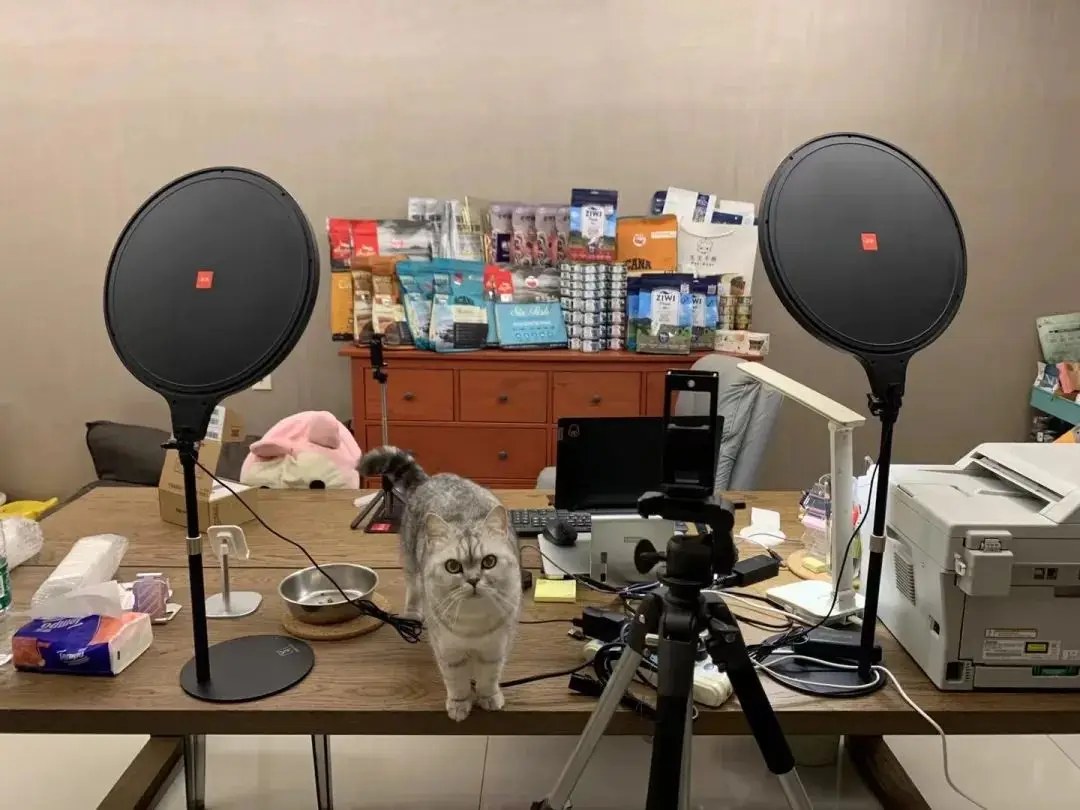
If you are a TikTok Shop Philippines seller who missed the 11.1 KLS deadline, has no platform creator traffic coming, and has to carry the eight days from 11.5 to 11.12 with their own livestream, the slot you wanted no longer exists — and the useful question is not how to get it back. It is what the remaining supply actually costs per usable piece of content, and whether that cost survives the margin. A livestream schedule is a fixed-cost business wearing a content costume. Each slot costs the same whether forty people watch or four hundred, so the only number that matters is orders per slot against the cost of running that slot. That is why the structure of the eight days matters more than the enthusiasm inside them, and why three SKUs beat twelve: a viewer who is shown twelve things buys none of them.
Take a ₱280 SKU that nets ₱19.52 after platform fees and a 12% return rate, and a room that costs ₱1,200 per four-hour session in host time and equipment. Each session needs 62 orders just to cover the room, so eight sessions need 496 orders, which is ₱138,880 of GMV, before the plan has made a single peso. Now open a Super CFV price for the room: the 30% discount is split 40/60, so you carry ₱33.60 of every order. On a ₱19.52 order that is a loss of ₱14.08 per sale, and four hundred sales across the eight days turn ₱7,808 of profit into ₱5,632 of loss. Run the same room price on a SKU that nets ₱84 because its cost ratio is 40% rather than 55%, and the same ₱33.60 leaves ₱50.40. Four hundred sales become ₱20,160. Identical discount, identical room, opposite result — the difference is which SKU you put the room price on.
The eight days have a shape, and it is not flat
The eight days have a shape, and the shape is not a straight line. Day one and day two carry the campaign badge and the highest browse traffic; the middle four days are where the audience is largest but the intent is thinnest; the last two days are where undecided buyers convert because the deadline does. A schedule that treats all eight days the same spends its host hours evenly across a curve that is not even, which means the expensive days get too little and the cheap days get too much.
There is a second reason to write the schedule down rather than decide each morning. A fixed slot builds a returning audience, and a returning audience is the only asset a self-run room accumulates. Viewers who know the room opens at eight come back at eight; viewers who have to guess do not. In a window where you have no platform creator traffic, that small returning group is the difference between a room that starts each session at twelve viewers and one that starts at forty.
Step 1 — Write eight rows before the window opens
Before 11.5, write eight rows: date, start time, end time, the three SKUs, the target order count, and who is hosting. Fill the target order count from the break-even number rather than from ambition — 62 orders per session if your SKU nets ₱19.52 and the room costs ₱1,200. If a row cannot reach that number on paper, it should not be a session; it should be a shorter session or no session at all.
Set the slot at the same hour every day and keep it there even on the days when nobody shows up, because the point of the first three sessions is not revenue, it is teaching the algorithm and the audience when the room exists. Four hours is the practical length: long enough for two full product cycles, short enough that a host can hold energy across eight consecutive days without the last three sessions collapsing.
Before you lock the eight rows, put the SKU economics next to the schedule so each slot's three products are chosen by margin rather than by preference. Get the eight-day slot planner from a DAMI specialist and check every SKU's net per order against the session's break-even count, because the row that looks weakest on paper is usually the one where a ₱19.52 SKU got a room price it could not carry.
Step 2 — Three SKUs a session, each with a different job
Three SKUs per session, with three different jobs. One is the traffic SKU: cheap, high-turnover, no discount needed, its job is to keep the room's viewer count from falling in the first twenty minutes. One is the margin SKU: the thing you actually want to sell, shown properly, with time spent on it. One is the basket SKU: priced so that adding it to the margin SKU pushes the order over your free-shipping or voucher threshold. Twelve SKUs in four hours means each gets twenty minutes, which is not enough time to explain anything and not enough repetition for anyone to remember.
Rotate the three SKUs in a loop rather than introducing them once: traffic, margin, basket, then back to traffic. A viewer who arrives at minute ninety has to be able to see the margin SKU without waiting until minute two hundred. Two full loops in four hours is the target, and the second loop is where most of the sales happen because the audience at that point has already heard the pitch once and is deciding rather than learning.

Step 3 — Put the room price only on the SKUs that can carry it
Split your SKUs into two piles before you open any room price. Pile one is everything that nets ₱84 or more per order, which usually means a cost ratio near 40% or a ticket size well above ₱280. Pile two is everything that nets around ₱19.52. The Super CFV room price belongs only on pile one, because ₱33.60 of seller-funded discount is affordable at ₱84 and fatal at ₱19.52. If pile one is empty, the honest conclusion is that this campaign has no room price to offer, and the room should compete on demonstration and schedule instead.
Pile one is usually smaller than sellers expect, often three or four SKUs out of forty. That is fine, because a room only needs three SKUs a session. The mistake is filling the slot from pile two and calling the resulting discount a marketing cost, when it is actually a unit-level loss that repeats every time the room sells one. A room that sells four hundred units at a ₱14.08 loss is not buying awareness, it is buying a bigger problem.
Step 4 — Why two sessions a day usually costs more than it earns
Two sessions a day looks like twice the coverage and is usually twice the cost. The host hours double to ₱2,400 a day, but the audience does not split into two equal halves: the same people who would have watched four hours now watch two, and the second session starts with a smaller room because the first one already took the peak hour. At forty orders per session instead of sixty-two, each session loses ₱431 against the room cost, and eight days of that is ₱6,896 of avoidable loss on top of the host hours you doubled.
If you do want more coverage, extend one session rather than adding a second. A fifth and sixth hour on the same room carries no additional setup cost, no second host handover and no audience split, so the marginal hour only has to cover the host's hourly rate. The test is simple: if the fourth hour is still producing orders above the per-hour break-even, a fifth hour is cheaper than a second session by a wide margin.
Where DAMI fits: three moves that keep the schedule and the margin together
DAMI brings an 8-million-plus creator database, competitor and competitor-store creator search, automated outreach tasks, AI-assisted outreach, AI video creation, sample management, campaign management, social media management, store analytics, and multi-store team dashboards into one place. The eight rows in this piece are a schedule, and a schedule is only useful if the products behind each row are read at the same time. That is the part that gets messy when the SKU list lives in one place and the numbers live in another.
Step one: read the SKU margin in one place
Pull store analytics so cost ratio, average order value and return rate sit next to each SKU instead of in a separate sheet, then sort by net per order. Output: the two piles, written down, with the cut line at ₱84 visible enough that nobody argues about it during the window.
Step two: build the eight slots as a campaign, not as a calendar note
Lay out eight sessions with their three SKUs, target orders and host in one plan, and keep the plan visible to whoever is on the room. Output: a schedule that survives the first bad day, because the person hosting can see that day three was never meant to be the peak.
Step three: compare the room against the videos around it
Put the room's hourly orders next to the traffic coming from your own short videos and any creator content still running, so you can tell whether a weak session is a room problem or a traffic problem. Output: a daily read that decides whether tomorrow's slot gets a creator boost or a schedule change.
Questions sellers ask about running the room alone
I have no audience at all. Do the first sessions still make sense?
Yes, but they should be scoped as training rather than as selling. The first three sessions teach the algorithm who to show the room to and teach your host what the questions are, and neither of those happens if you skip them. Expect them to lose money against the room cost and budget for that, rather than treating a weak day one as evidence the plan does not work.
Should the room price run all eight days?
Only on the SKUs in the high-margin pile, and only in the slots where you are pushing those specific products. A room price that stays on all day, every day stops being a reason to come and becomes the new baseline price, at which point you are just selling at a 12% discount and calling it a campaign.
How do I handle returns from livestream orders?
Assume the room's return rate is higher than your listing's, because impulse buying converts faster and regrets faster. In the Philippines, change-of-mind returns carry shipping both ways for the seller, with a monthly cap of two per customer, so a room that sells on urgency pays for that urgency twice — once in the discount and once in the return.
What if my whole catalogue is in the low-margin pile?
Then this campaign has no room price to offer, and you should compete on the two things that do not cost margin: demonstration and schedule. Show the product working for four hours, answer the same twelve questions, and hold the slot. A room with no discount but a reliable schedule usually beats a room with a discount and an irregular one, because the first one accumulates an audience.
Can I skip the room and put the budget into creators instead?
You can, and it is a legitimate choice, but it is a different plan with a different risk. A creator buys reach on a date you do not control, and the eight days are short enough that a creator who posts on day six leaves you two days of selling. A room buys a floor under the whole window. If the choice is binary, the room is the safer of the two in a window this short.
The number to check before your next session
The most expensive thing in this window is not a creator. It is not knowing which creator works, while still paying for all of them. DAMI brings an 8-million-plus creator database, competitor and competitor-store creator search, automated outreach tasks, AI-assisted outreach, AI video creation, sample management, campaign management, social media management, store analytics, and multi-store team dashboards into one place.
Open your product list and write one number next to each SKU: net per order after fees and returns. Then mark which of them clear ₱84. Fifteen minutes. The count of marked SKUs is how many room prices you can afford to offer this campaign, and if it is three, your eight sessions just wrote themselves.
Start with DAMI while the numbers are still small enough to read.