If you are using an ai product video maker to fill the Thai content gap with free-tool energy: two prompts, a batch of sellable clips, and a posting calendar that holds through peak season, Thai buyers scroll hardest in the weeks when creator schedules are fullest, and the free AI workflows going viral prove clips can be batched before the rush arrives. The Thai content gap has a number now. A creator walked through making AI product videos with free tools — no studio, no editor, two prompts per product — and the post collected 52,500 likes. Another free-AI workflow post in the same corner pulled 25,000 with the same promise: two prompts, one clip. Behind the likes sits a very concrete seller problem: Thai peak season runs from the 11.11 spike through New Year, buyers scroll hardest in exactly the weeks when creator schedules are fullest, and a shop that cannot produce an ai product video maker pipeline of its own goes quiet at the worst possible moment. The tools are free. The missing piece is a production process.
The cost of producing nothing during the gap shows up three ways. First, lost scroll real estate: peak-week traffic concentrates on accounts that post daily, and a shop posting twice a week is functionally invisible to half the buyers who decide in December. Second, creator dependency: when your own pipeline is empty, every launch waits on busy creators whose rates rise exactly when demand rises. Third, the compounding loss — content banks age, so the clips you did not batch in November are missing from the December shelf, and no late push recreates them. The 52.5K-like workflow exists because sellers already feel all three losses and are hunting for a way out that does not add a studio budget.

Why Batching AI Clips Beats Hiring During the Thai Peak
Why does a batched ai product video maker pipeline beat hiring during the peak? Because it decouples content supply from creator supply at exactly the moment both are scarce. Studio shoots cost money and calendars; creator posts cost waiting and rising rates; generated clips cost prompts and minutes. The Thai market rewards posting frequency during the December rush, and frequency is a supply problem — solvable in advance. The 52.5K-like post is popular not because the clips are masterpieces but because they are sufficient: clean product truth, real hooks, published daily. Sufficiency at scale is what fills a shelf; perfection is what leaves it half empty.
Keep the free-tool energy in the workflow, though. The viral posts celebrate tools that cost nothing to try — adopt the same spirit internally: test the prompt template on five products before committing the calendar to it. Five clips tell you whether the output is shelf-ready or needs one more prompt iteration, and that test costs an evening.
Step One: Map the December Clip Grid Before Generating Anything
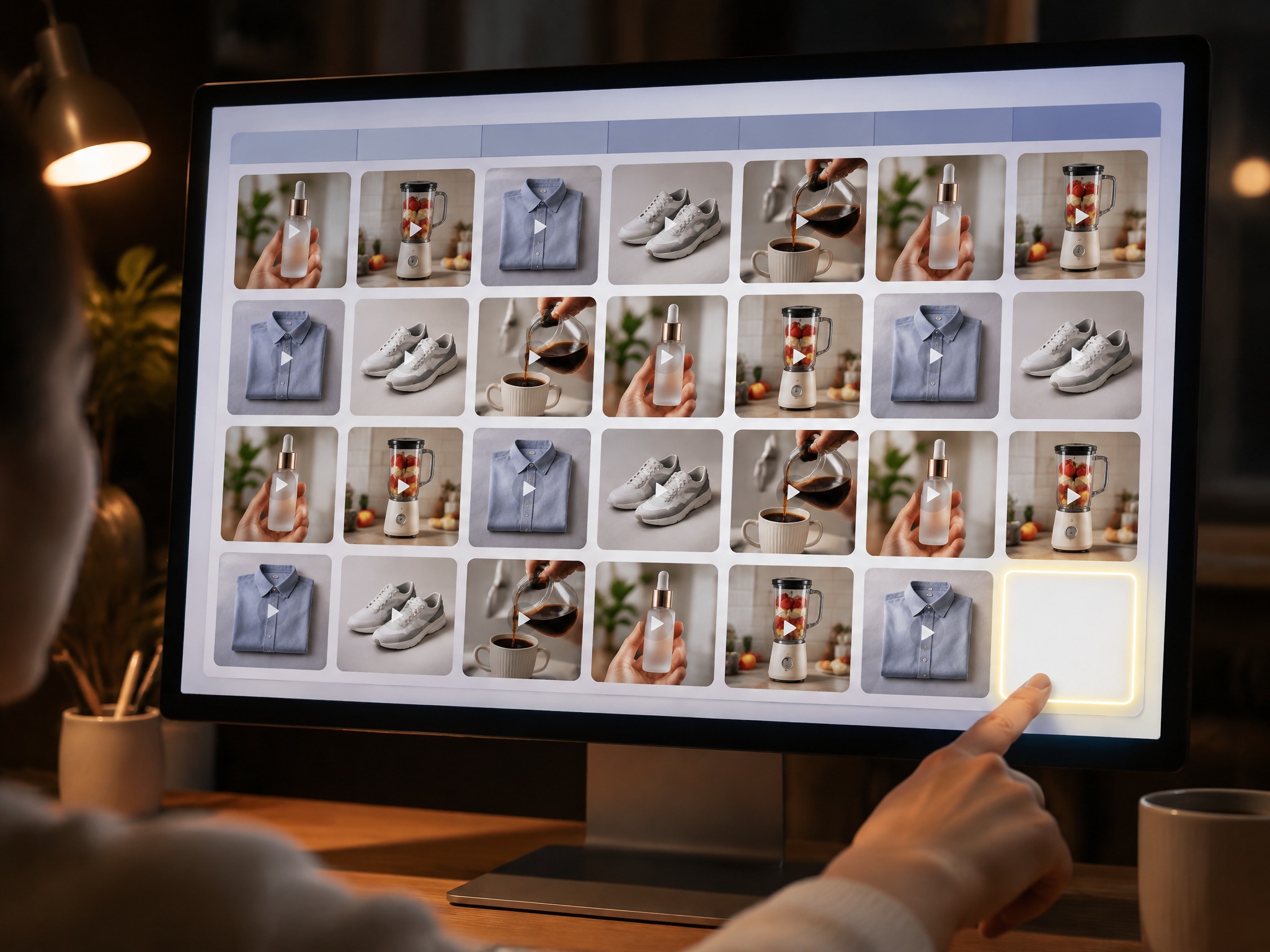
The first step is picking the clip slots the shelf actually needs. A December content calendar for a Thai shop is not one video — it is a grid: product-in-use clips for the feed, hook-first clips for ads, problem-solution clips for the weeks before the 12.12 and New Year spikes. Map the grid first: how many slots per week, which clip type per slot, which product per week. A typical Thai shop needs fifteen to thirty clips to cover a five-week peak without repeating itself. Naming the slots before generating anything is what turns the ai product video maker from a toy into a supply chain — every generation now has a named place to land.
Reserve two slots per week for creator content even at peak. The generated grid carries the frequency; the creator slots carry the faces and the trust. Shops that go fully synthetic for December tend to feel interchangeable by New Year.
Before generating anything, draft the two-prompt template so every clip starts from the same spine. Prompt one describes the product in use: who holds it, what problem it solves, the close-up moment. Prompt two describes the hook: the first three seconds, the on-screen problem, the payoff. Two prompts per product is the whole free-workflow secret behind the 52.5K-like post — repetition is what makes it a pipeline instead of a stunt. Lock the template into one sheet with a column per product and a slot per clip type. Want the same sheet wired to a generator that batches the clips and files them by SKU and date? register for DAMI and contact our support team for the two-prompt batch sheet, and the December shelf fills while you sleep.
Step Two: Batch From the Two-Prompt Template
The second step is writing the two-prompt template per product and batch-generating against the grid. For each hero SKU, write prompt one (usage scene, hands, close-up) and prompt two (hook, problem, payoff), generate three variants per clip type, and pick the best of three — variation is where free tools earn their keep, since each run costs minutes, not money. Batch the whole week in one sitting: the 25K-like post proved two prompts produce a clip, so a weekend session at the template produces the fortnight. Log every clip against its slot — SKU, type, date — so the ai product video maker output lands as inventory, not as a folder of maybes.
Watch the first three seconds hardest. Generated clips rarely fail on product truth; they fail on the hook — a slow open that a scrolling thumb skips. If a variant opens with the product already in motion or the problem already visible, it earns the slot; if it opens with a logo, regenerate.
Step Three: Schedule the Grid on Thai Peak Rhythm
The third step is scheduling the batch onto the calendar with Thai peak rhythm in mind. Front-load the weeks before 12.12 with problem-solution clips — that is when Thai buyers are researching and comparing — and hold the best hook clips for the spike weeks themselves, when attention is highest and the cheapest click converts. Post daily through the peak; the grid exists precisely so that no day depends on anyone's mood. Keep two regenerated clips on the bench as spares — when a scheduled post underperforms or a platform rejects a variant, the bench clip replaces it in minutes and the calendar never shows a hole. An ai product video maker pipeline is judged by the days it never misses.
Match clip language to buyer language. Thai captions on generated clips should read like Thai reviews, not translated specs — the viral free-workflow creators write their prompts in Thai precisely so the output sounds native. A clip that sounds translated loses the scroll in the same three seconds a bad hook does.
Step Four: Pair the Shelf With the Creator Roster
The fourth step is pairing the shelf with the creator roster — the two supply lines meet on the calendar. Send creators your generated clips as reference edits: the hook that worked, the close-up framing that converted. Creators matching a proven template post faster and perform better, and your grid absorbs the days their schedules miss. Track which slot types actually sell — by week four you will see whether hook-first or problem-solution clips carry the Thai December — and shift generation volume toward the winner while the peak still has weeks left. The ai product video maker does not replace the roster; it removes every empty day between roster posts.
Archive the season properly: at peak's end, mark which clips earned their slots and keep the prompt template per winning SKU. Songkran and the next big window will reuse the spine, and next season's batch starts from evidence instead of scratch.
Run the Whole AI Product Video Pipeline in One DAMI Screen
DAMI brings an 8-million-plus creator database, competitor and competitor-store creator search, automated outreach tasks, AI-assisted outreach, AI video creation, sample management, campaign management, social media management, store analytics, and multi-store team dashboards into one place. The manual version of this pipeline — templates in one doc, clips in one folder, slots in another sheet — collapses around week two, when nobody remembers which clip went to which slot and regeneration starts duplicating work. DAMI's AI video creation closes the loop: build the two-prompt template per product, batch the clips, and land each one on the content calendar with SKU and date attached. The same screen shows which slots are filled, which are empty, and which creator post the empty slot is waiting for — so the ai product video maker output and the roster share one shelf instead of two forgotten folders.
Map the December clip grid before generating
Count slots per week, assign a clip type and product per slot, and name them. Output: a five-week grid of fifteen to thirty named slots that every clip has to fill.
Batch-generate from the two-prompt template
Run prompt one and prompt two per hero SKU, take the best of three variants, and log every clip against its slot with SKU and date. Output: a filled shelf of shelf-ready clips, bench spares included.
Schedule the grid and pair it with the roster
Front-load problem-solution clips before the spikes, hold hook clips for peak weeks, and share proven hooks with creators as reference edits. Output: a December calendar with no empty days and a roster that posts on proven templates.

Frequently Asked Questions
Do AI product videos actually convert Thai buyers?
When they open with a real hook and native Thai captions, yes — the 52.5K-like post exists because creators are already shipping these clips. Conversion follows the first three seconds, not the production budget.
Will TikTok suppress AI-generated content?
Plain product-truth clips with honest captions perform like any other content. Problems come from fake claims and synthetic voices pretending to be people — keep clips factual and the grid stays safe.
How many clips should I batch before the peak?
Fifteen to thirty to cover five weeks without repeats, plus two bench spares. The two-prompt template makes that a weekend of work, not a production month.
Do I still need creators at all?
Yes — creator slots carry faces and trust while the generated grid carries frequency. The pipeline removes empty days; it does not remove people.
What if a generated clip looks off?
Regenerate that variant — each run costs minutes. Bench spares absorb any clip that fails review, so the calendar never shows a hole.
Fill the First Five Slots This Week
The expensive habit here is not skipping video. It is letting the December shelf depend on a calendar that belongs entirely to other people. DAMI brings an 8-million-plus creator database, competitor and competitor-store creator search, automated outreach tasks, AI-assisted outreach, AI video creation, sample management, campaign management, social media management, store analytics, and multi-store team dashboards into one place.
Today, map the December grid — slots, types, products — and write the two-prompt template for your top three hero SKUs. Generate five test clips tonight with an ai product video maker, pick the best of each, and you enter the Thai peak with a shelf that fills itself instead of a calendar that waits on everyone else.
Start with DAMI while the two-prompt template can still fill fifteen to thirty slots before the spike.