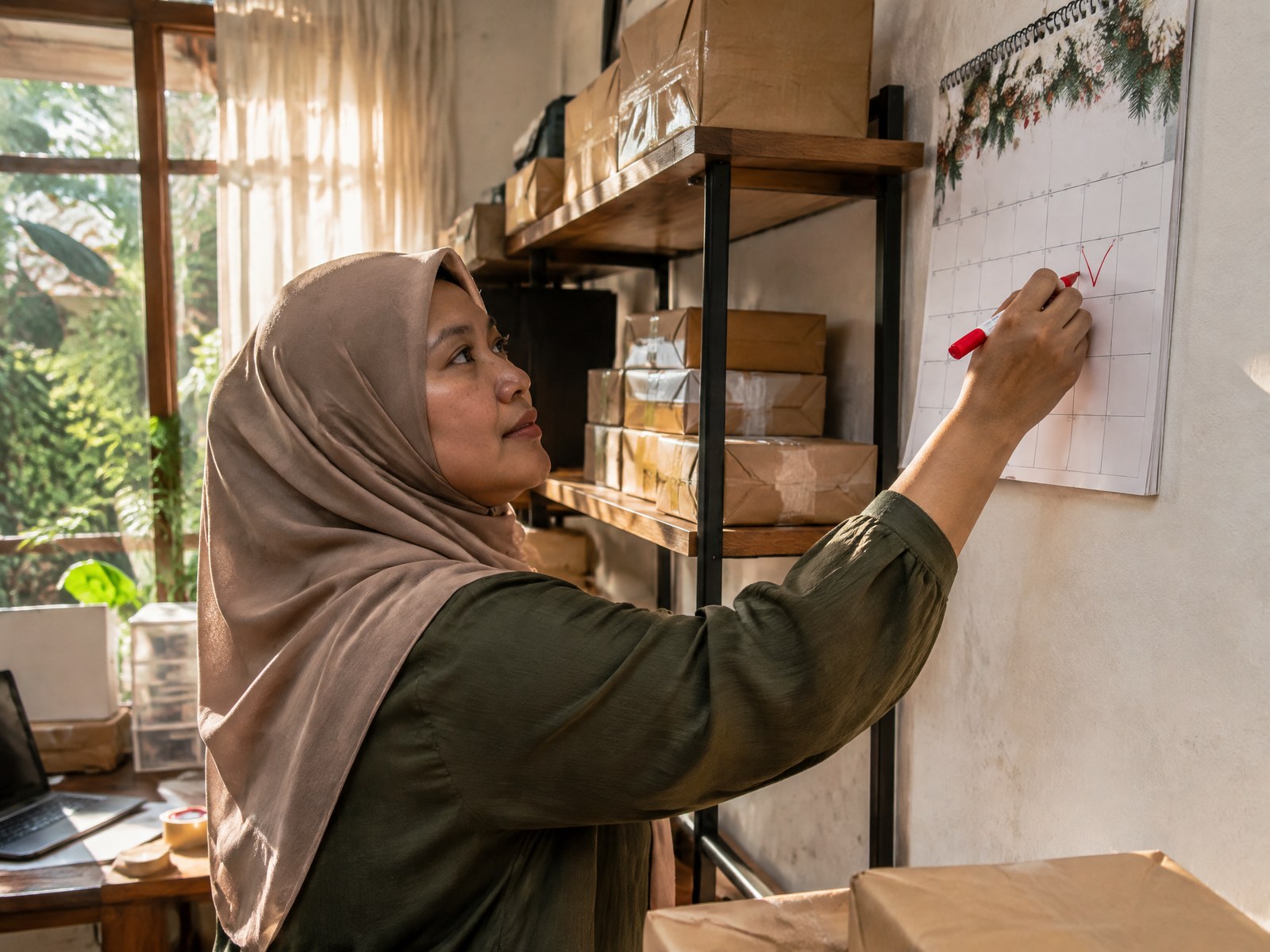
If you are sample management: track every KOC sample from shipment to posted video, so Vietnamese campaigns stop losing content inside the delivery stack, the year-end shopping weeks are where Vietnamese KOC content pays out, and the gap between a signed creator and a posted video is a stack of untracked packages. The post said it plainly: booking one hundred KOCs in a month is not the hard part — managing them is. It pulled a few dozen likes, but the comments are where the real story sits, and one of the recent posts underneath it is the same complaint in different words: creators who received the sample and never posted. Vietnamese sellers run into this at scale, because the KOC scene moves fast and the sample volume moves faster. The gap between a signed creator and a posted video is a stack of untracked packages, and that gap is exactly what koc sample tracking is built to close.
Price the gap and it stops being abstract. Assume the average Vietnamese KOC sample package costs VND 150,000 including shipping. One hundred KOCs means VND 15 million out the door. If a third of the samples land with creators who never post — and the recent complaint posts suggest that rate is realistic — VND 5 million of product bought zero content, and the campaign enters its peak week missing the very videos it paid for. The quieter loss compounds: silent KOCs occupy slots that posting KOCs could have filled, and no one knows which names to drop because nothing was ever written down.

Why KOC Sample Tracking Decides Whether the Samples Ever Post
Why does a ledger beat memory and chat history? Because sample promises decay silently. The day a package ships, the promise is vivid; ten days later the seller has thirty conversations half-remembered and no way to tell which samples are late versus lost versus forgotten by the KOC. A recent Vietnamese post about creators who receive samples and never post drew agreement precisely because every seller in the comments had a different version of the same blind spot. KOC sample tracking works because it moves the promise out of chat and into a row with a date — and a promise with a date is one you can act on without awkwardness, because the ledger, not you, is asking.
One Vietnamese-specific note: the KOC pool runs on volume and goodwill at once. Many KOCs juggle several shops' samples in the same week, and the one who forgets yours usually forgot the date, not the deal. That is why the promised post date column matters more in Vietnam than in bigger markets — a gentle reminder anchored to a date reads as professionalism, while a reminder anchored to nothing reads as nagging. The ledger gives every follow-up a factual anchor, and that anchor is what keeps the relationship warm while the package is still moving.
Step One: Make Every Shipment Land in the Ledger
The first step is making every shipment land in the ledger on the day it ships. Write the row before the box closes: KOC name from the signed list, ship date, tracking number, and the promised post date agreed in the chat — if no date was agreed, the row gets the seller's own default, seven days from delivery confirmation. Vietnamese shipping is reliable enough that the tracking number itself tells you when a package landed, so the ledger always has one checkable fact per row. One hundred rows at the end of the month is not a burden; it is the campaign's real table of contents.
A note on honesty inside the ledger: write the promised date the KOC actually gave, not the date you hoped for. A padded promise makes every follow-up sound accusatory and turns the seven-day rule into an argument. If a KOC says two weeks, the row says two weeks — the ledger is a shared fact base for koc sample tracking, and the moment it contains optimistic fiction, neither side trusts the reminders it generates.
Start the fix with one sheet: a sample ledger, five columns — KOC name, ship date, tracking number, promised post date, and status. The ledger turns the stack of untracked packages into a queue you can read, and the promised post date is the column most sellers skip even though it is the only one that creates a deadline. Fill the ledger for every shipment from today forward; do not backfill history. Twenty minutes per week of ledger discipline is what separates the seller who booked one hundred KOCs from the seller whose one hundred KOCs actually posted. Want that five-column KOC sample tracking ledger as a ready sheet, with the status column wired to reminders? register for DAMI and contact our support team for the five-column KOC sample tracking ledger, and every shipment from the sheet becomes a tracked task that follows its own package.
Step Two: Sort the Ledger Into Three States Every Monday
The second step is sorting the ledger into three states every Monday. State one: in motion — shipped, in transit, or delivered within the promise window. State two: silent — delivered past the promised post date with no video and no reply to one reminder. State three: stalled — delivered, one reminder sent, still nothing after another week. Three states, no more, because the state decides the action and the action decides the week: motion needs nothing, silence gets one friendly date-anchored nudge, and stalled names enter the reallocation conversation. The Vietnamese seller who booked one hundred KOCs needs this sort every Monday, because fifty packages in motion and thirty already silent are two completely different weeks.
Watch one ratio while sorting: the share of rows that reach silent state within fourteen days of delivery. Below one in five, your KOC pool is healthy and the ledger is mostly bookkeeping. Above one in three, the problem is upstream — the sign-up conversation never set an expectation, and more nudging will not fix what the first message should have. Vietnamese sellers who track this ratio catch a bad recruitment wave weeks before it eats the campaign budget.

Step Three: Run the Seven-Day Follow-Up Rule on Every Silence
The third step is the seven-day follow-up rule, applied uniformly so it never reads as personal pressure. Every row that goes silent gets one message anchored to the ledger: the sample landed on a date, the promised post date has passed, and one line asks whether the angle still works — reschedule or return, either is fine. One message, once. Vietnamese KOCs answer date-anchored reminders at visibly higher rates than vague check-ins, because the message carries a fact instead of a mood. Rows that respond move back to motion with a new promised date written into the ledger; rows that do not move to stalled automatically, without another minute of the seller's attention.
Set the follow-up tone before the first package ships, and the rule stops feeling like surveillance. The sign-up message can say it once, plainly: samples come with a ledger date, reminders are automatic, and no one takes it personally. Vietnamese KOCs who hear the rule at sign-up treat the reminder as the system doing its job; KOCs who first meet the rule on day eight of silence treat it as an ambush. The difference is one sentence at recruitment, and it costs nothing.
Step Four: Turn Stalled Rows Into Reallocation Decisions
The fourth step is the reallocation decision, which is what makes the ledger earn its keep. Every month, the stalled rows become a decision list: one more sample with a smaller product, a swap into a different content format, or a clean drop from the roster. The one hundred KOCs the Vietnamese seller booked are not a fixed squad — they are a portfolio, and the ledger is what turns the portfolio into decisions instead of vibes. Reallocation also protects the posting KOCs: names that deliver get the next samples first, and the budget stops funding silence. This is the quiet compounding effect of koc sample tracking — every month the same sample budget buys more posted videos than the month before.
One last habit protects the whole loop: thank the posters in writing. When a row flips from motion to posted, the same ledger that chased silence sends one line of genuine appreciation and, where budgets allow, a small second sample with no conditions attached. Vietnamese KOCs who feel seen post again; KOCs who feel extracted post once. The ledger's real product is not recovered samples — it is a roster that keeps choosing to post for your shop instead of the next one.
Run the Whole KOC Sample Tracking Ledger Inside DAMI
DAMI brings an 8-million-plus creator database, competitor and competitor-store creator search, automated outreach tasks, AI-assisted outreach, AI video creation, sample management, campaign management, social media management, store analytics, and multi-store team dashboards into one place. Running five columns across one hundred KOCs, every week, by hand is where Vietnamese sellers quietly give up — the method works, but chat screenshots do not scale into decisions. DAMI's sample management carries the same koc sample tracking ledger inside the workflow: each shipment becomes a tracked record with the KOC attached, delivery status updates from the tracking number, promised dates turn into reminders, and the Monday sort is a filter instead of an hour of scrolling. The goal is not another dashboard; it is the same five-column discipline, applied automatically, so the sample budget buys posted videos instead of unopened boxes.
Log every shipment the day it ships
Record KOC, tracking number, and promised post date into DAMI sample management before the box closes — no separate sheet, no end-of-month reconstruction. Output: one hundred rows that each carry one checkable fact.
Let the three states run themselves
Delivery status and promised dates drive motion, silent, and stalled automatically, so the Monday sort is three filtered lists instead of one hundred chat threads. Output: a weekly sort that takes minutes and misses nothing.
Close the loop with reminders and reallocation
Send the date-anchored reminder from the same screen, record replies as new promised dates, and move stalled names into the monthly reallocation list. Output: every silent sample either posting, rescheduled, or deliberately cut — none of them forgotten.
Frequently Asked Questions
How many KOCs can one sample ledger realistically handle?
Around one hundred active rows per coordinator, which matches the booking volume in the Vietnamese post. Past that, the Monday sort itself needs a second person or a system that filters for you.
What promised post date should I write if the KOC gives none?
Seven days from delivery confirmation. Write it into the row and say so at sign-up — a default announced in advance is a system, while a default invented later reads as a trap.
Should I reship to a KOC who went silent once?
Not before the reallocation conversation. One silence is a date problem; two silences is a portfolio decision, and the second package waits until the first video actually posts.
Does sample tracking hurt the creator relationship?
The opposite, when the rule is announced at sign-up. Date-anchored reminders read as professionalism, and KOCs who know the system exists stop feeling chased — they know exactly when and why a message will arrive.
Is a paid tool necessary, or can this stay manual?
Twenty rows survive in a notebook. One hundred rows across a monthly reallocation cycle need automatic status changes and reminders, and that maintenance is exactly what the sample management view removes.
Open Your Sample Ledger Today
The expensive habit here is not booking too many KOCs. It is letting samples leave the warehouse with no row, no date, and no one who will ask twice. DAMI brings an 8-million-plus creator database, competitor and competitor-store creator search, automated outreach tasks, AI-assisted outreach, AI video creation, sample management, campaign management, social media management, store analytics, and multi-store team dashboards into one place.
Today, open your signed KOC list and start the ledger with the samples already in transit — name, ship date, tracking number, promised post date, status. Announce the rule once in your sign-up chat, then run the first Monday sort this coming Monday. The Vietnamese seller who booked one hundred KOCs already did the expensive part; koc sample tracking is how that booking turns into videos instead of boxes.
Start with DAMI while every package shipped this week can still carry a promised post date into the ledger.