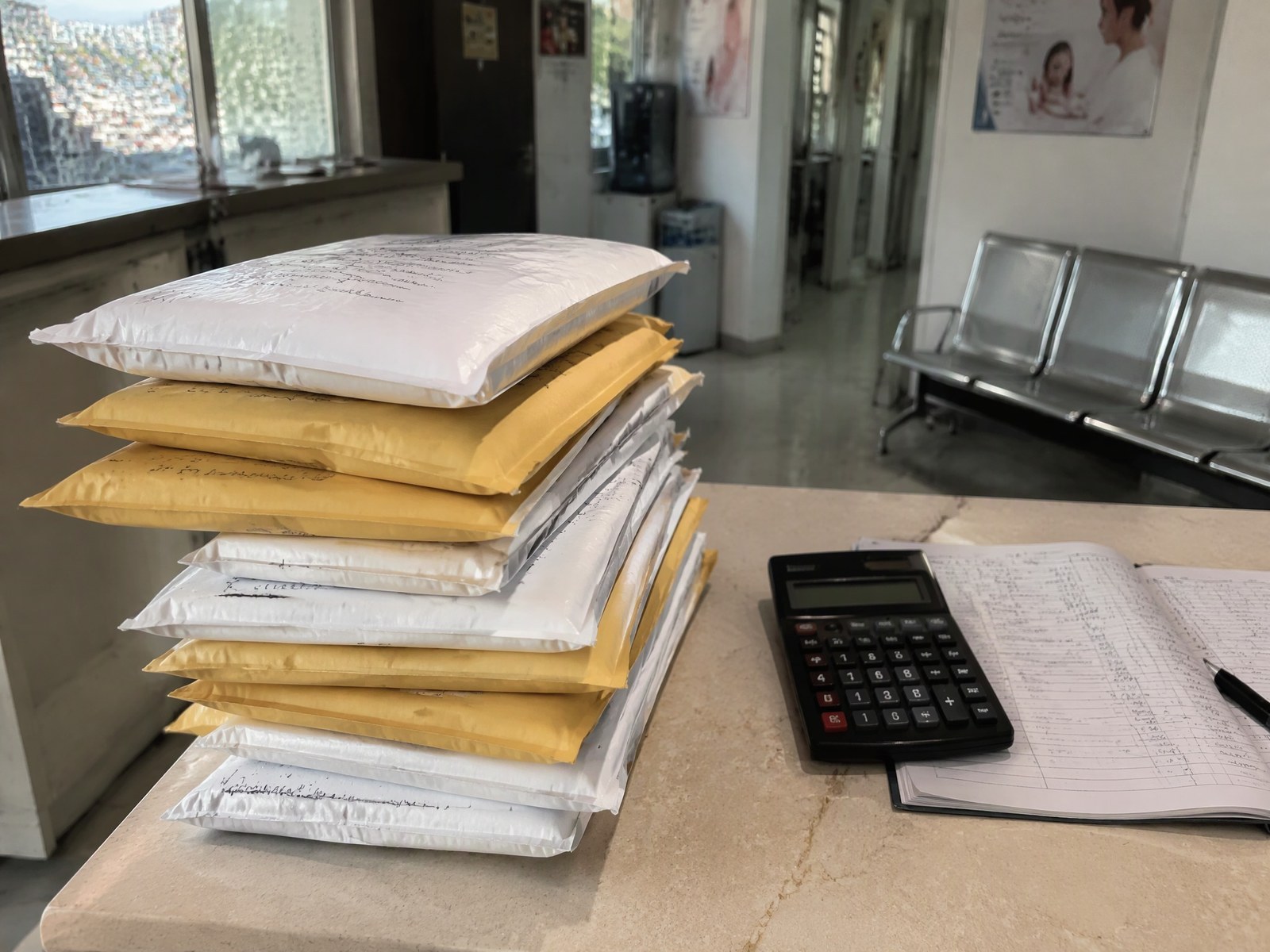
If you are a Philippines TikTok Shop seller in the middle of the -ber months run, whose affiliate applications quadrupled since October, and who has been shipping samples on instinct with no record of what went where, the peak window does not reward a better plan. It rewards the right order of operations, executed at the right hour. October changed the volume and nobody changed the system. In the -ber months an affiliate application stops being a weekly decision and becomes a daily stack of couriers, and the seller who ships on instinct ends November with a number they cannot explain: forty samples out, three videos in, and no idea which thirty-seven never opened the box. TikTok Shop sample tracking is not a spreadsheet luxury at this time of year. It is the difference between a sample budget that compounds and one that evaporates.
Run the untracked month at Philippine numbers. Average sample in the beauty-and-accessories band: ₱240 of goods plus ₱190 of metro-to-province shipping, ₱430 landed. Forty samples is ₱17,200. Three posted videos, each a fair ₱5,500 GMV at a 28% contribution margin, return ₱4,620. The month is ₱12,580 underwater before you count the hours spent answering 'where is my sample?' with no answer to give. Now the tracked version: the same ₱17,200 spent on 14 creators who committed in writing to a posting window — 12 shipped, 9 posted, same ₱5,500 per video. That is ₱49,500 of GMV and ₱13,860 of margin on the identical budget, plus a never-ship list of 26 names that makes next month cheaper again. Same money, triple the videos, and the list you build this month is the reason December does not repeat November.
-ber months quadrupled your sample volume and nothing else changed
Sample tracking matters because a sample is the only marketing spend in your store that ships before the commitment exists. Ads can be paused mid-flight; a parcel cannot. Every silent creator is spend that already left the building, and the only way to influence it after the fact is to know — parcel by parcel — where it is and what was promised when it left. Untracked, the thirty-seven silent parcels are invisible and the month repeats. Tracked, they become a list of names with dates, and a list of names with dates is actionable in a way that a feeling never is.
The loop has five moments, and four of them happen before the parcel moves. Moment one: the commitment, in writing, with a window. Moment two: the log entry — creator, SKU, variant, courier, date sent. Moment three: the box contents — product, card with the posting window and commission reminder, the variant you want pushed. Moment four: the ship-day confirmation message. Moment five, day seven: the chase. Sellers who only do moment five are chasing; sellers who do all five are running a sample program that produces videos on schedule.
The five-moment sample tracking loop that turns samples into videos
Start the log at the commitment, not at the courier. The entry that matters is the one written when the creator says yes: creator handle, SKU and variant agreed, posting window agreed, platform for delivery. A window agreed in chat and never written down is a window that will be renegotiated silently on day nine. One row per parcel, five columns, and the whole system fits in the time it takes to print a label — this is the entry fee of TikTok Shop sample tracking, and it is the only part that cannot be fixed later.
Two fields sellers leave out and regret: the variant, and the agreement screenshot's date. The variant matters because a creator who posts the wrong shade produces a video you cannot use in the campaign, and you cannot prove what you sent without the row. The date matters because 'you said next week' is a negotiation tactic, and a dated screenshot in your log ends it in one reply.
The sample log is one tab, eight columns: creator, SKU, variant, courier, date sent, tracking number, posting window, status. Get the sample-tracking log template from a DAMI specialist and keep it open in a pinned tab, because the log only works if the next row is written at the moment of the yes, not reconstructed from courier receipts on Sunday night.
Start the log at the yes, not at the courier
The box is media, not packaging. Inside every sample goes: the product, a printed card with three lines — the posting window with a real date, the commission reminder with the rate, and your message handle — and nothing else. Sellers who stuff samples with flyers and discount codes are spending the creator's attention on your other products when the only conversion that matters is the video. The card's date is the quiet workhorse: a creator who reads a real date treats the window as real, and a real window posts on time.
One upgrade that costs a peso and returns hours: write the creator's handle on the card, not just yours. When the parcel moves through a household — siblings, staff, a shelf of unopened mail — the card that says who it belongs to is the one that ends up with the right person. Misdelivered samples inside a creator's own home are a real category of silence, and it is free to fix.
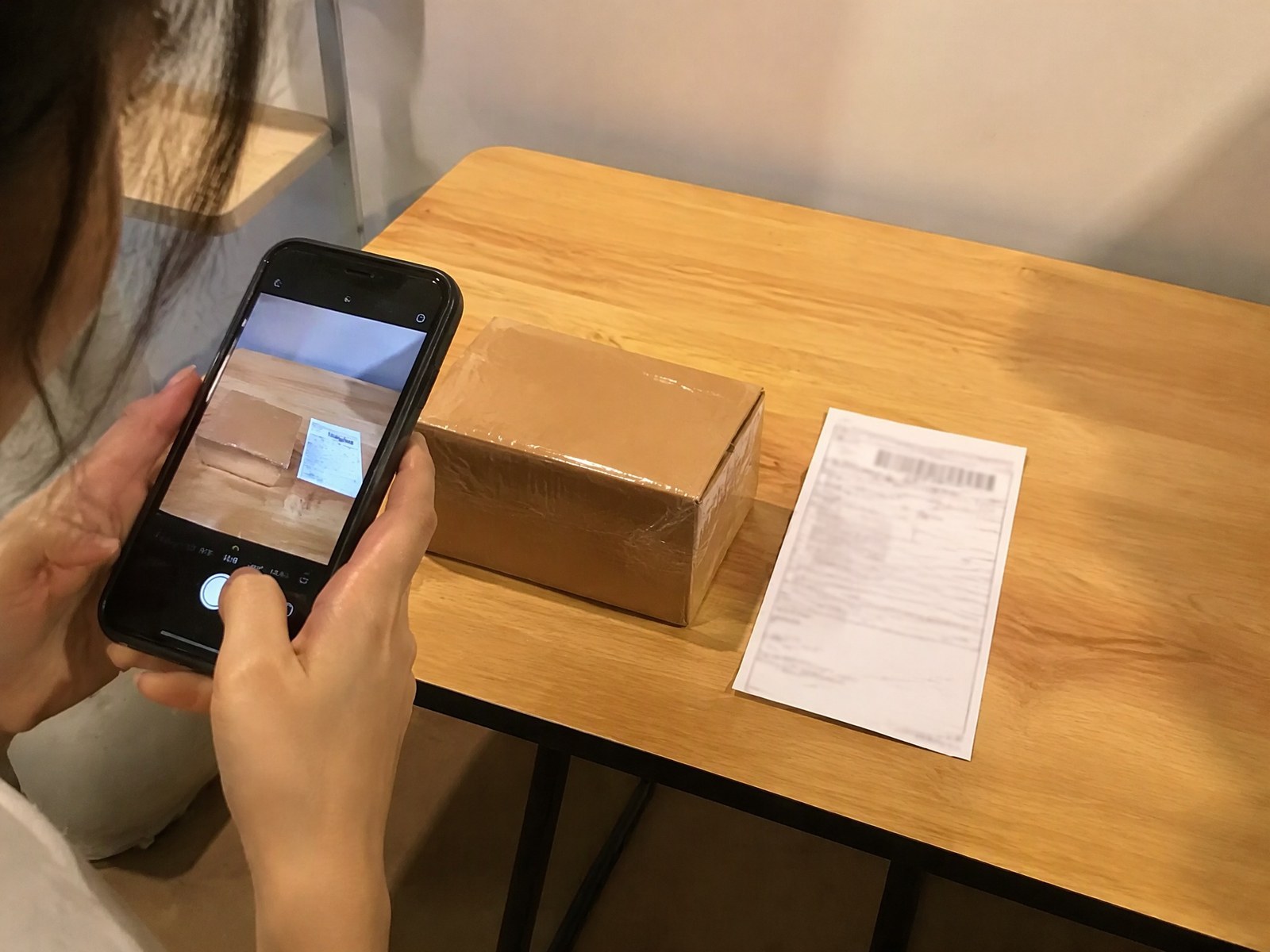
The box is media: what goes inside every sample
Day seven is the chase day, and it works because of timing, not wording. The message is one line: parcel landed Tuesday, window closes Friday, anything I can do to help the shoot. Sent on day three it is nagging; sent on day twelve it is a recovery mission; sent on day seven it reads as service. Expect roughly half of the silent ones to come back at day seven — not because your message convinced them, but because your message arrived while the parcel was still on the desk instead of under it.
Chase in the channel where the commitment was made. If the yes happened in TikTok messages, chase there; moving the conversation to WhatsApp or email mid-window breaks the thread the creator is already tracking and adds one more place for your message to be the unread one. One channel, one thread, one window — the chase is a reminder, not a renegotiation.
Day seven is the chase day, and timing does the work
The never-ship list is the compounding asset, and it is built one silence at a time. A creator who takes the sample and posts nothing — after the day-seven chase, after the confirmation message, after fourteen days — goes on the list with the date and the SKU. The list does two jobs: it screens next month's applications in one lookup, and it protects you from the specific seller mistake of re-shipping in December to a creator who already consumed a ₱430 sample in November without posting. Sellers with a never-ship list enter the next peak with a cheaper sample budget every cycle; sellers without one re-buy their own mistakes annually.
One caveat that keeps the list honest: the never-ship list is per-behavior, not per-person, forever. A creator who went silent during a family emergency and posts on schedule for two years afterwards is a creator you lost twice — once to silence, once to your own list. Review the list quarterly, give a one-line re-entry path on record, and treat the list as a filter with a memory rather than a grudge with a spreadsheet.
How DAMI runs the sample loop for you
DAMI brings an 8-million-plus creator database, competitor and competitor-store creator search, automated outreach tasks, AI-assisted outreach, AI video creation, sample management, campaign management, social media management, store analytics, and multi-store team dashboards into one place. None of this is hard; all of it is easy to skip, because every individual step fits inside a busy -ber months afternoon and skipping one costs nothing that day. The system lives or dies on whether the loop runs without you remembering to run it — which is the part that belongs in a tool rather than in discipline.
Log every sample at the moment of the yes
In sample management, register the creator, SKU, variant, courier, and agreed posting window the second the commitment lands, and attach the agreement screenshot. The output is a log where every row answers 'what was promised' without opening a chat history.
Run the day-seven chase automatically
Set the reminder so any parcel whose window opens in seven days without a post pings you with the creator, the date, and the one-line message ready to send. The output is a chase day that takes twenty minutes instead of an afternoon of digging through courier receipts.
Close the loop into the never-ship list
Mark every silence with its date and SKU, review the list each month, and let it screen new applications automatically. The output is a sample budget that gets cheaper every cycle, because the money stops visiting creators who have already shown you what they do with samples.
Questions Philippine sellers ask about sample tracking
How does TikTok Shop sample tracking actually change my video output?
It changes where the budget goes. Untracked, samples ship to whoever asked, and the silent majority consumes the budget silently. Tracked, every parcel carries an agreed window, the day-seven chase recovers roughly half the silences, and the never-ship list stops the budget from revisiting proven non-posters. Same pesos, roughly triple the videos, because the videos were always coming from the committed minority — tracking just stops paying the rest.
Is a written posting window too pushy for affiliates?
It is pushy the way a delivery date is pushy: it is the deal. Creators manage five to twenty brand parcels a week in the -ber months; the ones who treat samples professionally expect a window, and the ones who bristle at one were never going to post on schedule. The card in the box states the window once, neutrally, and never again — that is not pressure, it is information.
What share of silent creators come back after the day-seven chase?
Roughly half, in the Filipino categories where the loop is run consistently. The chase works because of position, not persuasion: on day seven the parcel is still visible on a desk, while on day twelve it is under three other parcels. The half that do not return were always never-ship list candidates, and the chase's real job is to separate them from the overloaded majority.
Should I ship to creators who apply without any posting history?
Only with a written commitment and a smaller variant. An application with no history is a request for a gamble; if the profile is otherwise right — active content, category fit — ship one low-cost variant with the card, and let the first video decide whether the second sample exists. Never ship your hero SKU to an unproven applicant during the peak.
My samples ship from overseas and arrive late. Does tracking still help?
It helps more, because the timeline is the thing at risk. Log the arrival date, shift the posting window by the delay, and say so in the ship-day confirmation — creators accept changed windows they were told about and punish ones they discover. The never-ship logic applies to late arrival too: a creator who posts nothing even after a shifted window is a creator for next season's list.
What to do in the next fifteen minutes
The expensive mistake inside a peak window is not a wrong call. It is a right call made six hours late, after the traffic is already paid for and the orders are already on the books. DAMI brings an 8-million-plus creator database, competitor and competitor-store creator search, automated outreach tasks, AI-assisted outreach, AI video creation, sample management, campaign management, social media management, store analytics, and multi-store team dashboards into one place.
Pull up every sample you shipped in October and count the rows where you cannot name the agreed posting window from memory. That count is your current sample-to-video leak. Tonight, add the eight-column log, write the window into the next box you pack, and set one day-seven reminder. TikTok Shop sample tracking starts working the moment the next yes arrives — and the December sample budget is decided by what you log this week, not by what you hope in December.
Start with DAMI while the numbers are still small enough to read.