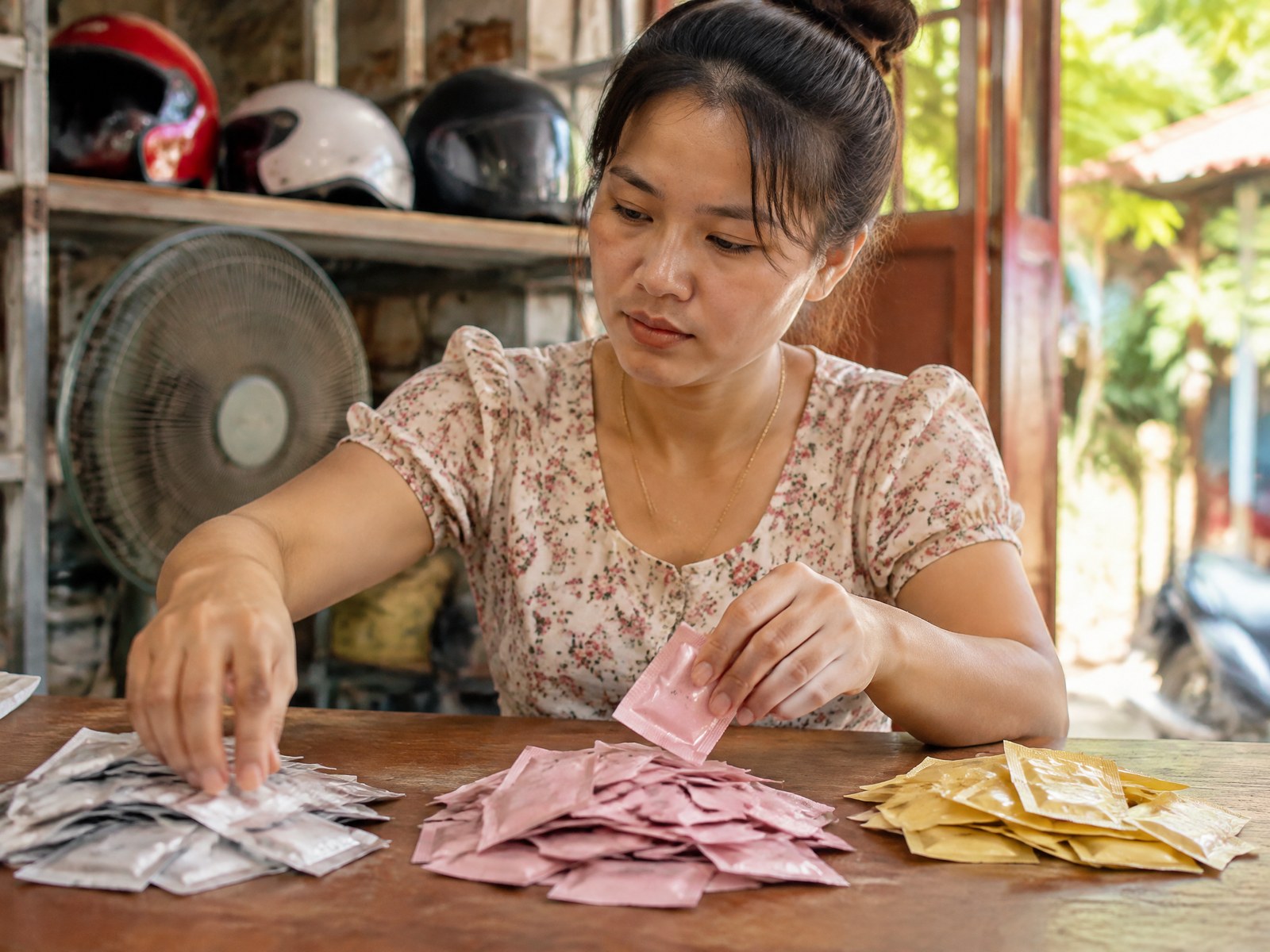
If you are a Filipino TikTok Shop seller whose December sample plan was written on the assumption that creators get product for free, the refundable sample policy has already changed, and the creators in your queue are learning the new terms before your invitation template does. Filipino creators are posting about the refundable sample policy change in the language of a fee, not a perk. One warning post tells creators to pay attention because the policy has changed and they do not want to get stuck paying for samples they missed the update on; another says the change to the creator pilot program will have a negative impact on creators. Underneath both is a plain question, asked in Tagalog and liked 1,570 times: how do we get back the money we spent on refundable samples? That is the conversation your December sample plan is arriving into.
Run the old assumption against the new rules and the gap shows up in cash, not in reach. Under a free-sample model the seller pays product cost plus shipping and hopes for a video. Under a refundable model the creator pays first, posts, and claims the money back — so the seller still bears the product cost, but now also bears a trust cost: a creator who waits three weeks for a refund tells her audience. One unresolved refund per twenty samples is enough to turn a warm creator list into a list that ignores your next invitation, and December is the worst month to discover that.

What the Refundable Sample Policy Change Actually Moved
Most sellers respond to a policy change by rewriting one sentence in the invitation message and calling it done. That keeps the message accurate and leaves the flow wrong: the creator is still asked to front money for a shop she has never worked with, the refund condition is still implied rather than written, and the seller still has no way to tell which names are worth the cash risk. A policy change is not a copy edit. It is a reason to split the sample flow into two tracks with different economics.
The two tracks are not a fairness statement, they are a risk statement. Names you have worked with carry no verification cost, so they can receive product on the old terms. Names you have never worked with carry the full cost of finding out, which is exactly what the refundable route prices in. Sellers who run one track for both groups end up paying verification costs on the wrong side of the list.
Step One: Name the Four Records a Refundable Sample Creates
Start by being precise about who is paying for what. In a refundable sample, the creator orders the product and pays for it, posts the content, and then reclaims the amount under the policy in force. The seller is not shipping free product; the seller is underwriting a purchase and settling it later. That distinction matters operationally: there is an order, there is a payment, there is a claim, and there is a settlement date. Four steps, each of which can break, and only one of which your current sample tracker probably records.
This is also why the old message template now reads wrong. A line that says the sample is free sets an expectation the flow cannot meet, and the creator discovers the mismatch at checkout — the worst possible moment, because it is the moment she decides whether your shop is worth the effort. Rewriting that line is not enough on its own, but leaving it in place undoes every other fix.
If you want the two-track sample flow with the refund clause already written — who pays, what proof is required, and the settlement date — register for DAMI and contact our support team for the free refundable sample flow checklist, and the four steps are laid out as a checklist you can hand to whoever runs dispatch.
Step Two: Two Tracks, Decided by Evidence
Split the list before you split the budget. Track one is the refundable route, and it belongs to names with no verified posting history in your category — the refundable sample policy change is, functionally, a verification tool: the creator puts money in, which filters out everyone who was collecting product for free. Track two is direct dispatch, and it belongs to creators whose delivery you have already seen. Same December, same product, two different economics, and the split is decided by evidence rather than by how persuasive the request sounds.
One operational note that saves arguments later: do not let a creator switch tracks mid-cycle. A direct-dispatch creator who asks for a refundable order because it is faster has just told you she has not understood the terms, and honouring the switch leaves you with two records for one commitment. Answer with the settlement date instead.

Step Three: One Page of Refund Terms, Sent With the Sample
Write the refund clause on one page and send it with the sample, not on request. It needs four things: who pays at checkout, what counts as proof of posting, how long settlement takes after that proof, and what happens if the content is deleted inside the window. Vague terms are what turn a policy change into a dispute — and in the Philippines the dispute does not stay private, because creators compare notes in public and the comment section is where the next hundred creators read your terms before they apply.
Put the settlement date in the message, not the duration. Seven working days means something different on December 3 and on December 24, and a creator who is told a date can plan around it while a creator who is told a duration will ask again on day four — which is the message you do not have time to answer during a peak.
Step Four: Carry the Risk With Commission Tiers
Use commission tiers, not promises, to carry the rest of the change. A creator who fronts money for a sample needs a reason for the risk to be worth it, and the reason should be a rate she can verify in the plan rather than an assurance in a chat. A higher window rate for December posts, a lower everyday rate outside it, and a stated end date does more for sample acceptance than any message about how much the shop values creators.
Keep one number for the whole flow: the share of refundable samples that end in a settled claim within the stated window. If it is below 80 percent, the problem is usually the clause, not the creators — and you will only see it if the sample record and the claim record are the same record. Sellers who track dispatches in one place and refunds in another discover the leakage in January, after the creators have already decided not to work with them again.
The One Number This Flow Has to Report
DAMI brings an 8-million-plus creator database, competitor and competitor-store creator search, automated outreach tasks, AI-assisted outreach, AI video creation, sample management, campaign management, social media management, store analytics, and multi-store team dashboards into one place. Two tracks, one clause, one settlement number — that is a flow, and flows break when the records live in different tools. DAMI keeps sample management on the same creator profile as the posting history and the commission plan, so a refundable order, the proof of posting and the settlement date are visible in the same place the next invitation is written from.
Write the refund clause before the next sample leaves
Open DAMI sample management, pick the five creators you plan to ship to this week, and attach the one-page clause to each: who pays, proof required, settlement date, and what voids it. If you cannot fill those four lines for a name, that name is not ready for a sample.
Sort the list into two tracks
Creators with verified delivery in your category go on direct dispatch. Everyone else goes on the refundable route, where the policy itself does the verifying. Record the track on the creator profile, not in a chat thread.
Watch the settlement share, not the dispatch count
Once a week, check the share of refundable samples settled inside the promised window. Under 80 percent means the clause needs rewriting, not that the creators need chasing.
What Filipino Sellers Keep Asking About Refunds
What actually changed in the refundable sample policy?
The creator now carries the payment first and claims it back after delivering, rather than receiving a free unit. For a seller the practical consequence is that a sample is no longer a gift you hand out; it is a purchase you underwrite, with a claim and a settlement date attached. The Filipino creators posting about the change are reacting to that shift in who holds the cash, not to the product.
Do I have to offer refundable samples at all?
No, and for creators you already trust you probably should not. Direct dispatch is still allowed and still cheaper to administer for names with a delivery record. The refundable route earns its keep on names you cannot verify, where the creator paying first is the cheapest verification available.
How long should settlement take after a creator posts?
Short enough that the creator does not have to chase it, and specific enough that she can plan: a date, not a duration. Seven working days is a reasonable ceiling for a small shop; whatever you pick, publish it in the clause and hold it during the peak, because a December refund that slips into January is remembered as a shop that did not pay.
What if the creator deletes the video after being refunded?
Say what happens before it happens. The two workable answers are a clawback window stated in the clause, or accepting the loss and removing that name from future samples. What does not work is an unwritten rule applied after the fact, because the creator will describe it publicly and the next hundred applicants will believe her version.
Why would I need DAMI for this instead of a spreadsheet?
Because this flow has four records per sample — order, payment, claim, settlement — and a spreadsheet holds one of them well. DAMI keeps the sample, the creator history and the commission plan together, so the settlement share is a number you can read instead of a reconciliation you have to perform at the end of the month.
Fix the Flow Before the First Dispute Does It for You
The expensive habit here is not the refund itself. It is running December on a flow that was built for a policy which no longer exists. DAMI brings an 8-million-plus creator database, competitor and competitor-store creator search, automated outreach tasks, AI-assisted outreach, AI video creation, sample management, campaign management, social media management, store analytics, and multi-store team dashboards into one place.
This afternoon, open the last ten samples you sent and check one thing: whether each one has a written settlement date attached. If most of them do not, the flow was built for the old policy and the next December dispatch will inherit the gap. Fixing that takes one page, and the page is cheaper than the first public complaint.
Start with DAMI while the clause can still be rewritten by you rather than for you, in a comment section.