

Videos are being posted regularly, live sessions are not empty, and products are getting clicks, yet sales value remains flat. This kind of situation often makes sellers immediately add discounts, extend live sessions, or send more samples to creators. The problem is that those actions are expensive if the leak has not been clearly identified. Host time, margins, stock, and team energy can be spent scaling activity that may not actually move payments.
A more sensible way to increase TikTok Shop GMV starts with diagnosis. Do not read stagnant GMV as simply a lack-of-traffic problem. Sometimes the traffic is already there, but the product page is not convincing enough. Sometimes checkout happens, but the average order value is too small. Sometimes live sessions are busy, but the host does not have a strong product sequence and responses to objections.
Start with three questions before adding more activity
Is the problem traffic, conversion, or order value?
GMV rises when more visitors become buyers, or when buyers purchase at a higher order value. For that reason, sellers need to separate three layers: the number of people who arrive, the percentage who buy, and the transaction value per buyer.
If impressions are low, the initial problem may be content distribution, hook quality, theme consistency, or the live schedule. If impressions exist but product clicks are low, check whether the video truly shows a relevant problem, the product benefit, and usage context. If product clicks are sufficient but checkout is low, the obstacle is usually closer to the product page: price, photos, variants, benefit descriptions, trust, shipping fees, stock, or promo clarity.
Use store data and content performance as the basis for decisions. One viral video can provide a signal, but it is not enough to determine the strategy for the entire store.
Common mistake: chasing views while the product page is weak
High views feel satisfying, but they do not always mean the offer is strong. Symptoms that need to be read more carefully include products being clicked often but rarely reaching checkout, many carts but low payments, or orders remaining stable but coming only from the cheapest product.
The practical boundary is simple: do not add discounts, scale up live sessions, or push affiliates before knowing the main leak. Discounts can help in certain conditions, but if the problem is trust, confusing variants, or unclear product photos, discounts only cover the problem temporarily and erode margin.
Audit the store funnel from impressions to payment
Criteria for reading the source of the problem
A TikTok Shop GMV audit should be read sequentially. First, check impressions and traffic sources: short videos, live sessions, storefront, or creators. Second, look at product clicks to assess whether content successfully brings interest to the product. Third, read add-to-cart, checkout, and payment to see whether visitors trust the offer and feel enough motivation to buy.
Average order value needs to be separated from the number of orders. A store can have a decent number of orders, yet GMV still struggles to grow because buyers only take the entry product or the cheapest variant. In this condition, the more relevant action is not always adding views, but improving bundling, variant recommendations, or the product sequence during live sessions.
Weekly GMV audit template

Use a weekly format so decisions are not driven by a single day that happened to be busy or quiet. The following template can be adjusted to the data available in each seller's store dashboard and content performance reports.
| Audit column | How to read it |
|---|---|
| Period | Record the same weekly range so trends can be compared. |
| Traffic source | Separate short videos, live sessions, storefront, and creators. |
| Main product | Mark the product being pushed during that period. |
| Impressions | Assess whether content or live distribution is open enough. |
| Product clicks | Assess the strength of the hook, audience relevance, and usage context. |
| Add to cart | See the initial purchase interest before checkout. |
| Checkout | Read obstacles around price, variants, shipping fees, or promo clarity. |
| Payment | Assess transactions that are truly completed. |
| Average order value | See whether buyers are only taking cheap items or higher-value packages. |
| Action notes | Write down changes to titles, visuals, bundling, live scripts, or creators being tested. |
Do not change too many variables at once. If the product title, main visual, price, bundling, and live script change on the same day, the team will have difficulty knowing which action actually helped.
Fix the offer before scaling live sessions and affiliates
Main products, entry products, and bundling have different jobs
The main product should be chosen because stock is secure, margin is reasonable, and it has the potential for stable volume. The entry product's job is to attract clicks or first purchases, so its benefit must be easy to understand within a few seconds. Bundled packages are used to increase average order value without relying on large discounts.
Good bundling does not need to be complicated. Build it around a clear usage reason: the main product with a complement, variants that are often used together, or refill packages. The biggest risk in bundling is having too many choices. If buyers are confused about what to choose, the live host struggles to explain it, and the packing team is also burdened, bundling can actually slow down purchase decisions.
Short-form content builds intent, live sessions close doubts
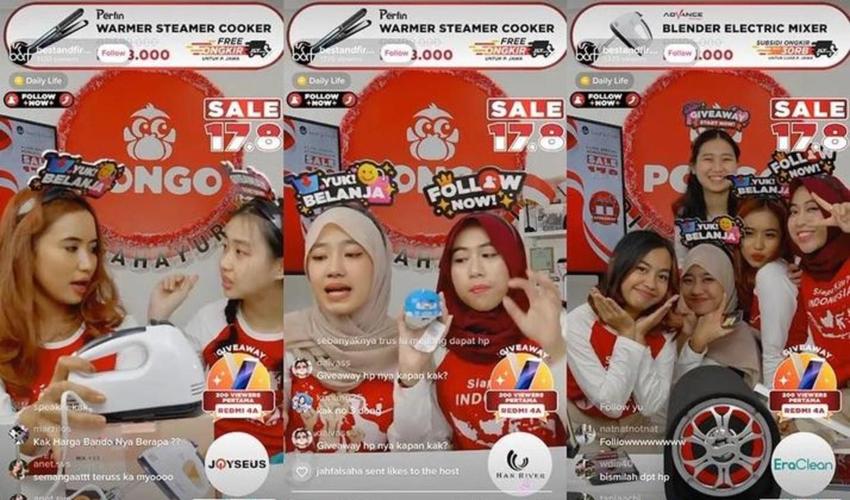
Short videos are suitable for opening up daily problems, showing product usage, and bringing the audience to the product page. Live selling is better suited for answering objections, comparing variants, showing physical details, and giving reasons to buy now.
A long live session is not necessarily effective if it has no structure. Determine priority products, the offer sequence, reasons to buy, answers to common objections, and moments to repeat the offer. Without that structure, a live session can look active but be difficult to evaluate.
When are affiliates ready to be scaled?
Affiliates are more effective when the store foundation is already tidy: the product page is clear, stock is secure, commissions are calculated against margin, product materials are available, and claim rules do not confuse creators. Do not use affiliates to cover weak ratings, vague product descriptions, or offers that have not been tested.
If that foundation is ready, sellers can prepare creator briefs, product benefit lists, claim limits, sample content angles, and priority products. For the next stage, also read TikTok Shop affiliate strategies so the creator channel is used as a reinforcement, not as a cover for basic problems.
14-day test priorities so the results can be read
Days 1 to 3: audit and choose priority products
Start by choosing the three products most worth testing. The considerations are not only the products with the highest views, but also stock, margin, repeat order potential, clarity of benefits, and product page readiness. Compare impressions, product clicks, add-to-cart, checkout, payment, and average order value.
Days 4 to 7: improve the product page
Focus on elements that directly affect purchase decisions: title, photo or video, variants, benefit description, price, bundled packages, and promo clarity. Make sure buyers do not have to guess what is included in the package, the size, how to use it, or the differences between variants.
Days 8 to 14: test content, live sessions, bundling, or creators in a limited way
After the product page is better prepared, then test funnel reinforcements. Create several videos with different problem angles, structure live sessions around priority products, test simple bundling, or involve creators in a limited way. Record the changes made so the results do not get mixed together.
FAQ about TikTok Shop GMV
Does increasing GMV always have to involve discounts?
No. Discounts can help, but GMV can also be driven by better conversion, sensible bundling, and higher average order value. If margins are thin, large discounts can make sales look higher while weakening the business.
Which should be fixed first, content or product?
If product clicks are low, improve the content hook, opening visual, usage context, and audience relevance. If clicks already exist but checkout is low, prioritize the product page, trust, variants, shipping fees, stock, and offer.
How should you read traffic rising but orders not rising with it?
That is a sign that the problem has likely moved from distribution to conversion. Check whether the incoming audience is relevant, whether the product matches the content promise, and whether the product page is clear enough to make buyers trust it.
What are the signs that affiliates are not ready to run?
Affiliates should be postponed if stock is not yet stable, the product description is still confusing, the rating is not convincing enough, or commissions have not been calculated against margin. In that condition, creators can bring traffic, but that traffic will leak on the product page.
Decision summary
The way to increase TikTok Shop GMV starts with a funnel audit, not merely adding traffic. Priorities are determined by the leak: impressions, clicks, carts, checkout, payment, or average order value. A healthy strategy combines clear products, relevant content, structured live sessions, and affiliates that are ready to execute.
The most practical step for this week is to choose three priority products, read data by traffic source, then test one or two improvements that can be clearly recorded. From there, the next decision will be easier to justify.