
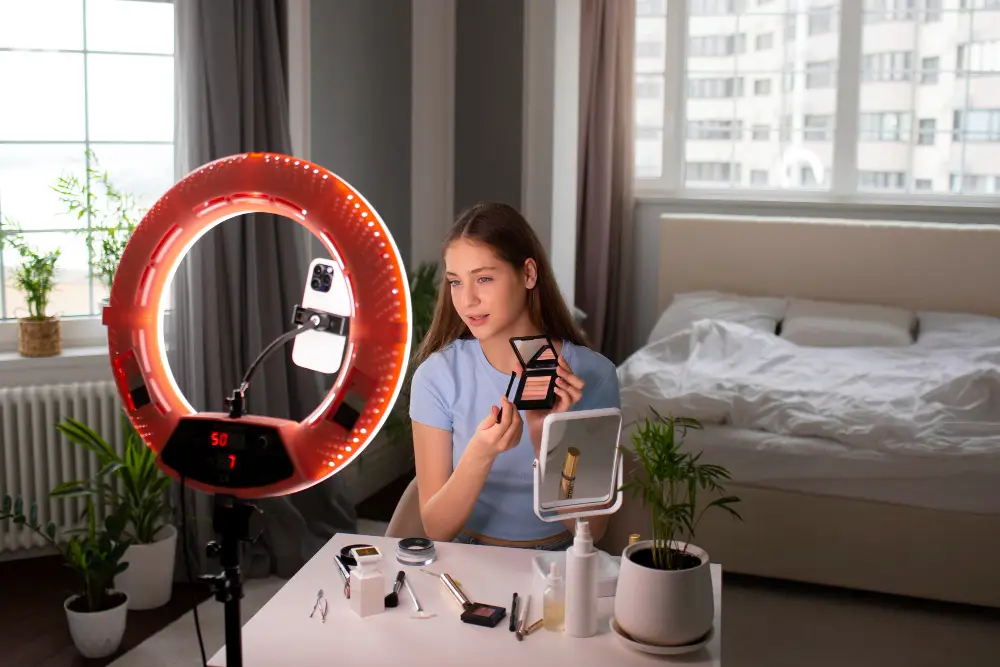
Recently, sellers operating on TikTok Shop in the US market have been noticing a clear shift: more and more brands are putting part of their effort back into their own content production.
In the past, the growth strategy for many sellers was relatively straightforward: find creators, send samples, wait for videos, and track sales. The more creators they worked with, the more content and sales opportunities they expected to generate. But as more sellers enter TikTok Shop, creator marketing is gradually moving from a competition based on “quantity” to one based on “fit and efficiency.”
TikTok Shop does not lack creators. What sellers really lack is the ability to consistently produce good content.

Why Is It Getting Harder Even as the Number of Creators Grows?
Over the past year or two, both the number of sellers and creators on TikTok Shop in the US have grown rapidly. For sellers, this means there are more creators available to work with. But from another perspective, it also means that each creator may be receiving collaboration offers from a growing number of brands.
As creators receive more products and collaboration requests, the amount of time they can dedicate to each individual product naturally becomes limited.
As a result, some sellers find that even after sending dozens or hundreds of samples, they may receive plenty of videos, but only a small portion actually generate meaningful conversions. Some videos technically fulfill the collaboration requirement but simply show the product without a clear use case or a compelling answer to the consumer’s most important question: “Why should I buy this?”
This does not necessarily mean creators are not putting in the effort. The underlying supply-and-demand structure has changed.
When a creator is handling a large number of collaboration opportunities at the same time, sellers can no longer expect every partnership to produce high-quality content. Creators can help sellers expand content distribution, but sellers cannot completely outsource content production itself.
The Value of In-House Content Goes Beyond Saving Creator Commissions
This is why more sellers are beginning to build their own content capabilities.
The biggest value of producing content in-house is not simply how much money can be saved on creator commissions. It is having greater control over the content production process.
Which selling point should appear in the first three seconds? Which scenario makes the product easiest for US consumers to understand? What type of hook works better? How many different versions should be tested for the same product?
With an in-house content capability, sellers can test these questions continuously instead of waiting for creators to produce new content every time.
This is especially important for new products.
When a new product launches, sellers often do not yet know what consumers actually care about. Instead of immediately investing heavily in creator partnerships, sellers can first use their own content to test different selling points, use cases, and messaging. Once they identify what works, they can then give those proven content directions to better-matched creators and scale them further.
In other words, in-house content primarily solves a problem of testing and iteration efficiency.
But that does not mean sellers should abandon creators.
In fact, the stronger a seller’s own content capability becomes, the easier it can be to identify creators who are truly worth building long-term relationships with.
The Real Question Isn’t “In-House Content or Creators” — It’s Who Should Do What
Many sellers tend to treat the two approaches as alternatives: either produce content themselves or work with a large number of creators.
In reality, a more effective strategy may be to give the two content systems different roles.
In-house content is better suited for testing, product explanation, and scalable production. Sellers can quickly test product selling points, create multiple versions of a video, and continuously optimize based on performance data.
Creator content is better suited for trust, authentic experience, and influence. A creator who regularly shares their family life, for example, may have a very different level of credibility when recommending a household product than a brand-produced advertisement.
Consumers are not simply seeing a product description. They are seeing how someone they already follow actually uses the product.
Therefore, a mature TikTok Shop content strategy should not be about “replacing creators with in-house content.” Instead, it should be:
In-house content makes the product easier to understand, while creators make more consumers willing to believe in it.
Combining the two makes it easier to build sustainable growth.
Creator Marketing Is Moving From “Scale” to “Precision”
This is also where many sellers need to rethink their creator strategy.
In the early days of TikTok Shop, many sellers focused on finding as many creators as possible and sending as many samples as possible, hoping that sheer volume would eventually produce a breakout product.
But as the number of sellers and creators on the platform continues to grow, this simple volume-based strategy is becoming increasingly difficult to sustain.
The creators who create the most value are not necessarily those with the largest follower counts. They are the ones whose audience, content, and product are highly aligned.
For example, a general entertainment creator with one million followers may not be the right fit for a professional tool. A creator with only tens of thousands of followers who regularly shares DIY or home-repair content may generate much more relevant engagement and conversions.
So what sellers really need to build is not just a “creator list,” but the ability to continuously identify, evaluate, and develop relationships with high-fit creators.
A single collaboration that generates one video is not the end.
If a creator consistently produces strong content and sales across multiple collaborations, the relationship can gradually move from a one-off transaction to a long-term partnership.
In the next stage of TikTok Shop, the real competition may not be who has more creators, but who knows how to use creators better.

What Sellers Really Need to Build Is a Content Capability
From this perspective, the value of in-house content becomes much clearer.
It is not about replacing creators, nor is it about forcing sellers to handle all content production themselves. It is about giving brands a basic content capability: knowing how their products should be communicated.
When sellers can test selling points themselves, analyze successful content, and understand consumer feedback, they can apply those insights directly to creator collaborations, making creator content more effective.
At the same time, authentic comments, questions, and content performance from creators can feed valuable insights back into the brand’s own content team.
This creates a more complete cycle:
In-house content testing → identify effective messaging → match the right creators → scale strong content → collect consumer feedback → optimize content again.
This may be the long-term capability that TikTok Shop sellers really need to build.
The creator ecosystem will remain important, and it will continue to be a major part of TikTok Shop growth for a long time.
But sellers should not build their entire growth strategy around simply “waiting for creators to make videos for me.”
Creators may determine how far you can go, but content capability determines whether you can keep moving forward.
That may be the real reason why more and more TikTok Shop sellers are beginning to take ownership of their content capabilities.