

Overseas markets have never really lacked traffic. What they have lacked is a shopping experience that makes consumers want to keep browsing.
In the past, American consumers were more accustomed to traditional e-commerce. They would discover a product on social media, become interested, and then move to Amazon or a brand’s website to search, compare prices, and make a purchase.
But this shopping journey is beginning to change.
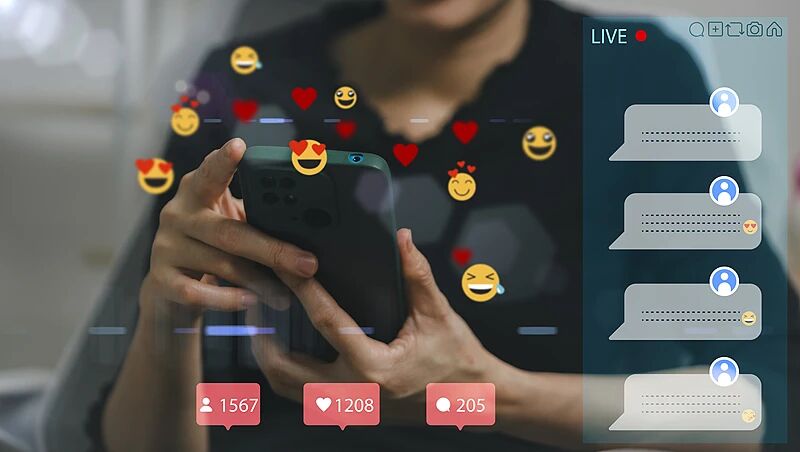
More and more consumers are entering livestreams to watch Creators showcase products, interact with hosts, and even participate in live auctions. In many cases, they do not enter a livestream with a specific purchase in mind. They are simply browsing, until a product, demonstration, or comment suddenly sparks their interest.
Traditional e-commerce is more like “people searching for products,” while TikTok Shop is turning shopping into “content finding the right people.”
Recent TikTok Shop promotional campaigns in the U.S. also show this shift. Overall business has nearly doubled year over year, while live commerce has grown even faster. Highly interactive formats, including live auctions, have been particularly notable.
The change is becoming increasingly clear:
American consumers are gradually embracing a new way to shop: watching, interacting, and buying as part of the same experience.
Why Has TikTok Shop Made Interest-Based Commerce Work?
Getting overseas consumers to embrace live shopping is not easy.
Amazon, Instagram, and Facebook have all experimented with live commerce, but none managed to build a strong enough shopping habit around it.
TikTok took a different approach.
Instead of immediately telling users that they could shop on the platform, TikTok spent years building a massive and active Creator ecosystem. Users gradually became accustomed to discovering new content, products, and trends on the platform.
Once “discovering something new” became part of the TikTok experience, products naturally gained opportunities to enter that content.
As a result, three elements that were previously separated—
content, products, and transactions
started happening within the same environment.
Livestreaming takes this experience even further.
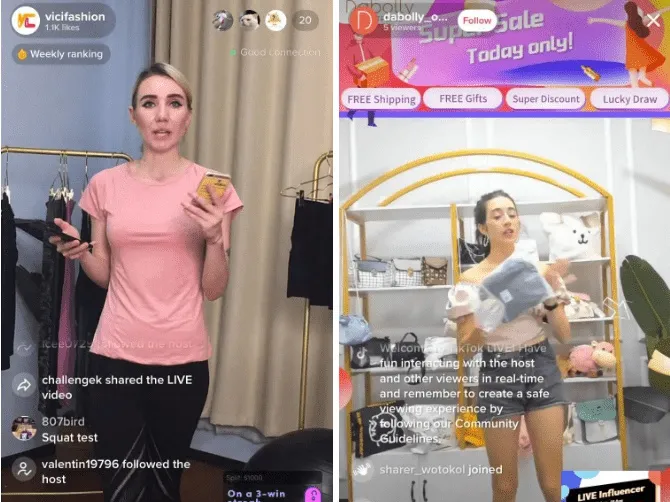
Consumers can ask about sizes, colors, or how a product works in real time. They can watch Creators demonstrate the product directly, while other viewers can add their own experiences through the comments.
Shopping is no longer simply a process of “search → compare → buy.” It is becoming a more interactive, entertaining, and participatory experience.
Live auctions are one of the clearest examples.
In some TikTok Shop livestreams, products such as sports cards, collectibles, and unique crafts are auctioned starting from relatively low prices. As the countdown changes, consumers who were initially just watching can become active participants.
This format also resonates with the U.S. market partly because auction and collecting culture is already well established there. TikTok Shop is not creating an entirely new consumer habit from scratch. It is taking a familiar bidding mechanism and repackaging it into a younger, faster, and more interactive content experience.
When familiar consumer culture meets a new content format, buying becomes participation.

Content Is Redefining How Brands Go Global
The changes brought by live commerce are not simply about adding another sales channel.
They are also changing how brands connect with consumers.
The Shenzhen-based tool brand Fanttik is a good example.
In one video, an American Creator used a Fanttik electric screwdriver to take apart toys, tighten screws, and install a door handle. There was no complicated advertising script. The product was simply placed into a realistic household setting.
Consumers were not looking at a list of product specifications.
Instead, they were seeing a much more direct question:
“What problem can this product solve for me?”
This type of content makes the product easier to understand while significantly reducing the distance between the brand and the consumer.
SHOKZ has taken a similar approach.
Bone conduction and open-ear headphones are not concepts that every consumer can immediately understand. If a brand only explains technical specifications, it can be difficult for consumers to truly understand the value of the product.
That is why SHOKZ places its products in real-life situations such as running, sports, and even underwater training.
When consumers see the headphones remain securely in place during intense physical activity, terms such as “open-ear,” “water-resistant,” and “secure fit” are no longer just technical specifications.
They become experiences that consumers can see and understand directly.
This is one of the most important strengths of TikTok's content commerce model:
Instead of simply telling consumers what a product has, show them why the product is worth buying.
As a result, brands are no longer relying only on advertising to “tell” consumers who they are. They can build brand perception through large amounts of authentic content that gradually shapes how consumers understand the product and the brand.
Comments Are Becoming a New Source of Market Research
Interest-based commerce is also creating a deeper change:
Consumers are beginning to participate directly in product improvement.
In traditional international trade, factories are often far removed from overseas consumers. Why consumers like a product, why they return it, and what they actually need often have to pass through distributors, platforms, or sales teams before reaching the manufacturer.
On TikTok, a single video can generate a large number of real consumer questions.
The Hatteker waterproof hair removal device is a good example.
A Creator demonstrated the product's blade and waterproof capabilities through a highly visual video. But it was a highly engaged question in the comments that caught the team's attention:
“Can this be used in the shower?”
That question revealed a real use case that consumers cared about.
The comments were no longer just feedback.
They became product insights.
Consumer questions can influence product development, content ideas, product pages, and even future Creator partnerships.
In other words, content commerce is not only shortening the distance between “discovering” and “buying.” It is also shortening the distance between:
consumer → brand → product
And this is one of the reasons Creators are becoming increasingly important.
Creators are no longer simply sources of traffic. They also play a role in content production, product demonstration, and building consumer trust.
As a result, Creator marketing is shifting from “find the person with the most followers” to “find the Creator who is the best fit for the product.”
A general entertainment Creator with millions of followers may not be suitable for promoting kitchen products. Meanwhile, a smaller Creator who consistently shares home and lifestyle content may have a much more relevant audience.
What really matters is:
Does the product fit the Creator's content? Does the content fit the audience? And can the Creator naturally integrate the product into real life?

What Does This Mean for the Indonesian Market?
The changes happening in the U.S. do not mean Indonesia will simply copy American consumer behavior.
But they do send an important signal:
Content is becoming a new entry point into e-commerce.
For Indonesian sellers and brands, the opportunity on TikTok Shop is not simply about having “another sales channel.” It is about getting products into the content that consumers are already watching, discussing, and sharing every day.
Beauty products can become part of the everyday content of local Beauty Creators. Fashion products can be showcased by Fashion Creators through real-life styling. Home products can be demonstrated in everyday household situations. Electronics can be tested by Tech Creators through hands-on experiences.
Compared with simply displaying product photos, localized content like this makes it easier for consumers to relate to the product and imagine it in their own lives.
That means the future competition on TikTok Shop may not simply be about:
Who has the cheapest product.
Instead, it may be about:
Who has products worth showcasing, who can find the right Creators, and who can make consumers stop scrolling.
From “searching for products” to “discovering products,” from “watching ads” to “watching content,” and from “completing a transaction” to “participating in the shopping experience,” e-commerce is increasingly becoming a content-driven experience.
For Indonesia, with its large young user population and highly active Creator ecosystem, this transformation may only be getting started.
In the future, what matters may not only be what consumers buy, but why they suddenly decide to buy it after seeing a piece of content.