

1. What Are Influencer Marketing Tools
Influencer marketing tools are a complete set of auxiliary tool systems for brands to carry out cross-border influencer cooperation, content seeding and social media marketing. Different from simple editing or data analysis software, these tools focus on the full-link cooperation process between brands and overseas influencers. They cover core business scenarios including influencer mining, data verification, business communication, campaign launch, commission settlement and data review.
Any brand that needs to operate influencer resources on overseas social platforms and implement long-term influencer marketing can rely on professional influencer marketing tools. These tools replace inefficient manual spreadsheet statistics, manual screening and scattered follow-up modes, enabling standardized, large-scale and data-driven influencer operations.

2. Why Brands Need Influencer Marketing Tools
Most small and medium-sized brands rely on manual operations in the early stage of influencer marketing. Teams manually browse platforms to find creators, verify follower data one by one, record cooperation status in spreadsheets, follow up with influencers individually and count launch results manually. As cooperation volume expands and marketing scale grows, pure manual operations expose obvious limitations, making professional tools an essential requirement for brand growth.
Manual operations have obvious output limits. The number of creators that can be screened and contacted manually per day is limited, which cannot support large-scale outreach layout across multiple accounts and vertical categories. Marketing tools automatically process repetitive work such as screening, invitation, recording and follow-up, greatly improving team productivity.
Overseas influencers commonly have fake followers, artificial engagement and inflated traffic. Manual inspection cannot accurately identify low-quality creators, which easily leads to cooperation losses and wasted marketing budgets. Professional tools support data verification and fraud detection, helping brands select authentic and high-value creators and avoid cooperation risks in advance.
Pure manual operation relies heavily on personal experience. Without tool support, talent resignation will directly take away brand influencer resources and operational experience. Professional tools systematically precipitate influencer resources, cooperation records and launch data, forming exclusive brand influencer assets, realizing standardized team collaboration and ensuring stable business operation.
Manually collected data is fragmented and delayed, making it impossible to accurately evaluate the performance of different creators, cooperation modes and content styles. Marketing tools summarize multi-dimensional data in real time, helping brands iterate marketing strategies, reduce cooperation costs, improve conversion effects and optimize overall return on investment.
3. Common Types of Influencer Marketing Tools
The complete influencer marketing workflow consists of multiple independent links. Most mainstream tools focus on one or several functional scenarios. According to core functions, tools can be divided into six categories, covering all needs for brands to build influencer marketing systems from scratch.
Influencer Discovery Tools
These tools help brands mine vertical overseas creators in batches and solve common operational pain points such as insufficient influencer resources and low mining efficiency. Covering mainstream global social platforms, the tools support multi-dimensional screening by category, vertical niche, follower scale, audience region and content style. Brands can quickly match creators that fit product positioning and break the limitations of manual mining.
Influencer Analytics Tools
Focusing on influencer data verification and quality screening, these tools serve as core risk prevention tools for brands. They deeply analyze follower authenticity, engagement quality, traffic sources, audience portraits and historical content performance. The tools accurately identify low-quality creators with fake followers and inflated traffic, predict content conversion potential, and provide data support for influencer selection and budget allocation.
Precision Creator Search Tools
Different from broad discovery tools, precision search tools focus on targeted positioning and matching. Brands can search for excellent promotional creators through competing accounts, popular videos, product keywords and trending topics. The tools help brands target competing track resources, intercept peer traffic and tap high-potential promotional influencers.
Campaign Management Tools
These tools are used to manage brand full-scale influencer marketing campaigns, suitable for scenarios of multi-batch and multi-project parallel operation. Core functions include project initiation, layered influencer management, schedule control, content script review, performance tracking and team collaborative work. The tools unify the management of all influencer cooperation projects and avoid project chaos, missing performance and progress out-of-control problems.
Affiliate Management Tools
Focusing on commission settlement and link management for sales-oriented influencer cooperation, these tools adapt to affiliate marketing and long-term commission cooperation models. They automatically count sales volume, transaction data and commission ratios, calculate settlement amounts and sort out billing details. The tools eliminate the problems of cumbersome manual accounting, reconciliation errors and settlement confusion, supporting stable long-term influencer sales cooperation.
Data Reporting Tools
These tools focus on full-link data aggregation and visual review. They automatically capture multi-dimensional operation data including exposure, play volume, likes, comments, drainage and transaction data to generate standardized reports. Brands can intuitively view the marketing performance of single creators and single campaigns, accurately analyze return on investment, and provide data basis for subsequent influencer screening, budget adjustment and strategy iteration.
4. Key Criteria for Selecting Influencer Marketing Tools
The influencer marketing tool market is complex, with most products focusing on single functions while comprehensive tools are relatively rare. Brands should not follow trends blindly but select tools based on actual business scenarios with six core evaluation standards.
Data accuracy and coverage are the primary evaluation indicators. Brands need to check the scale of influencer resource database, platform coverage, data update frequency and anti-fraud capability to ensure the tool can screen real, high-quality and e-commerce oriented creators and avoid decision errors caused by false data.
Functional adaptability determines practical application value. Operation teams focusing on outreach and large-volume cooperation should prioritize batch invitation, status management and follow-up functions. Teams focusing on precise launch and sales conversion should pay more attention to data analysis, commission settlement and data reporting capabilities.
Operational simplicity affects overall team efficiency. Many overseas tools have complex functions and cumbersome operation logic with pure English interfaces, bringing high learning costs for domestic teams. Brands should prioritize tools adapted to local operation habits with simple interfaces and low learning thresholds to reduce team training costs.
Excellent tools support complete team collaboration capabilities. Multi-account collaboration, permission division, data sharing and progress synchronization prevent isolated resources and business interruption caused by personnel changes, adapting to large-scale team operation needs.
Full-link closed-loop capability is an important selection standard. Brands should avoid single-function tools and prioritize products covering the whole process of influencer mining, screening, business outreach, continuous follow-up, project management and data review. Integrated tools reduce frequent platform switching and improve overall operational efficiency.
Cost performance and supporting services cannot be ignored. Brands need to select tools matching their budget while evaluating after-sales guidance, functional iteration and scenario optimization services. Complete supporting services avoid ineffective tool purchases that cannot adapt to actual operational scenarios.
5. Suitable Teams for Different Types of Tools
Brands and teams at different scales and development stages match different types of influencer tools. Reasonable selection maximizes tool value and fits actual business demands.
Startup Teams and Individual Operators: Lightweight retrieval tools and basic free data tools are the best choice. Complex campaign management and commission functions are unnecessary. Basic influencer mining and simple data verification meet low-frequency and small-scale cooperation demands, helping teams launch influencer business with low costs.
Small and Medium-Sized Cross-Border Brand Teams: Comprehensive lightweight full-process tools are most suitable. Teams need to balance influencer mining, batch outreach, status follow-up and basic data review. Integrated tools solve core pain points such as low manual efficiency, scattered resources and missing follow-up, supporting stable daily large-volume influencer cooperation.
Mature Large-Scale Brand Teams: Integrated tools with advanced data analysis, campaign management and commission settlement capabilities are required. Large teams need accurate influencer quality verification, large-scale campaign overall planning, multi-project parallel management, refined reconciliation and in-depth data review, adapting to high-frequency, high-budget and large-scale influencer marketing launch scenarios.
Pure Affiliate Marketing Sales Teams: Priority is given to commission management, transaction data statistics and settlement tools. Teams focus on influencer sales conversion, bill management and closed-loop commission links, while weakening auxiliary functions such as content seeding and brand exposure.
6. Tool Positioning of DAMI
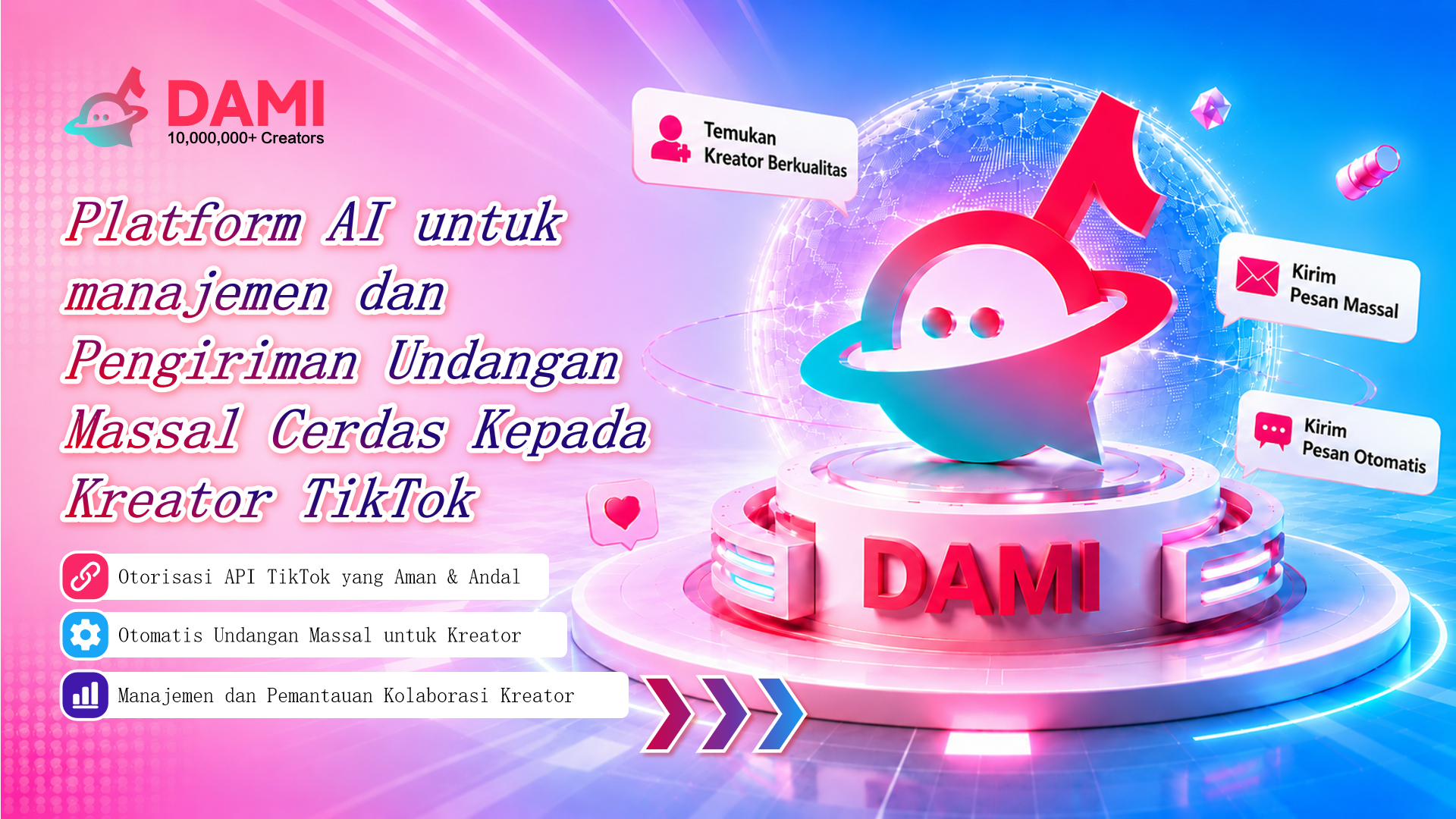
Most mainstream tools on the market are single-functional products focusing only on data retrieval or simple project management. DAMI is a comprehensive full-link TikTok influencer marketing operation tool. It integrates the core capabilities of multiple types of marketing tools, specifically solving core pain points in cross-border brand influencer outreach, large-volume cooperation, follow-up management and project operation, perfectly matching the operational needs of small and medium-sized cross-border brands and large-scale professional teams.
DAMI integrates precise creator search, batch influencer mining, project status management, automatic follow-up control and data review capabilities. It focuses on practical operational scenarios rather than simple data query.
Different from pure data tools that only support query without practical landing functions, DAMI builds a complete business closed loop including influencer searching, screening, batch invitation, status filing, layered follow-up and data review. It replaces the most time-consuming, repetitive and error-prone manual links in influencer marketing, serving as a professional tool for standardized large-volume outreach and refined operation of TikTok cross-border influencer business.
7. How to Choose the Right Influencer Marketing Tool
The core principle of tool selection for brands is to choose the most suitable solution for the current business stage instead of blindly pursuing full functions. Tool matching needs to be progressive with business development.
Cold Launch Stage: Teams should choose lightweight and easy-to-operate comprehensive tools. Complex data analysis and commission settlement functions are not required in the early stage. Tools solve basic problems such as insufficient influencer resources, difficult outreach and chaotic follow-up, helping brands complete the first batch of influencer cooperation and accumulate initial industry experience and resources.
Large-Scale Expansion Stage: Integrated tools with outreach, batch operation and status management capabilities are the best choice. The core business demand shifts from simple resource mining to standardized influencer management and volume increment. Teams rely on batch invitation, layered follow-up, resource precipitation and team collaboration functions to expand cooperation scale and improve overall conversion efficiency.
Refined Profitability Stage: Teams need to add in-depth data analysis, investment return review and commission settlement capabilities. On the basis of stable large-volume cooperation, precise data review helps screen high-quality high-value creators, optimize marketing strategies, reduce comprehensive cooperation costs, realize transformation from volume expansion to quality improvement, and precipitate long-term brand influencer assets.
For most TikTok cross-border export brands, it is unnecessary to purchase multiple scattered single-function tools. A comprehensive and practical full-link operation tool like DAMI can cover more than 90% of daily influencer operation scenarios. It effectively reduces tool purchase costs and operational thresholds, helping brands efficiently implement large-scale and standardized influencer marketing systems.