If you are an Indonesian TikTok Shop seller who has shipped dozens of free samples in Bahasa Indonesia outreach waves and now cannot say, without scrolling chats, which samples were delivered, which creators agreed to post, and which videos actually went live, the problem is rarely that there are no creators to invite. It is that most invites go out without a plan for the silence that follows. A sample that leaves your warehouse and never appears again is not a shipping problem — it is a memory problem. Creators remember the sample; sellers remember the tracking number; nobody remembers the deadline in between.
The leak is measurable. An Indonesian seller shipping forty samples a month at an average 60,000 rupiah of product and shipping cost each is putting 2.4 million rupiah a month into creator hands. Without a way to track free samples sent to affiliates, typically eight to twelve of those forty go dark: delivered but never posted, or agreed to post and then quiet. That is 500,000 to 700,000 rupiah of inventory per month with no content return — and because nothing was tracked, the seller cannot even say which creators to avoid next round. The same list, tracked, usually converts twenty-five to thirty of the forty into posted videos, because deadlines get enforced while the sample is still top of mind.
Track Free Samples Sent to Affiliates? Start With Where Tracking Usually Dies
Tracking fails because it lives in the wrong place. Most Indonesian sellers track samples inside chat threads: the shipping number is in one chat, the creator's promise is in another, the video link arrives in a comment days later. A 412-like video teaching affiliates how to check their own sample status went viral for a reason — both sides are staring at the same platform features and neither side keeps a ledger. When a creator posts late, the seller does not know whether the sample arrived, whether the promise was ever made, or whether a reminder is even appropriate. A tracking table moves all three facts into one row per sample, so the next action is a lookup, not an investigation.
There is also a fairness angle that Indonesian creators respond to. An 848-like confession from a creator who uploaded her sample video late — and felt bad about it — shows the other side wants the structure too. Creators are juggling dozens of seller requests with no system of their own; a seller who states the posting window clearly at ship time, and reminds once at the deadline, is easier to work with than one who goes silent for three weeks and then explodes. The table is not surveillance. It is the schedule both sides can see.
The Five-Column Table: One Row per Sample
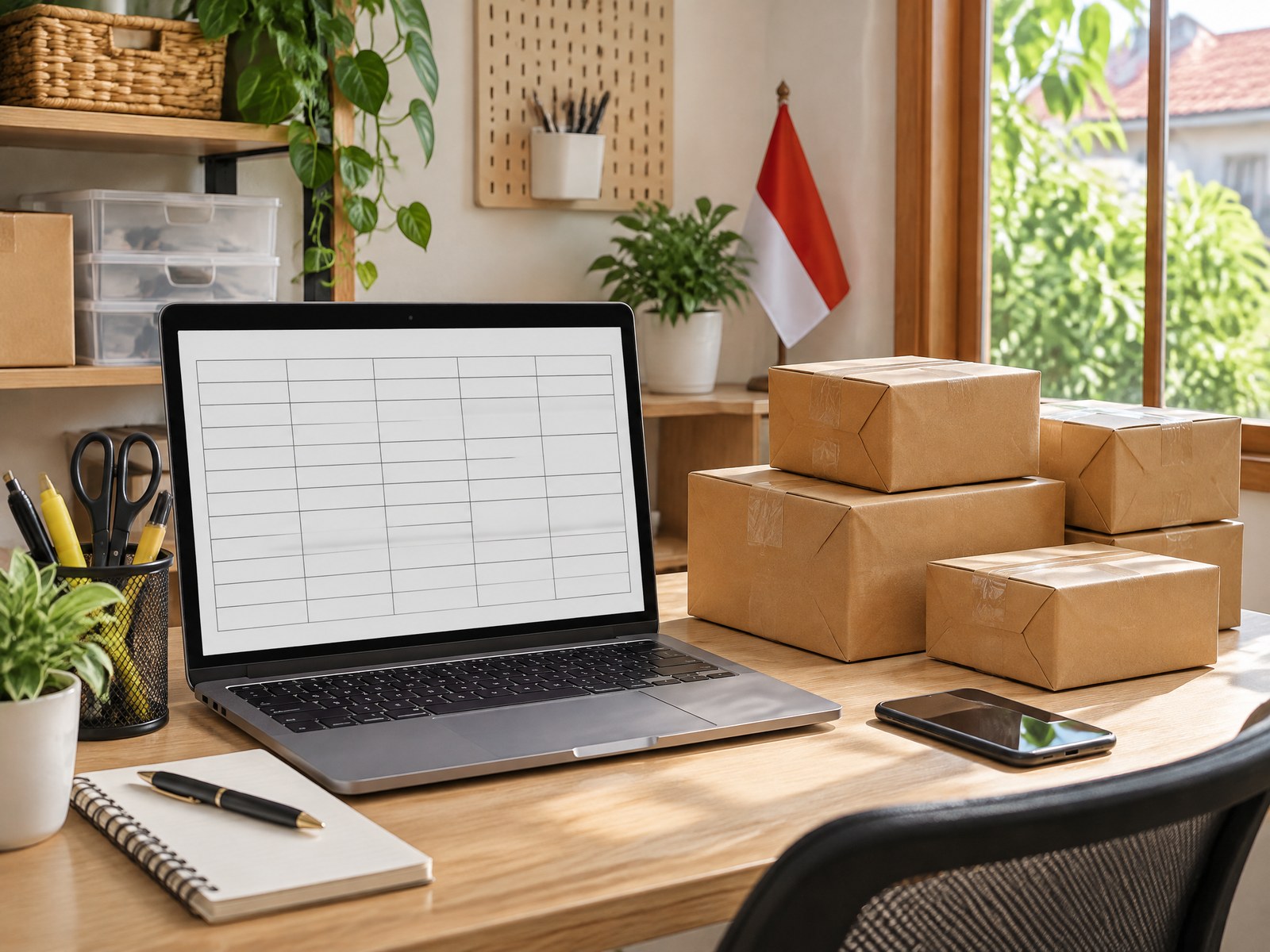
Build the table with exactly five columns, one row per sample. Column one, shipped: the send date and the courier number, written the day the parcel leaves. Column two, delivered: the tracking status, checked once on the expected arrival day — do not chase couriers daily. Column three, agreed: what the creator actually committed to, in their own words, plus the date they said it. Column four, posted: the video link, pasted the hour it goes live. Column five, ordered: whether the video has produced any sales, checked weekly, not hourly. The five columns matter because each one has a different owner of the next move: you own the first two, the creator owns the third and fourth, and the algorithm owns the fifth. Knowing whose move it is prevents the classic mistake of reminding a creator about a parcel that has not even cleared the courier yet.
Two formatting rules keep the table alive past week one. First, one row per sample, never per creator — a creator with three samples needs three rows, because the deadlines run per parcel. Second, the agreed column must contain a date, not a vibe: a promise without a date cannot be enforced, and enforced deadlines are the entire point of the table. If a creator says soon, reply once and pin an actual day before you close the chat.
If you want the five-column sample tracking sheet ready-made, register with DAMI and message our support team for the free tracking sheet — the columns, the deadlines per column, and the two stall actions are already filled in.
Deadlines per Column, So the Table Becomes a Workflow
Deadlines make the table a workflow instead of a diary. Set them per column. Shipped to delivered: three to five days inside Java, five to seven days to outer islands — check once, mark it, move on. Delivered to agreed: you should have asked for the posting commitment in the original offer, so if the delivered cell is filled and the agreed cell is empty after three days, that reminder is yours to send. Agreed to posted: the date the creator named, plus a two-day grace. Posted to ordered: fourteen days of observation before you judge the video. A 63-like seller complaint — a sample handed over for free and not a single video made — is what happens when the delivered-to-agreed reminder never gets sent, because after two quiet weeks the ask feels awkward and the seller drops it entirely.
One deadline deserves its own rule: the reminder itself. One reminder per stall, phrased as service, not as debt collection — a creator confession post with 848 likes about uploading late shows creators genuinely forget, and a single friendly nudge with the parcel date attached lands as help. Two reminders with no reply moves the row to the stall actions, which is the next section.

The Two Stall Actions: Re-offer, Then Reclassify
The two stall actions are what separate a table from a wall decoration. Stall action one, for a delivered-but-no-agreement row: resend the offer compressed into three lines — the product, the posting window, the commission — and mark the row re-offered. If there is still no agreement seven days later, stop writing; the sample is a sunk cost and the row teaches you which creators to skip next wave. Stall action two, for an agreed-but-no-post row past the deadline plus grace: send the single service reminder with the parcel date, wait the grace period once, then reclassify. Reclassified names go into a cold list — not deleted, because an Indonesian creator who stalls in November may still convert for Ramadan — but they do not get new samples before fresh names do. The table earns its keep precisely here: a 122-like thank-you post from a creator who received her second free sample shows the reward loop exists, and sellers who track can route the second sample to the rows that actually posted.
Keep the stall list visible when you plan the next wave. The names in stall action two are not just lost samples; they are data. Three creators stalling from the same city, or from the same follower band, is a pattern worth a rule in the next campaign brief. Tracking tables pay twice — once in recovered videos, once in the filters they teach you.
The Monday Fifteen-Minute Maintenance Loop
Weekly maintenance is fifteen minutes, and it has a fixed order. Monday morning: scan the shipped column and mark anything delivered. Then scan the agreed column for dates that fell due over the weekend and send the one reminders those rows earned. Then open the posted column and paste any video links creators sent over the weekend — same day, while the link is fresh. Finally, glance at ordered and write down which of the week's new videos produced sales, without analyzing anything deeper than yes or no. The fifteen-minute loop works because each column is touched exactly once, in shipping order, and no single scan turns into an hour of doom-scrolling creator profiles.
A note on the ordered column, because it tempts over-analysis: in Indonesia, a posted video with zero orders after fourteen days is usually a content-fit miss, not a tracking failure. Keep the yes-or-no mark and move on. The table exists to protect samples, not to grade every video — the grading belongs to your content review, and mixing the two is how tracking tables die.
How DAMI Runs the Tracking Table as a System
DAMI brings an 8-million-plus creator database, competitor and competitor-store creator search, automated outreach tasks, AI-assisted outreach, AI video creation, sample management, campaign management, social media management, store analytics, and multi-store team dashboards into one place. The five columns, the deadlines per column, and the two stall actions are exactly what DAMI's sample management runs as a system — so the table maintains itself instead of dying in a spreadsheet nobody opens in week three.
Track every parcel in sample management
Log each shipped sample in DAMI's sample management with the courier number and the agreed posting date; delivered status and the video link land back on the same row, so the five columns fill themselves instead of living in five chat threads.
Automate the one reminder per stall
DAMI's automated tasks watch the agreed-to-posted deadline for you and send the single service reminder with the parcel date attached; two stalls with no reply are flagged into the cold list without you remembering any dates.
Route the next sample by posted rows
Because every posted video is linked to its sample row, DAMI's records show which creators earned a second sample — the 122-like thank-you loop becomes a filter, and your second-round budget goes only to rows that produced content.
Frequently Asked Questions
What is the simplest way to track free samples sent to affiliates?
One table, five columns per row: shipped, delivered, agreed, posted, ordered. Each column has a deadline and a single owner — you for shipping and delivery, the creator for the agreement and the post, and the fourteen-day window for orders. Fifteen minutes of Monday maintenance keeps it alive.
When should I remind a creator who received a sample but has not agreed to post?
Three days after delivery. The posting commitment should have been part of your original offer, so an empty agreement cell is your reminder to send — one message, phrased as service, with the delivery date attached. Two reminders with no reply means reclassify the row.
How long should I wait between agreement and the posting deadline?
Use the date the creator named, plus a two-day grace period. If the creator never named a date, set fourteen days as the default and confirm it once in chat before the sample ships. A promise without a date cannot be enforced, which is why the agreed column must always contain a day.
Should I send a second sample to a creator who posted the first one?
Yes, and route it by results rather than memory. A creator who posted on time and produced any orders in the observation window has earned the second sample; a creator whose video went live but produced nothing is a content-fit question, not an automatic resend. The tracking table gives you both answers without scrolling chats.
Is sample tracking worth it for small Indonesian sellers with ten samples a month?
It matters more at small volume, not less. Ten samples a month at 60,000 rupiah each is 600,000 rupiah of inventory, and losing three of ten means losing a fifth of that budget with no way to learn which creators wasted it. The table costs fifteen minutes a week and usually recovers two to three stalled samples per month.
Build Your Tracking Table Tonight
The expensive habit here is not skipping outreach. It is sending follow-ups by memory, whenever the inbox happens to remind you, with no gap, no exit line, and no archive. DAMI brings an 8-million-plus creator database, competitor and competitor-store creator search, automated outreach tasks, AI-assisted outreach, AI video creation, sample management, campaign management, social media management, store analytics, and multi-store team dashboards into one place.
Tonight, open a sheet and write the five column headers — shipped, delivered, agreed, posted, ordered — then fill one row for the last sample you sent, from memory, and mark which cells you could not fill. Those empty cells are exactly where your last samples leaked. The full track free samples sent to affiliates drill takes twenty minutes and pays for itself the first week.
Start with DAMI while the thread is still warm enough to answer in two words.