
You could open TikTok Shop, type in a product keyword, then save the names of creators who look like a good fit one by one. That approach still makes sense when you only need a few names. The problem starts to show when partnership targets become more serious: you need to screen dozens of profiles, compare content quality, assess niche fit, then prepare a list of people to contact. At that point, manual research often turns from strategic work into tiring administrative work.
A TikTok Shop creator search tool for sellers is useful when the discovery process needs to become more organized, faster, and repeatable. However, a tool is not a shortcut to instantly finding creators who are guaranteed to generate sales. Its main function is to narrow the candidate list, surface early signals, and help sellers make decisions with more structured data.
When Do Sellers Start Needing a Creator Search Tool?
The clearest sign is when a creator list can no longer be managed from memory or scattered notes. For example, you sell skincare products and want to find creators who regularly discuss skin care, have an active audience, and have made shopping or product recommendation content before. If all of that has to be checked one by one from manual search results, your research time will quickly run out before you even get to outreach.
A tool becomes relevant when you need to compare many candidates using the same criteria. It is not only about who has many followers, but whose content fits, whose interactions look reasonable, and whose activity history is still alive. For sellers who are just building a creator list, this process consistency matters because the initial list usually becomes the basis for future campaigns.
However, do not use a tool just because it looks comprehensive. If your needs are still very small, manual search and a simple spreadsheet may be enough. A tool is worth considering only when it reduces repetitive work, helps screen candidates faster, and makes decisions less dependent on instinct.
Feature Checklist You Really Need to Test
Before choosing a tool, test its features based on your daily workflow, not its promotional page. A tool with many menus is not necessarily suitable if its main filters do not help you find relevant creators. Use the following checklist as your evaluation baseline.
Niche, Category, and Keyword Filters
The first filter to check is the ability to search for creators based on niche or product category. Snack, modest fashion, baby product, and skincare sellers need different types of creators. If the tool only displays a large list without clear grouping, you still have to do the manual work of sorting for relevance.
Also pay attention to whether keyword search can capture content context, not just account names. A suitable creator may not always write the product category in their bio, but may often discuss related topics in their content. A good tool should help find those patterns, although the final results still need to be checked directly.
Follower Range and Engagement Signals
Follower count is still useful as an initial filter, but do not make it the only measure. For many sellers, creators with smaller but active audiences can be more attractive than large accounts with weak interactions. For that reason, check whether the tool provides engagement signals such as average interactions, comment patterns, or recent content performance.
Use the numbers as guidance, not the final answer. If an account looks good on the dashboard, open the profile and look at several recent pieces of content. Are the comments relevant? Is the audience asking about the product? Is the creator still posting consistently? This simple check helps avoid decisions that rely only on numbers.
Affiliate History and Shopping Content
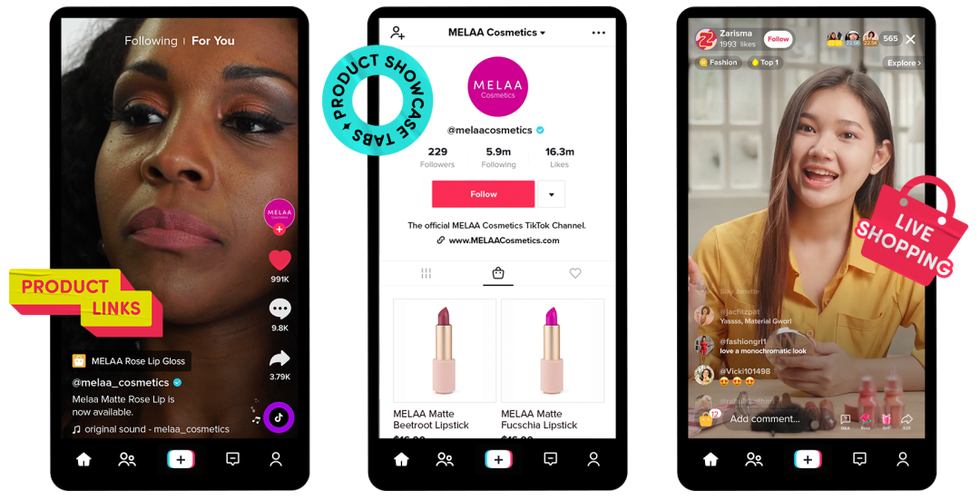
For TikTok Shop, creator fit is not only about popularity. Sellers need to see whether a creator is used to making content that leads to purchases, product reviews, demonstrations, or live shopping. If the tool provides affiliate history signals, use them to assess the creator's experience with commercial content formats.
Still, be careful with sales performance or commission data if the source and method are not explained. This kind of data should be treated as an early indication. Before sending samples or making an agreement, check the creator's profile, content quality, and whether their communication style fits your product.
Data Export and Follow-up Management
Many sellers stop at the stage of finding names, even though the next work is just as important: contacting creators, recording responses, marking sample status, and evaluating results. For that reason, export features to spreadsheets or integrations with internal work systems need to be tested from the start.
At minimum, you need to be able to save account names, profile links, categories, reasons for selection, contacts if available, follow-up status, and verification notes. Without this kind of management, a creator list will quickly become messy, especially when you start running several campaigns at once.
How to Test a Tool Without Being Influenced by Marketing Claims
Start from a real scenario. Do not open a trial just to look at every feature. First define a concrete need, such as finding creators for a body care product, within a certain follower range, with Indonesian-language content, and a content style suitable for short educational videos. From there, run the search in the tool and assess the results.
Compare three things: the time required, candidate relevance, and ease of following up on the list. If the tool speeds up search but the list that appears is too random, its benefit is limited. If the data looks complete but is hard to export, you will lose time at the operational stage. If the results are relevant but require too much manual correction, calculate again whether the tool truly helps.
The most practical way is to take a small sample from the search results, then check it manually on TikTok. Open the profiles, look at recent content, read some comments, and note whether the creators are still active. Also test whether the data shown by the tool is close enough to the profile conditions when checked. You do not need to chase perfection, but discrepancies that appear too often should be recorded as a risk.
Manual Search vs Tool Comparison: Which Makes More Sense?
Manual search is strongest when you are still in the early exploration stage. You can understand content styles in a particular niche, see conversation trends, and recognize the types of creators that feel suitable for the brand. This method provides context that sometimes does not appear on a dashboard.
By contrast, a tool makes more sense when you already have criteria and want to scale up the search. A tool helps build an initial list, rank candidates, and reduce repetitive work. The healthiest combination is usually not choosing one or the other, but using a tool for initial screening and then doing manual verification before outreach.
FAQ About TikTok Shop Creator Tools
Are sellers required to use a tool to find creators?
Not always. Sellers with small needs can still use manual search. A tool is more useful when there are many candidates, the criteria are clear, and the follow-up process needs to be managed neatly.
What is the most important feature in a TikTok Shop creator search tool for sellers?
The most important features are relevance filters, engagement signals, activity or affiliate history, and the ability to save and export data. Additional features only have value if they truly support that workflow.
Can data from a tool be trusted immediately?
Not completely. Tool data can differ from the latest conditions on TikTok because data collection and update methods are not always the same. Use the data as initial guidance, then verify creator profiles manually.
Decision Summary
Choose a TikTok Shop creator search tool for sellers that helps you screen candidates according to your product needs, not one that merely looks like the most talked-about option. The main criteria are simple: relevant filters, easy-to-understand data, verifiable results, and a creator list that is easy to manage for follow-up.
The best decision usually comes after testing with a real scenario. If the tool makes research faster, the list neater, and the verification process easier, then the tool is worth considering. If it only adds numbers without context, sellers still risk choosing the wrong creators.