
A four-person fashion team sold nearly 8,000 units in just three days, ranking No. 1 among sellers and No. 1 for a single product on TikTok Shop Mexico.
Stories like this are becoming increasingly common among sellers using TikTok Shop’s Full-Service model.
In May 2026, TikTok Shop’s US business doubled year over year, while business across the UK and four EU markets grew 71% year to date. Mexico and Japan also continued to reach new highs in daily GMV.
As competition in global markets becomes increasingly intense, one question is becoming more important for manufacturers, industrial clusters, and trading companies:
How can great products be sold globally more efficiently?
Recently, TikTok Shop held its Full-Service Seller Conference in Guangzhou under the theme “Renew Growth, Win Globally with Quality.”
The message from the event was clear: TikTok Shop Full-Service is not simply about helping sellers sell products. It is about connecting four critical parts of global expansion: products, content, fulfillment, and market expansion.

Full-Service Isn’t About Doing Less. It’s About Scaling What Sellers Do Best
Many sellers initially understand the Full-Service model as “the platform helps me operate my business.”
But for sellers with strong supply chains, its greater value is allowing them to focus on what they do best: developing products, maintaining quality, and responding quickly to market demand.
Guangzhou-based fashion seller Xinwuyu is a good example.
The company has only four employees and a warehouse of just 115 square meters. It also focuses heavily on one niche: women’s woven trousers.
After joining TikTok Shop, Xinwuyu did not try to expand its SKU count aggressively. Instead, it focused on developing its core category, adapting popular styles from outside platforms, making small product innovations, and iterating quickly based on market feedback.
During TikTok Shop’s Mexico Brand Day in March 2026, Xinwuyu sold nearly 8,000 units in three days, ranking No. 1 among sellers and No. 1 for a single product in the Mexico market.
Another example is LARGNER, a personal-care appliance manufacturer.
The company has been focused on products such as hair clippers and shavers for more than 15 years. After entering TikTok Shop Full-Service, LARGNER began adapting its products and operations for the US and UK markets. It has since grown into a leading seller in the personal-care category in both markets and has participated in programs including US overseas warehousing and local fulfillment in Europe.
The common factor behind both cases is clear:
The sellers already had strong supply-chain capabilities. TikTok Shop Full-Service helped turn those supply-chain strengths into global market growth.

Great Products Are the Starting Point—but Which Products Are Worth Scaling?
Product selection has always been critical in e-commerce.
Having a factory, inventory, and a price advantage does not automatically mean a product will succeed overseas.
Xinwuyu’s approach is worth noting.
Instead of constantly expanding its product range, the company has remained focused on woven trousers, developing products around tailored trousers and business-casual styles.
Its store maintains more than 20 active products, with 5–8 core bestsellers. Each month, it develops 3–5 new products for testing while concentrating most of its resources on proven products.
More importantly, the company responds quickly to consumer feedback.
One of its core trousers initially received negative reviews because the length was too short and the fabric did not meet customer expectations. Instead of continuing to invest in traffic, the team adjusted the fit and fabric based on feedback and relaunched the product within a week.
After optimization, the product went on to sell more than 50,000 units.
The lesson is simple:
A product worth investing in is not simply one with a low cost. It is one that can continue improving based on real market feedback.
TikTok Shop Full-Service is also moving this decision-making process further upstream.
Through its Business Opportunities Center, platform merchandising directions, buyer resources, key product support, and new-product incentives, the platform helps sellers identify which products are more suitable for overseas markets and which ones deserve continued investment.
AI is also becoming part of this process.
Through trend discovery and opportunity recommendations, sellers can gradually move away from relying purely on experience or “guessing” what to sell, toward data- and opportunity-driven decision-making.
The message from the conference is therefore straightforward:
The competition is no longer simply about who has products. It is about who can identify the right products faster.

Great Products Still Need to Be Understood by Consumers
One of the biggest differences between TikTok Shop and traditional shelf-based e-commerce is that products do not have to wait for consumers to search for them.
They can actively enter consumers’ attention through short videos, creator content, and livestreams.
This addresses another major challenge for many manufacturers:
The products are not short of selling points. What they lack is the ability to translate those selling points into reasons consumers actually care about.
LARGNER understands this particularly well.
Its approach can be summarized simply:
Content is the entry point; product value is the foundation.
Factories tend to focus on blades, motors, specifications, and costs.
Consumers are more likely to care about:
Is it easy to use?
Can it save time?
Is it comfortable?
Does it fit naturally into everyday life?
Can it solve a real problem?
TikTok Shop Full-Service is lowering the barrier to content creation and localization through AI tools and creator resources.
The platform has introduced AIGC multilingual short-video tools that allow sellers to turn one set of materials into content in English, French, German, Italian, Spanish, and other languages.
In Europe, the platform has also built a network of more than 500,000 local creator partners and over 500 cross-border partner agencies.
For sellers who previously struggled with filming, translation, creator recruitment, or localized content, content production is gradually becoming something that can be scaled with the help of platform tools.
Xinwuyu is also using AI to expand its content production.
In 2026, the company added dedicated AIGC staff who analyze successful content on the platform and use AI-generated materials to produce 40–50 pieces of content per day for two stores, supporting new-product launches and product testing.
The underlying change is clear:
Great products no longer have to wait for traffic. They can actively find consumers through content.
After a Product Goes Viral, Can You Handle the Orders?
Cross-border sellers often have two concerns:
What if the product does not sell? And what if it suddenly sells too much?
Poor sales mean the product or content has not worked.
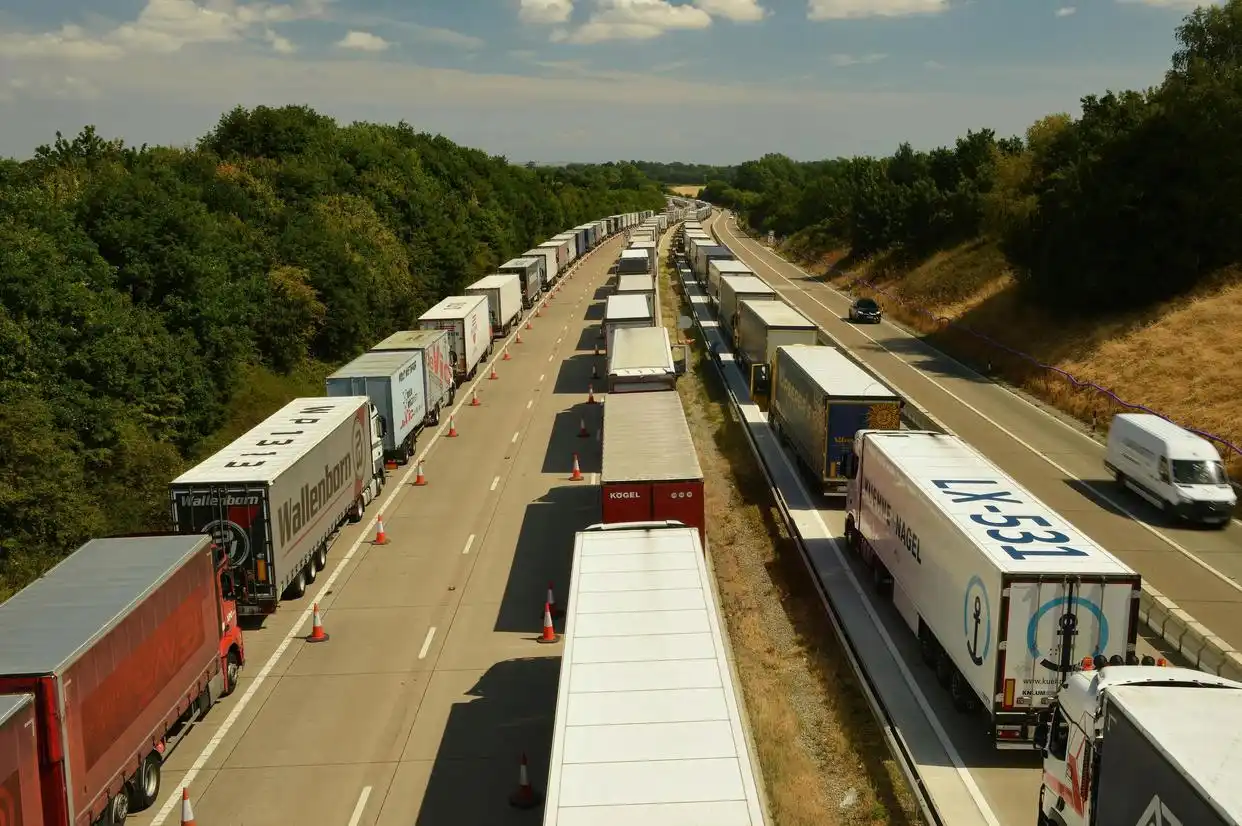
But explosive sales without sufficient inventory or fulfillment capacity can also lead to stockouts, refunds, negative reviews, and wasted traffic.
Xinwuyu’s performance during Mexico Brand Day is a good example.
During the campaign, the team quickly coordinated factory capacity, arranged shipments twice a day, and used backend data to predict replenishment needs for different colors and sizes.
Because inventory had been prepared in advance and the factory could respond quickly, the company experienced only minor shortages in a few sizes during the three-day campaign, with no large-scale stockout.
LARGNER has taken fulfillment a step further through overseas warehousing.
It currently maintains around 200,000 units of inventory in its US overseas warehouse and uses overseas stocking, local fulfillment, and one-piece dropshipping models to improve delivery efficiency and supply stability.
This is why TikTok Shop Full-Service continues to upgrade its localized fulfillment infrastructure.
Beyond domestic inventory models, the platform is expanding overseas warehousing and local fulfillment options to support different product categories and market needs.
For sellers, localized fulfillment is about more than simply “faster delivery.”
It directly affects:
customer experience, conversion efficiency, and the ability to sustain product growth.
Especially during major campaigns and brand events, the sellers who can reliably handle the surge in orders are the ones with a better chance of turning a sales spike into long-term growth.
From One Market to Multiple Markets: “Sell Globally from One Platform” Is Becoming More Realistic
Once products, content, and fulfillment begin to work together, sellers naturally ask:
Where can we go next?
TikTok Shop Full-Service is already expanding opportunities across multiple overseas markets.
The US business has doubled year over year, while business across the UK and four EU markets grew 71% year to date. Mexico and Japan have also continued to reach new highs in daily GMV.
At the same time, TikTok Shop Full-Service has recently opened applications for sellers in eight additional European markets: Poland, the Netherlands, Belgium, the Czech Republic, Austria, Greece, Portugal, and Hungary.
For Chinese sellers, this means a broader range of market opportunities.
For manufacturers and industrial-cluster sellers with mature supply chains, broad product capabilities, and fast product development, new markets also create more opportunities to test products and validate consumer demand.
In the past, entering multiple overseas markets meant solving operations, content, logistics, and localization separately in each market.
The Full-Service model is attempting to integrate many of these complex processes.
Sellers can focus more on their products while the platform helps connect them with more markets.
What Full-Service Really Changes About Taking Great Products Global
Looking at the bigger picture, TikTok Shop Full-Service is not simply solving the problem of sellers “not knowing how to sell.”
It is helping supply-chain-driven businesses fill some of the most difficult gaps in global expansion:
Don’t know what products to choose?
→ Use trends and business opportunities to identify products worth investing in.
Don’t know how to create content?
→ Use AI tools and creator resources to lower the barrier to content production.
Worried about handling a sudden surge in orders?
→ Use overseas warehousing and local fulfillment to improve order capacity.
Want to enter more markets?
→ Use a multi-market network to reduce the complexity of international expansion.
The core value of Full-Service is therefore not simply helping sellers “do less.”
It is:
Helping sellers with great products, strong supply chains, reliable quality, and fast response capabilities scale those strengths more efficiently across global markets.
There are still many steps between “having a great product” and “selling it globally.”
But as products, content, fulfillment, and market access become increasingly connected, global expansion is becoming a clearer and more accessible path for manufacturers, industrial-cluster businesses, and trading companies.
Great products do not automatically go global. But with the right growth model, they have a much better chance of truly reaching consumers around the world.