

Supported by mature supply chains for Muslim apparel, home goods, beauty and accessories, a growing number of Indonesian local sellers are expanding to TikTok overseas markets including Malaysia, Philippines, Thailand, and Western countries. However, most sellers face the same dilemma:
Option A: Cooperate with Indonesian local creators to sell products to their overseas followers
Option B: Recruit local creators from target countries to precisely connect with local consumers
Most sellers make decisions based on experience only: using local creators for small-scale testing and overseas creators for mass scaling. Without standardized cost calculation rules, they often encounter low profitability despite apparent sales growth and extremely low ROI with high manpower and resource input.
Unlike ordinary cross-border sellers, Indonesian TikTok sellers have unique cost advantages and challenges. Local supply chains offer low costs and fast delivery, while cross-border creator communication, fulfillment, logistics and after-sales costs vary drastically across regions.
This article breaks down 3 practical creator cooperation cost models and comprehensively compares the advantages, disadvantages, costs, risks and applicable scenarios of the two mainstream promotion strategies. It also guides Indonesian sellers to use DAMI to unify multi-country creator data statistics and calculate real ROI, ensuring every marketing budget delivers tangible returns.
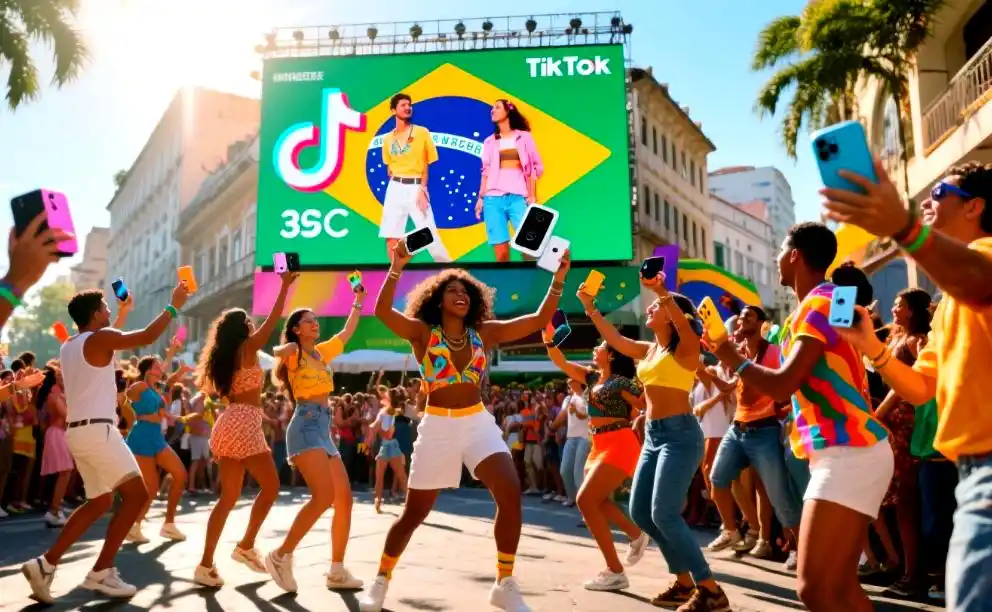
1. Two Core Creator Promotion Strategies for Indonesian TikTok Global Expansion
Before analyzing cost models, we clarify the only two cross-border creator development paths for Indonesian sellers. They differ completely in applicable scenarios, cost structure and conversion logic with no absolute superiority — suitability matters most.
Strategy 1: Indonesian Local Creator Cross-border Selling
Core logic: Select Indonesian local creators whose fan base covers neighboring Southeast Asian countries such as Malaysia, Singapore and Brunei, and leverage their cross-border audiences to complete overseas sales.
Core strengths: zero language barriers, high communication and fulfillment efficiency, ultra-low sample logistics costs, high cultural compatibility, no need to engage unfamiliar overseas creators.
Core weaknesses: scattered audience geography, insufficient targeting accuracy, poor conversion in distant Western markets, and relatively low repurchase rates.
Strategy 2: Direct Collaboration with Local Creators in Target Markets
Core logic: Directly source local creators from target markets including Southeast Asia and Western regions. These creators deeply understand local aesthetics and consumption habits to accurately reach targeted local users.
Core strengths: precise audience targeting, locally adapted content, high conversion efficiency, suitable for long-term brand cultivation and market penetration.
Core weaknesses: high multi-language communication costs, expensive cross-border sample logistics, low efficiency caused by time zone differences, and high MCN agency premium fees.
2. 3 Practical Cost Models Covering All Creator Cooperation Scenarios
TikTok creator marketing costs consist of four core parts: manpower communication cost, sample logistics cost, paid cooperation cost, and after-sales sunk cost. Based on the actual operation status of Indonesian cross-border sellers, we have standardized three universal cost models applicable to all categories and promotion scales.
Model 1: Pure Commission Sample Collaboration Model
Applicable scenarios: new product cold launch, low-budget product testing, Muslim apparel, affordable home goods, new creator evaluation
Cost breakdown:
1. Fixed cost: only product sample cost + logistics fee, no additional slot fees or extra charges beyond commission;
2. Soft cost: manpower time spent on creator screening, multi-language communication, sample follow-up and content review;
3. Sunk cost: invalid loss from creators failing to post content, low-traffic content and zero-order performance after receiving samples.
Model 2: Small-scale Paid Cooperation Model
Applicable scenarios: mature product promotion, steady new product launches, vertical beauty & accessory categories, in-depth development of core Southeast Asian markets
Cost breakdown:
1. Fixed cost: sample logistics fee + small fixed slot fee + tiered sales commission;
2. Soft cost: manpower for in-depth creator negotiation, content brief revision, schedule coordination and data tracking;
3. Sunk cost: losses from underperforming content, commission settlement disputes and sudden creator cooperation cancellation.
Model 3: Large-scale Brand Cooperation Model
Applicable scenarios: big sales event volume boosting, brand promotion, high-end home goods, functional beauty products, Western market expansion
Cost breakdown:
1. Fixed cost: high-value fixed cooperation fee + bulk sample delivery + high sales commission + auxiliary overseas promotion fees;
2. Soft cost: dedicated team docking, multiple rounds of content review, compliance risk control and cross-timezone follow-up;
3. Sunk cost: losses from market traffic fluctuations, compliance restrictions and brand reputation risks.
3. Core Comparison: Indonesian Local Cross-border Creators VS Overseas Local Creators
Based on the three cost models above, we conduct a refined comparison across cost, efficiency, conversion and risk dimensions to guide sellers’ staged and categorized promotion decisions:
Comparison Dimension | Indonesian Local Cross-border Creators | Overseas Target Market Local Creators | Best Application Scenarios |
Sample Logistics Cost | Very low (local delivery, no cross-border freight or customs risks) | Very high (cross-border logistics, customs clearance, time loss and return costs) | Low-budget product testing prioritizes Indonesian local creators |
Manpower Communication Cost | Low (same language & time zone, zero communication barriers, efficient follow-up) | High (multi-language translation, staggered time zones, cultural differences) | Small teams with limited manpower prioritize local creators |
Targeted Conversion ROI | Medium (scattered multi-country audiences, low accuracy, average repurchase) | High (100% market-matched audiences, high conversion and repurchase rates) | Stable best-selling products & long-term market development prioritize overseas creators |
Sunk Risk Cost | Low (flexible secondary follow-up, reusable creator resources, easy loss control) | High (irretrievable cross-border samples, high breach cost for paid cooperation) | Prioritize local testing for new products with uncertain risks |
Market Coverage | Limited to neighboring Southeast Asian countries (MY, PH, SG, BN) | Covers all global TikTok markets (Southeast Asia, Europe, America) | Western market expansion requires overseas local creators |
4. Category & Stage-based Precise Promotion Guide
Match optimal creator strategies for Indonesia’s three core export supply chain categories to maximize ROI and avoid blind investment:
1. Muslim Apparel & Affordable Accessories
- Cold launch/testing stage: Prioritize Indonesian local cross-border creators for low-risk testing and fast growth based on shared Muslim culture;
- Stable sales stage: Adopt hybrid promotion — local creators guarantee basic sales while Malaysian & Filipino local creators drive precise incremental growth;
- Scaling stage: Focus on overseas local creators to deepen regional markets and build localized brand awareness.
2. Home Daily Necessities & Storage Products
- Full-stage solution: Primarily adopt the overseas local creator pure commission model. Low unit product cost and low sample loss support large-scale volume expansion;
- Low-budget teams can continuously cooperate with Indonesian local cross-border creators to reduce overall promotion risks.
3. Beauty & Functional Skincare
- Blind cooperation with Indonesian local cross-border creators is prohibited, as inaccurate audience targeting easily triggers negative reviews and returns;
- Fully prioritize vertical local creators in target markets with a hybrid small-payment + pure-commission model to ensure professional content and accurate conversion.
5. Eliminate Confused Accounting: Calculate Real Multi-country Creator ROI with DAMI
Most Indonesian cross-border sellers make ROI calculation mistakes: only counting final GMV while ignoring logistics, manpower and sunk costs, resulting in seemingly profitable but actually loss-making promotions.
DAMI is a professional TikTok creator marketing SaaS tailored for cross-border sellers. It perfectly fits the multi-market operation needs of Indonesian outbound sellers, solving multi-country creator cost statistics, data review and precise ROI calculation challenges, and supporting both Indonesian local and overseas creator management.
1. Unified Dual-track Creator Data Archiving
Tag and classify creators as "Indonesian local" or "overseas local". Uniformly record sample costs, logistics fees, cooperation commissions, paid expenses and manpower follow-up records to eliminate scattered Excel files and data loss.
2. Automatic Real ROI Calculation for Each Creator
The system automatically summarizes total costs (fixed + soft + sunk) and total output of single creators and batch promotions, accurately calculates investment return, screens high-value reusable creators and eliminates low-efficiency loss-making accounts.
3. Batch Optimization of Promotion Structure
Data review clearly identifies whether local cross-border promotion or direct overseas promotion suits specific product categories. Precisely adjust budget allocation to focus funds on high-ROI strategies and eliminate blind bulk investment.
4. Accumulate Reusable Low-cost Creator Assets
Classify high-ROI local and overseas creators as corporate exclusive assets. Reuse resources for new product launches and big sales events to greatly reduce secondary testing and creator sourcing time and capital costs.
6. Conclusion: Core ROI Logic for Indonesian Creator Promotion
1. There is no permanent best promotion strategy, only the most stage-suitable choice: local Indonesian creators stabilize costs for product testing, while overseas local creators improve conversion for long-term market cultivation;
2. Promotion effectiveness cannot be judged by GMV alone. Full-link real ROI calculation covering samples, logistics, manpower and sunk costs is mandatory;
3. The three cost models cover all cooperation scenarios: pure commission for beginners, small paid deals for stable sales, and large brand cooperation for volume boosting;
4. Standardize dual-track creator data management via DAMI to achieve precise accounting and structural optimization, turning Indonesian cross-border creator marketing from blind trial-and-error into controllable profitability.
Frequently Asked Questions
Q1: Should new Indonesian cross-border sellers choose local or overseas creators first?
A: PrioritizeIndonesian local cross-border creators + pure sample commission model. Zero language & time zone barriers, ultra-low logistics costs and minimal trial risks help new sellers quickly master cross-border market rules and accumulate initial creator resources before expanding overseas creator layouts.
Q2: Why do pure-commission overseas creator cooperations have huge ROI gaps?
A: The core reason lies in hidden cost differences. Overseas creator cooperation involves invisible sunk costs such as cross-border logistics loss, time zone communication costs and low sample fulfillment rates. Despite zero upfront payment, the comprehensive cost is much higher than local Indonesian creator cooperation. Full-link cost calculation is required to obtain real ROI data.
Q3: What is the most reasonable budget allocation for simultaneous Indonesian domestic and multi-country cross-border business?
A: Recommended ratio: 60% budget for verified high-ROI overseas local creators (core sales guarantee), 30% for Indonesian local cross-border creators (basic sales backup), 10% for new creator testing (incremental expansion), adjustable by category and market stage.
Q4: How to achieve low-cost multi-country creator ROI review with limited team manpower?
A: Manual bookkeeping is unnecessary. Use DAMI to uniformly record all creator cooperation costs and output data. The system automatically generates ROI reports, saving 80% of manual statistical work and enabling refined promotion control even for small teams.
Q5: Do we need different promotion strategies for Southeast Asian and Western markets for Muslim apparel exports?
A: Strict differentiation is required. Southeast Asian markets support hybrid local and overseas creator promotion with low costs and fast growth. Western markets have drastically different consumer aesthetics and demands, requiring exclusive cooperation with vertical Western local creators and abandoning Indonesian local cross-border promotion to avoid low-conversion losses.